Making boats easier to recycle means everyone wins.
If there’s one thing we’re good at, it’s building boats. According to the latest industry figures there are more than 400 million recreational boats scattered around the world right now. And that figure continues to grow, as more and more boats make their way home from dealer showrooms each and every year.
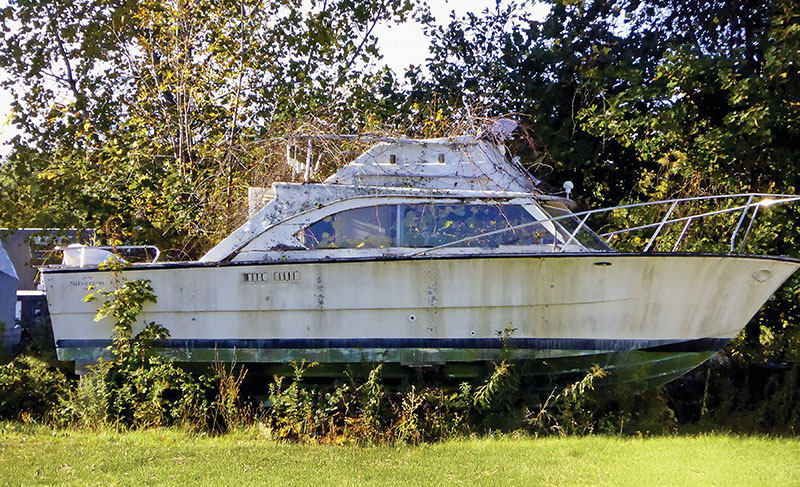
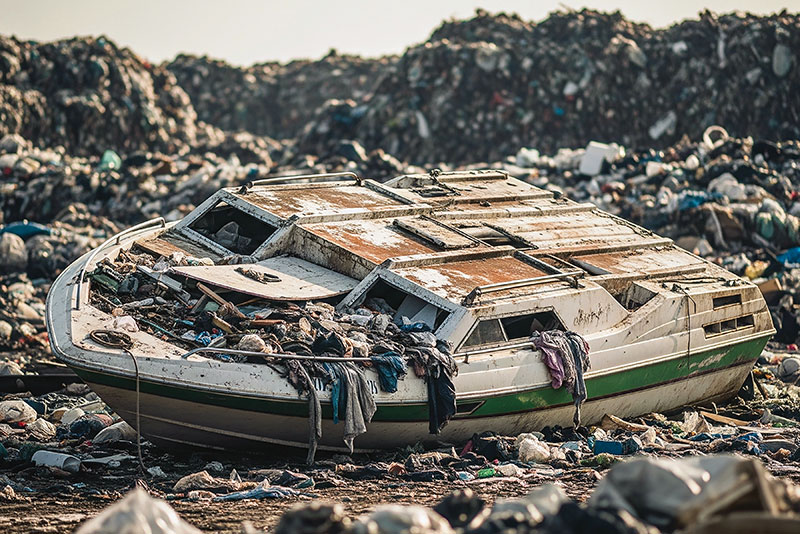
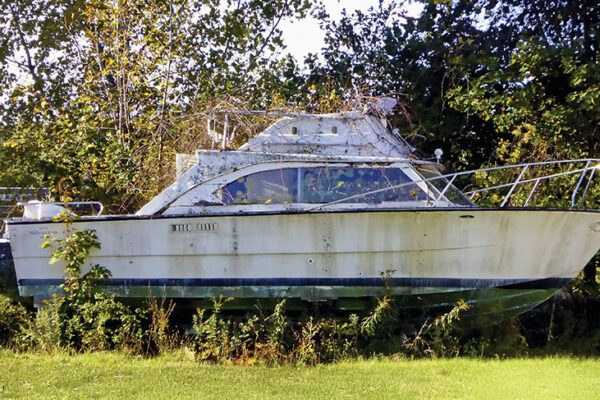
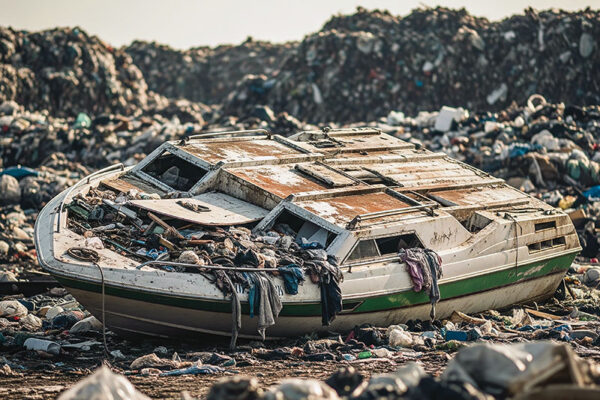
What we’re not very good at is figuring out exactly what to do with all these boats when they eventually reach the end of their service life. If even 1% of them reach the end of the line each year, that means somewhere around 4 million boats go into landfills every 12 months.
That’s almost 11,000 a day. Every day.
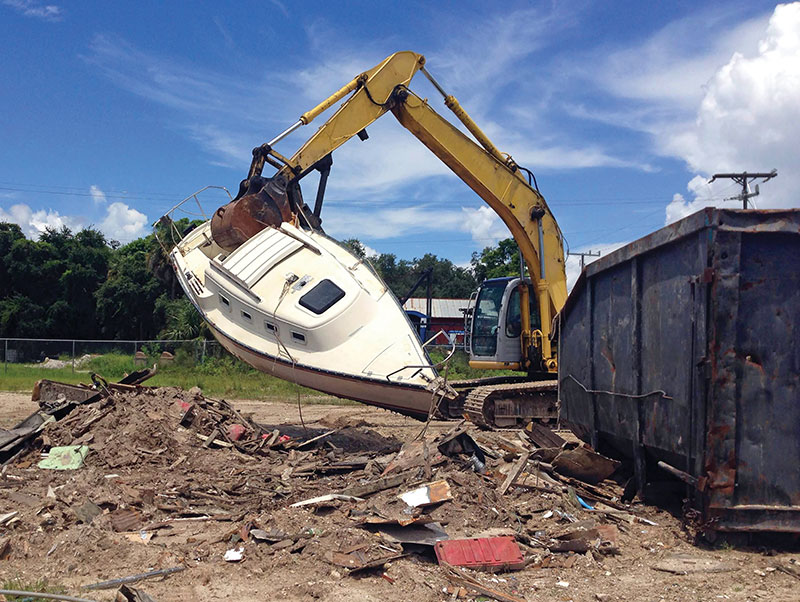
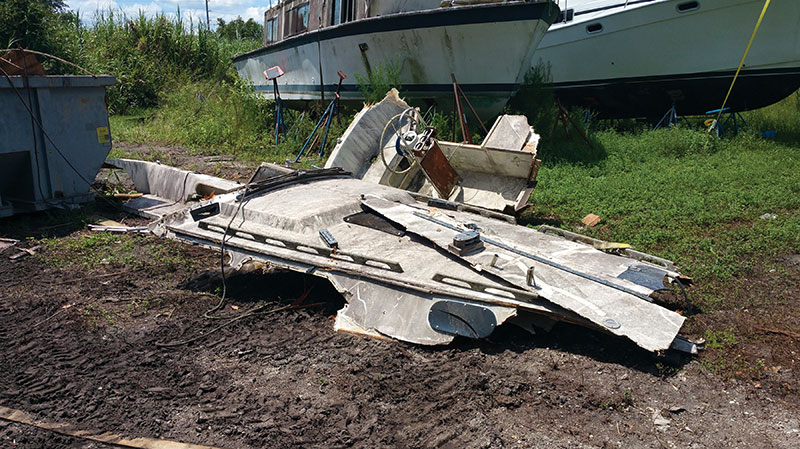
While aluminum boats are comparatively straightforward to recycle — we can just melt them down and make all sorts of new things out of them — fiberglass boats are a lot more difficult to deal with. The biggest issue is that most fiberglass boats aren’t just fiberglass — they’re a laminated jumble of fiberglass and wood and aluminum and, more recently, Kevlar and other durable materials that simply don’t break down easily for cost-efficient recycling. Because recycling of these mixed-material hulls simply isn’t economically feasible, the vast majority of old fiberglass boats are simply broken up and buried in landfill.
The issue is that most of them use old-technology fiberglass hulls that can leech a variety of nasty chemicals like formaldehyde straight into our ground water, which is why end-of-life boats have come to represent a bit of a growing ecological problem. Peter Franklin, one of the organizers of the Future of Yacht Recycling conference series, says that while some fiberglass boat recycling pilot programs in Canada, Japan, Sweden and France have enjoyed varying levels of success, all rely heavily on government subsidies and would simply not be viable otherwise. For boat recycling to gain any real traction, he says we need to make it commercially attractive. “That’s the biggest issue – right now, at least, no one is making any money at this,” he says. “But by sharing our collective knowledge and by focusing attention on the situation, the hope is that we can develop ways of recycling fiberglass boats more economically.”
He adds that fiberglass hull recycling is an issue that the boat industry needs to take the lead on addressing, because taxpayers are unlikely to support the idea of public money being used to develop recycling programs for what most people regard as luxury products.
All photos: Pixabay

Covering The Costs
In France, the government addressed the matter of funding boat recycling with a tax hike, adding a surcharge to the cost of every new boat sold in order to pay for its old boat disposal programs. “The tax is applied to sales of all new recreational watercraft up to 24 meters (78 feet) in length,” says Pierre Barbleu, former manager of France’s APER Network which helps manage its vessel recycling program. “That’s sailboats, power boats, even canoes. There is a high cost to dismantling boats, and no one wants to pay it. So, the government has decided who will.”
The problem with this approach, says Barbleu, is that the number of old boats in the pipeline outweighs the number of new boats being sold each year. “There are boats now coming to the end of their life from over the past 50 years,” he says. “The tax makes getting a new boat even more expensive, and it discourages new boat sales. That, in turn, means less money to fund the recycling program moving forward. It causes a bigger problem than it solves.”
Boats As Material Banks
For generations boats — like most consumer goods — have been produced following a linear “cradle-to-grave” model of build, use and dispose. While this may have been fine in the days when wood was the primary boat building material, the widespread adoption of fiberglass in the 1960s changed everything. The two main issues are the environmental problem of dumping large quantities of fiberglass into landfill, and the lost value of potentially reusable building materials.
Steven Beckers, president of the Lateral Thinking Factory in Belgium, says that fiberglass boats should be designed following a “cradle-to-cradle” concept of build, use, then recycle and use to make something else. He contends that the cost of recycling boats could be dramatically reduced if they were designed from the outset with their eventual deconstruction in mind. “Materials should be used, not consumed,” he says. “We need to think of products like boats as raw material banks for the future. Materials appreciate in value over time, so designing boats with an eye to their eventual deconstruction will allow them to retain greater value at every stage of their life, including the end of it.”
Beckers likens it to commercial ships, which still hold considerable value as scrap metal even after they’re no longer fit to go to sea. “Recreational boat builders need to adopt this way of thinking,” he says. “Because with the present way of doing things there is too much waste, and it costs everybody too much money.”
He says boat builders can learn from the auto industry, which has designed cars for years with an eye to recycling all of their parts — not just the steel shells, but the plastic and fiberglass components as well. General Motors began its pioneering work on developing fiberglass recycling technologies back in the late 1960s, long before the material was first introduced in the mid-1970s Corvette, Camaro and Firebird. Today, fiberglass auto parts are profitably shredded into shards and slivers with multiple uses — including serving as a rust-proof substitute for rebar in concrete structures that will be deployed underwater.

Looking ahead
While it’s still far behind the auto sector, changes have begun taking place in the boat industry too. Beneteau, for example, has entered into new partnership agreements with several leading waste technology firms to not only make boats more easily recyclable, but to use that reclaimed material in order to build new boats. Rapid developments in recycling technology are enabling the company to adopt a circular production approach.
Other boat builders are following their lead. Northern Light Composites now builds fully recyclable sailboats that can be ground up at the end of their life, formed into pellets and used to make all-new things. A variety of boat builders, including Brunswick Corp, have begun experimenting with constructing boats like their Veer fishing models from rotomolded polyethylene, a durable material that’s similar to fiberglass, but far easier and less expensive to recycle.
“Boat builders need to pay attention to this issue, because the next generation of buyers, the next big demographic group of consumers, are a lot more environmentally aware than any that have gone before them,” says Franklin. “Boat manufacturers who produce environmentally sustainable, recyclable products will be seen in a positive light, while companies who build boats with poor recyclability won’t.”