Photos provided by Tom Koroknay unless otherwise noted.
Celebrating the incredible journey of Lyman Boats.
Story by Heather Steinberger — Featured in the October 2025 issue of Lakeland Boating
Great stories often start with humble beginnings. Remember Peter Parker, a shy, working-class high school student being raised by an aunt and uncle, or Steve Rogers, a slight, sickly kid who wanted to stand up to bullies during the Great Depression.
These seemingly ordinary boys transformed into Spider-Man and Captain America, proving that even the most unassuming origins can lead to greatness.
That’s not only true for people. One small boat company, launched on the Great Lakes 150 years ago, would chart a similar course. Through a mix of ingenuity, opportunity and hard work, it would become a legend. This is the story of Lyman Boats.
From humble roots
Today, recreational boating enthusiasts associate the Lyman name with Sandusky, Ohio, but the venerable boat company actually got its start nearly 70 miles away in Cleveland. There, in 1875, German immigrant brothers Bernard and Herman Lyman had an idea.
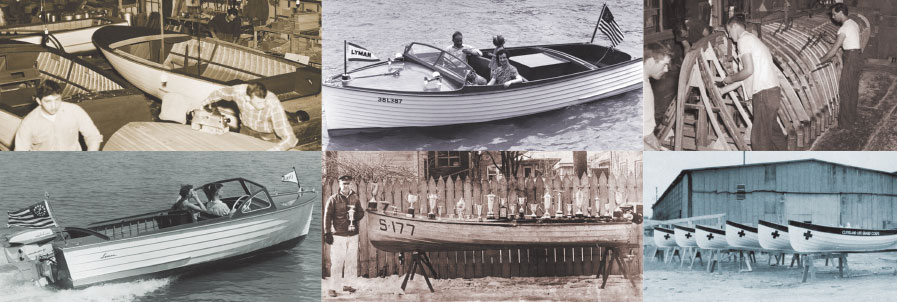
 “They were cabinetmakers and avid outdoorsmen, and they wanted to go fishing offshore in Lake Erie,” said Tom “Doc Lyman” Koroknay, a Lyman Boats expert and author of the 2004 book Lyman Boats: Legend of the Lakes. “So, they built a skiff. They used lapstrake construction — one plank lapped over another like siding on a house — which allows flex as the boat goes over the waves. They used clinch nails to fasten the planks.”
With local interest growing in their clinker-built watercraft, the brothers started a livery on the Cleveland waterfront. Soon Lyman Brothers Boat Builders was producing a variety of rowboats and sailboats ideally suited to Lake Erie’s notoriously challenging waters.
They started with utility and fishing boats and gradually moved up to larger pleasure craft. Although Lyman Brothers Boat Builders was forced to leave the waterfront in 1916, likely due to local World War I mobilization efforts, the move inland resulted in the construction of more small, outboard-powered boats. Their affordability broadened the company’s market.
Then, in 1928, Sandusky came calling. Like many communities, the city was actively developing its industrial base in the early 20th century and sought to boost its reputation for economic health.
“The city lured them with five acres right on the bay,” Koroknay said. “That’s where they became legendary.”
The golden era
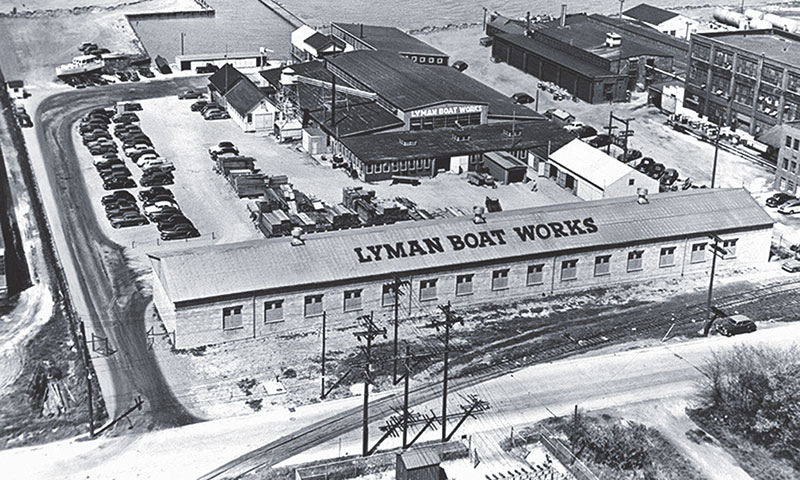
Renamed Lyman Boat Works and with Bernard Lyman’s eldest son William ‘Bill’ Lyman at the helm, the business moved to First Street in Sandusky. The company resumed production of powerboats and sailboats,
with their first vessel coming off the line in January 1929.
Just nine months later, the Great Depression arrived with Black Thursday on October 24, 1929. To survive, the company focused on building larger custom cruisers for its wealthy clientele, as well as durable trap-net boats for local commercial fishermen.
By 1937, it was even able to expand its manufacturing with a new 18,000-square-foot facility. That came in handy when the next major storm arrived: World War II.
“Lyman honed their mass production skills for the war effort,” Koroknay said. “They started using marine-grade plywood instead of solid mahogany, because they had to build fast to fulfill the war contracts.”
Competitors like Chris-Craft and Gar Wood also shifted from recreational to wartime production. During the war years, Lyman built military craft that included 24-foot personnel boats and pontoons that were used to support floating bridges. When World War II ended, the recreational boat market came roaring back, and Lyman Boat Works boomed. Its reputation for high-quality lapstrake craftsmanship spread across the nation, and a golden era began.
“In 1955 alone, Lyman built 5,000 boats,” said Koroknay. “They went through one million square feet of marine-grade plywood that year. That’s 41,000 sheets. Not bad for 350 employees.”
“Even at its biggest, it was not a giant company,” agreed Molly Sampson, executive director at the Maritime Museum of Sandusky. “It had a hometown, tight-knit feel, even during peak production, and the boats were still hand-crafted, even with assembly-line technology.”
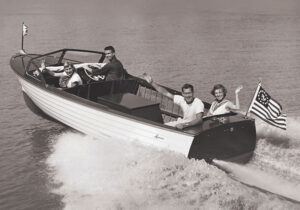
Celebrated for decades on the Great Lakes for their distinctive styling and durable, high-quality lapstrake design, Lyman Boats surged in popularity nationwide as the 1950s progressed. The company focused on outboard-powered models to meet strong demand, and a dealer network blossomed from coast to coast.
“Although most Lymans were on Lake Erie, there were dealerships in 40-plus states and Puerto Rico by the mid-1950s,” Koroknay said. “The hull design is really what set it apart. The Lyman name became synonymous with lapstrake.”
Lyman Boats LLC
lymanboat.com
Lyman Boat Owners Association
lymanboa.com
Maritime Museum of Sandusky
sanduskymaritime.org
The decline and Doc Lyman
As with so many things, the good times wouldn’t last forever. Some boatbuilders began experimenting with fiberglass in the 1950s, and by the 1960s, a revolution took hold — while Lyman continued building with wood.
“Bill Lyman died in 1952 at 69 years of age,” Koroknay said. “His widow and son-in-law took over, and they were reluctant to get into fiberglass. Had Bill been able to continue another 20 years, who knows what might have happened.”
Lyman Boat Works ultimately did make the shift to fiberglass, in 1972, but by then it was too late. The company ceased wood boat production in 1973.
It continued with a series of owners over the next 18 years, but by 1991, the doors closed for good.
“I bought the pre-1973 wood operation,” Koroknay said. “The patterns, archives, photos, tooling, jigs, trademark — everything came to my place.”
Koroknay is a native Ohioan, born and raised in Mansfield. He spent many happy childhood hours fishing, boating and swimming thanks to a family cottage on Lake Erie. “There were Lymans all over the place when I was a kid,” he says.
A third-generation woodworker and an experienced home builder, Koroknay started working on Lymans in 1979. By the mid-’80s, he was operating a full-time boat restoration business called Koroknay’s Marine Woodworking, now known as Lyman Boats LLC, and became known far and wide as Doc Lyman.
“Over the years, I did everything from planking, stems, knees and transoms to new decks and windshields,” he said. “Lots of guys can do paint and varnish, but when it comes to structural elements, you need help. It’s challenging, skilled work and these days, we have a shortage of people who can do it.”
Keeping the legend alive
Over the years, Koroknay has provided information and artifacts to museums across the country. He also has amassed a collection of Lyman Boats representing every decade of production from the 1920s to the 1960s, plus one special rowing skiff dating to the late 1800s or early 1900s.
“No one knows for sure, because the factory records only go back to 1929 when they moved to Sandusky,” he explained. “But it’s very old. There’s only one other Lyman I can think of that comes even close. It’s at a museum in Michigan, but unfortunately its hull number was sanded off. Mine has the earliest number I know of.”
Koroknay also has several other prewar boats, an early fiberglass model and a prized 1967 26-foot Lyman Cruisette. Billed as an economical weekender, it features a V-berth, convertible dinette and small galley.
“It’s the pinnacle of single-screw inboard design in my opinion,” he said. “It’s a great rough-water boat, perfect for a couple or a small family. We raised two kids on one, before we got our cottage.”
“At the museum, so many people share their personal connections and nostalgia,” Sampson said. “They tell us they had a Lyman as their family boat when they were kids.”
“It was a local build, and it was like a member of the family,” she continued. “Everyone had a Lyman — not because it was a collector’s item, but because that’s just what you had.”
Now, of course, Lymans are a cultural icon, and there are many hundreds if not thousands of them left. They are highly sought after, with active owners associations, informal rendezvous events and restoration projects throughout the Great Lakes region and beyond.
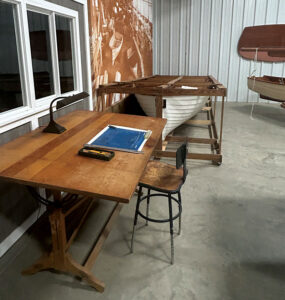 At the Maritime Museum of Sandusky, visitors can see a 1965 hardtop sleeper model, with a video of boating around Sandusky Bay — something Sampson calls “weatherproof boating.” The museum also showcases a 1955 runabout in its original crate, and the drafting table of Tony Giovagnoli, Lyman’s lead designer.
“It’s neat to see his workspace in the same condition as it was the day he retired in the 1970s,” Sampson said. “You can even see the ring from his coffee mug.”
In addition, the museum is home to an important Lyman restoration project: a rare prewar 24-foot Lyman Custom Runabout named Gull. Constructed between 1937 and 1940, it once belonged to Oscar Lay, vice president of Lay Brothers Fisheries. The boat features Lyman’s signature lapstrake hull — clinker-built with solid mahogany planks — and twin six-cylinder 103-horsepower Gray Marine Phantom engines. Classic Marine of Vickery, Ohio, is handling the restoration project.
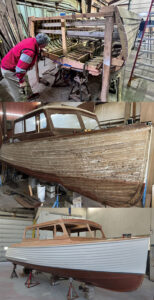 “We purchased the boat in July 2023, and lead donors Bob and Cindy Grimm funded the restoration,” Sampson said. “The previous owner is the third owner of the boat and sometimes pops over. They’re supportive and a great friend of the museum.” A “mid-restoration unveiling” of Gull took place at the Lakeside Wooden Boat Show in July. The museum is planning to have the fully restored boat in the water during the 2026 boating season.
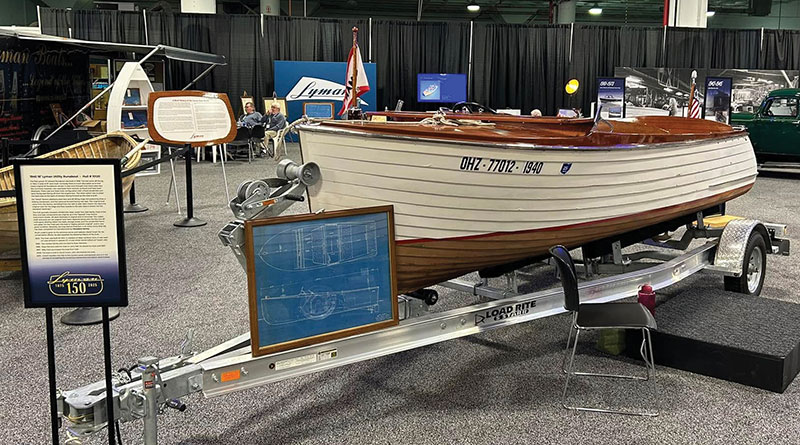
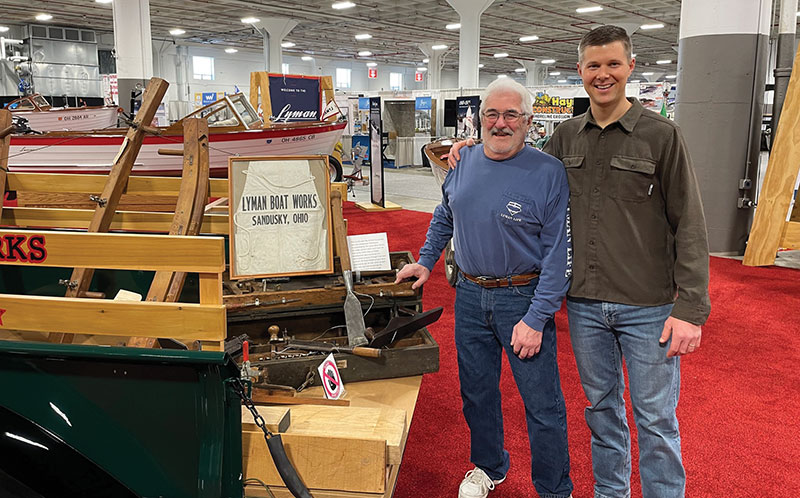
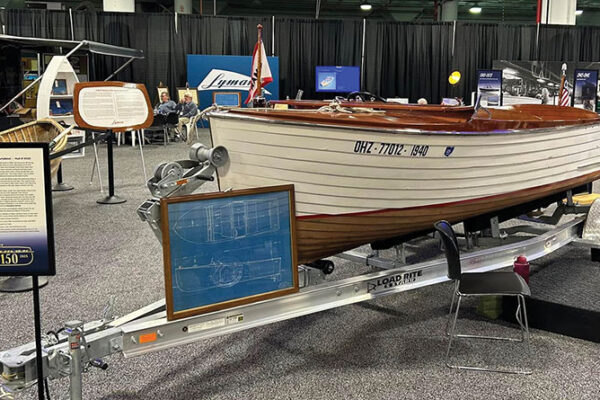
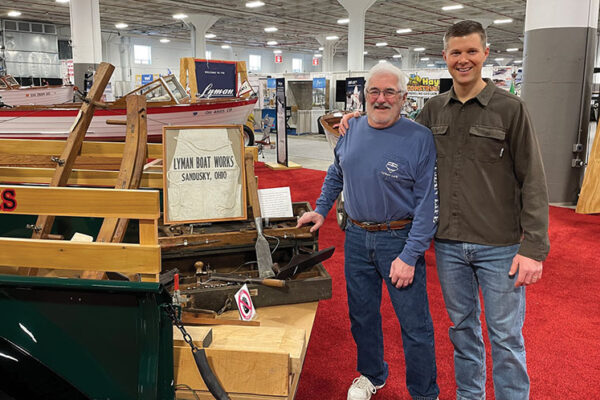
Koroknay has also been busy during Lyman’s 150th anniversary year, showcasing vintage boats, original blueprints and other artifacts at the Progressive Cleveland Boat Show in January and leading forums at the 61st Annual Antique Boat Show and Auction at the Antique Boat Museum in Clayton, NY in August. The museum dedicated its 2025 show to celebrating 150 years of Lyman Boats.
Today, Koroknay primarily focuses on parts, but he said he remains dedicated to his company’s mission: to keep the Lyman legend alive.
“Lyman is one of the oldest boat manufacturers in the United States, and its legacy is right up there with Chris-Craft,” he said, noting that Chris Smith was building small boats in 1874 but didn’t start his boatbuilding enterprise in Algonac, Michigan, until 1922. “These are the finest boats on the Great Lakes, with such high-quality craftsmanship and such a legendary ride.”
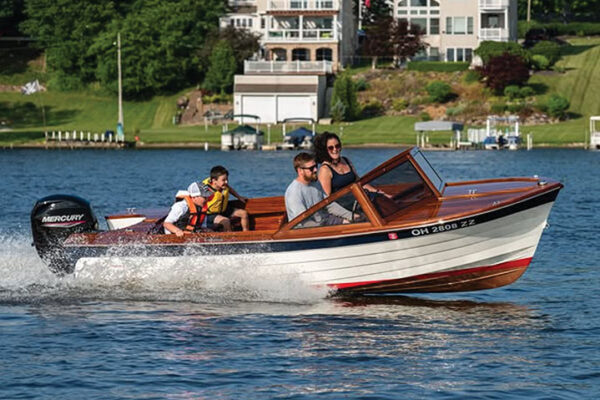
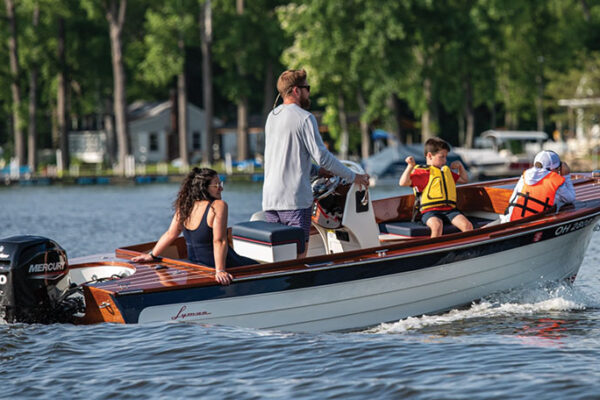
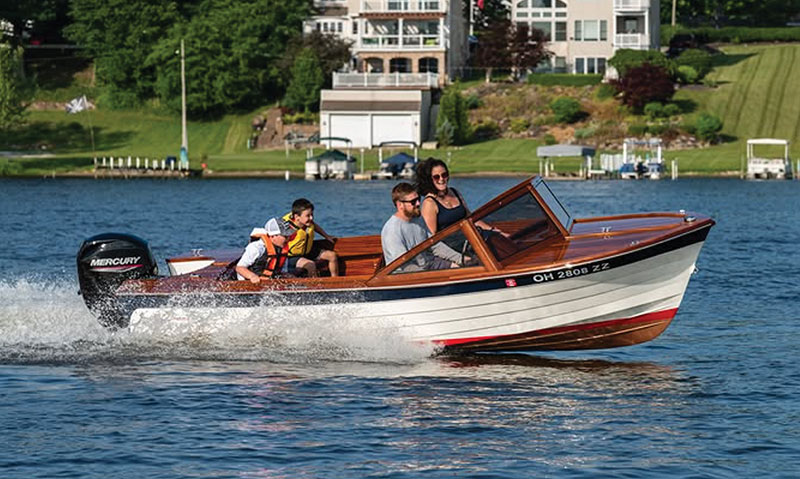
For Lyman Boats, the Roaring ’20s have returned — this time in the 2020s. Chippewa Boatworks, a subsidiary of Benchmark Craftsmen, is reviving the brand in Seville, Ohio.
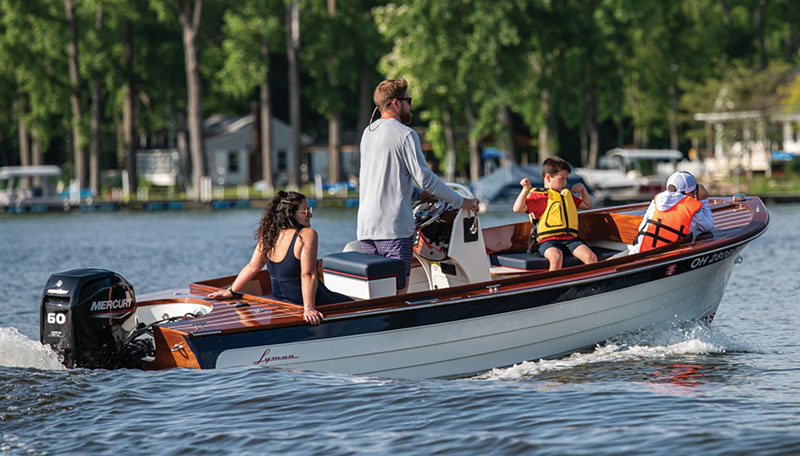
“They licensed the Lyman name from me, and are currently building a 16.5-foot hull in three different configurations, with a 23-foot model in development,” said Tom “Doc Lyman” Koroknay. “The design of these new boats is based on the classic Lyman designs, incorporating modern innovations in boatbuilding techniques. They’re all-wooden boats, just like the originals, and the craftsmanship is incredible.”
Current builds are powered by a 50-horsepower Mercury four-stroke engine, with a 70-horsepower option available.
To learn more about the next generation of Lyman Boats, visit chippewaboatworks.com or thelyman.com.
Chippewa Boatworks photos