Photos Courtesy of Sunstream
The ultimate dock upgrade.
It’s easy to understand why everyone loves boat lifts.
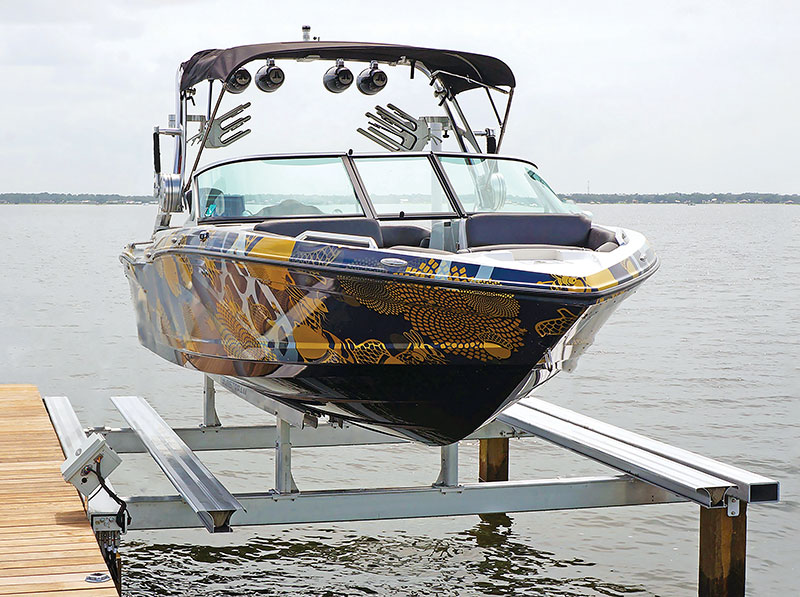
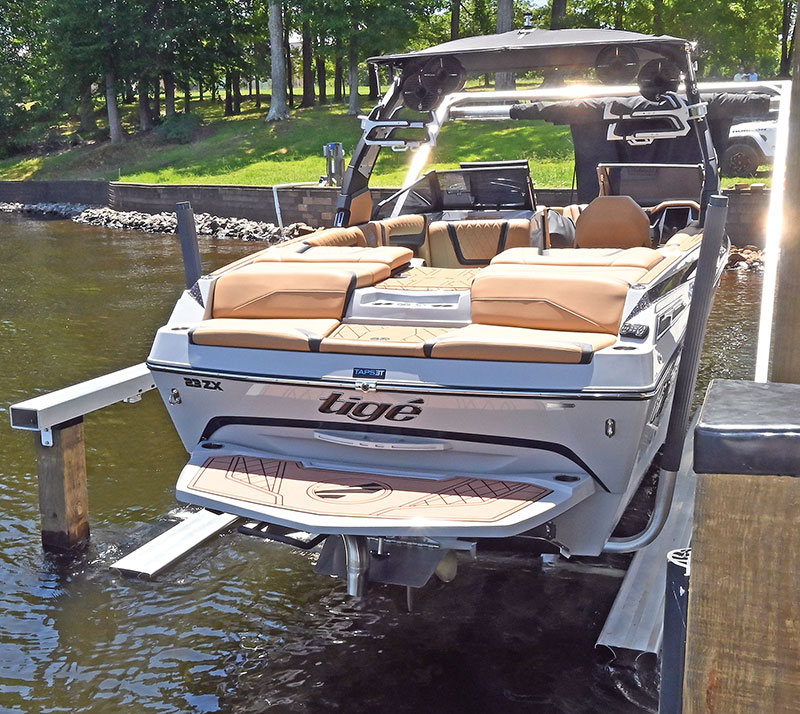
By raising the boat clear of the water when it’s not in use, lifts protect boats from waves and wakes more effectively than traditional fenders and dock whips can. Lifts completely eliminate the need for anti-fouling paint on hulls, and they utterly dispense with any concerns about the boat’s bottom becoming carpeted with algae or zebra mussels when it’s not in use. With the hull stowed clear of the water, lifts greatly reduce wear on submerged engine components through galvanic corrosion. And best of all, lifts represent one of the best theft deterrents out there, since it’s so much harder for thieves to steal a boat that’s stowed on a locked platform than one that’s simply tied the dock with a humble rope.
But boat lifts need power to operate, and that’s always been a bit of a barrier to their more widespread adoption. Understandably, some people simply aren’t comfortable with the idea of having a high voltage power feed anywhere near their dock. And for others, and especially owners of homes and cottages set in remote locations, simply having enough power to begin with is a problem in itself. A low-amperage or sketchy power feed that’s prone to periodic interruptions just won’t cut the mustard.
But a new series of boat lifts aim to change all of that.
A new way of thinking
Sunstream, the Seattle-area company that introduced the world’s first freestanding hydraulic boat lift back in 1996, says it makes two boat lifts designed expressly for locations with dodgy power supplies, or no power at all.
Described as the industry’s first rotary hydraulic boat lift, the company’s Helix-P uses a high-efficiency, battery-powered electric motor that’s kept constantly charged by a compact solar panel. Ditching traditional lift architecture for some impressive modern engineering, the Helix-P doesn’t require a high-power electrical feed, and can operate just fine in locations with no AC power whatsoever. That means there’s no fear of electrical fixtures getting wet at the dock, no expense of having to hire an electrician to install the device and no ongoing electricity bill to operate it.Because the Helix runs on a battery charged by a solar panel, it’s immune to even total power outages. It’s also well suited to remote sites like island cottages, which may not have power at all.
“The Helix-P lets us serve customers who otherwise wouldn’t be able to use a boat lift,” says Sunstream founder and CEO, Ken Hey. “The hydraulic design of the Helix-P is extremely energy efficient so it can run on a battery.
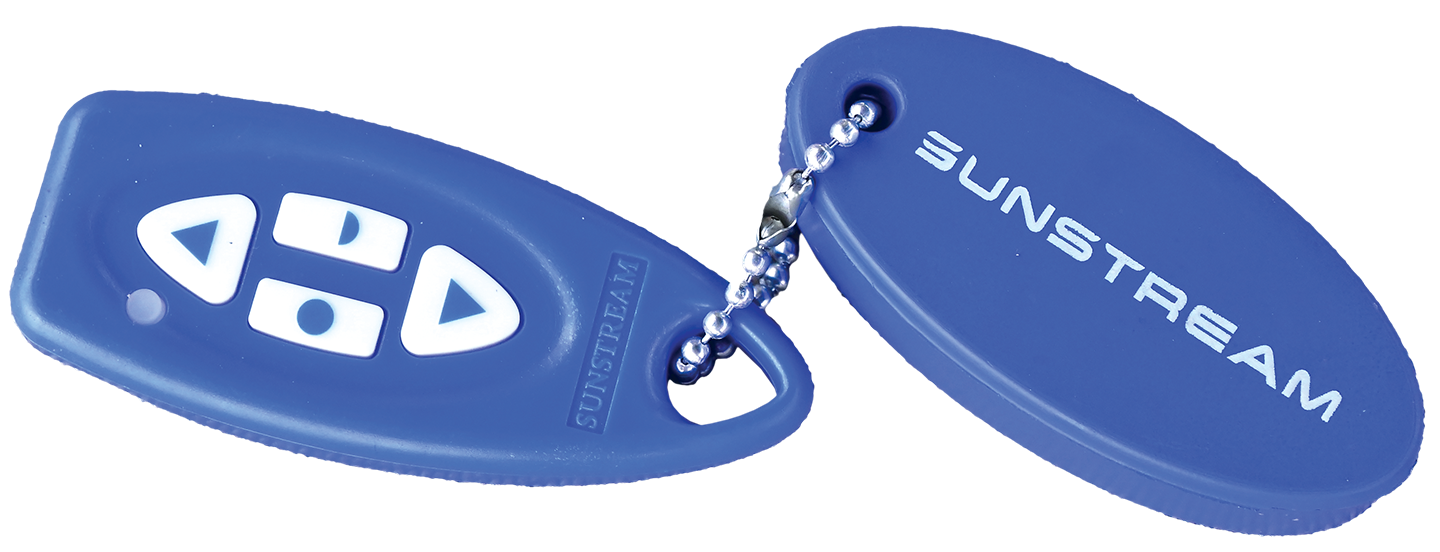
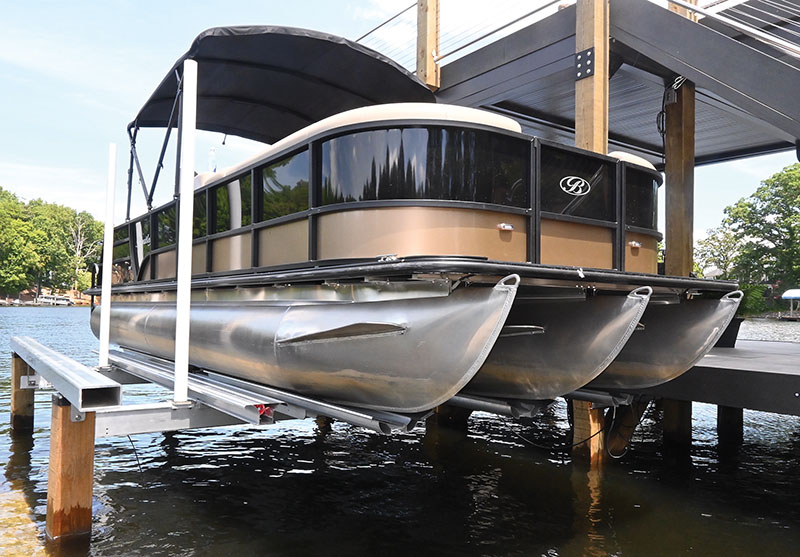
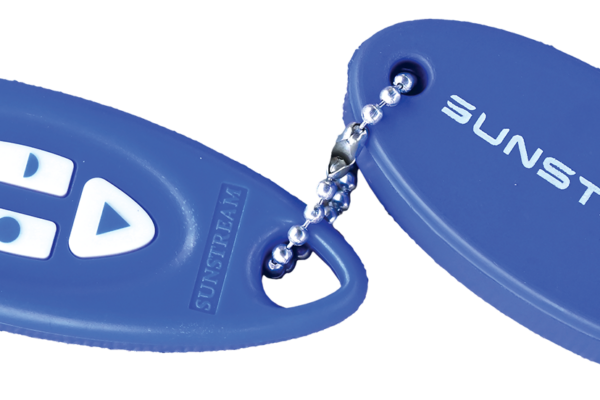
It’s also quiet, so you’re less likely to disturb anyone when heading out early in the morning, and far quicker than a traditional cable lift so you can raise or lower the boat in seconds rather than minutes.” The Helix-P comes in sizes to accommodate vessels up to 24,000 pounds, with larger models capable of handling vessels up to 48,000 pounds under development. Lifting height is up to a substantial 15 feet, so it works perfectly even on docks positioned along steeply sloping shorelines. The device is operated with a small, floating remote control that’s similar to an automotive key fob. Pushing its up or down keys raises or lowers the lift accordingly, making operation as simple as it gets.
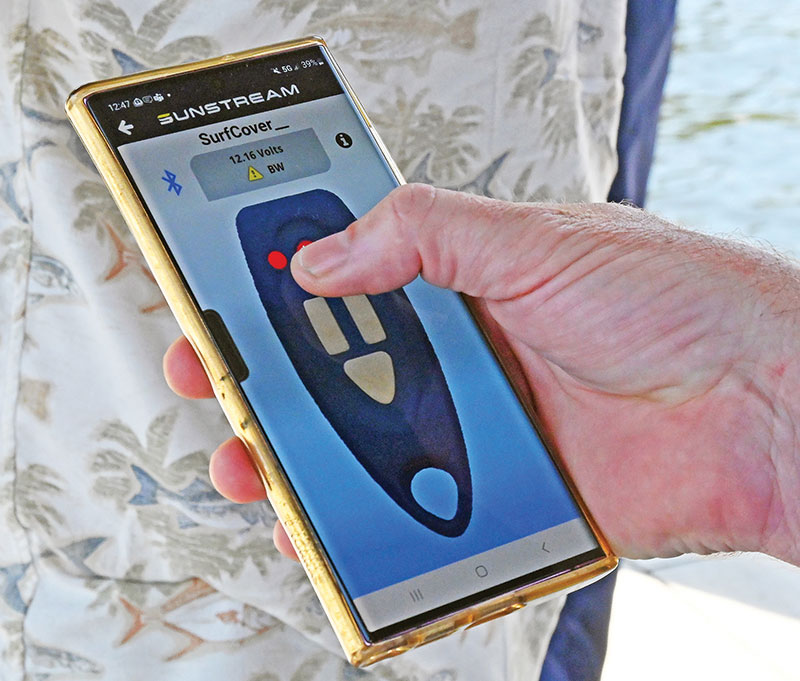
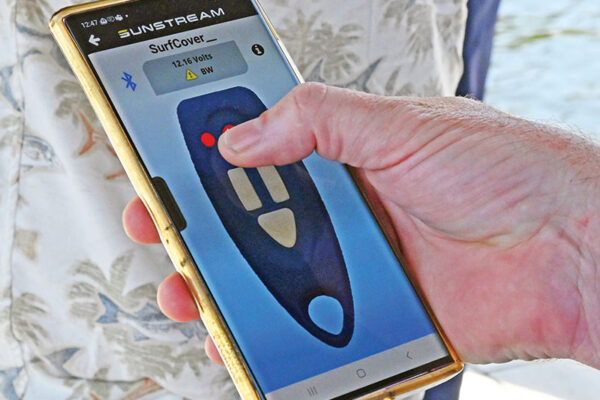
It’s also possible to operate the Helix-P from anywhere in the world by using a companion cell phone app. Halfway home and realise you forgot to raise the lift? As long as you have a cell signal, it’s no problem at all. An optional add-on can even automatically deploy an optional automatic boat cover to protect the vessel’s interior from weather and bird droppings while you’re away.
Sunstream
sunstreamboatlifts.com
Bar none
Joining the Helix-P is Sunstream’s new LiftBar boat lift, which adds a regenerative braking-like power management capability similar to that used in electric cars. The LiftBar only uses battery power to raise the boat, allowing gravity to lower it. As it descends, the built-in regenerative braking feature captures energy, helping to further recharge the unit’s battery.
The LiftBar also differs in using planetary gears and an integral screw jack housed inside an aluminum tube to provide the lifting power, rather than the traditional cables. This not only reduces its overall size, says Hey, it eliminates the need for vertical posts, which some home or cottage owners may find unattractive. It also contributes to the LiftBar being quick and almost completely silent in operation.
Available in five sizes, the LiftBar can accommodate vessels up to a healthy 32,000 pounds. A powerful 12 horsepower electric motor allows it to lower or raise boats at a rate of 10 feet per minute — far more quickly than traditional cable lifts. And like the Helix-P, the LiftBar can run solely on a battery charged by a solar panel. What’s more, it works with both fixed and floating docks.
By holding parked vessels clear of the water, lifts protect boats from damage and theft — all while keeping them ready for use in minutes. By eliminating the cost and safety concerns of having a high voltage power feed at the water, next-generation solar lifts represent the ultimate way of protecting vessels from yachts to personal watercraft, and enhance our time at the water.