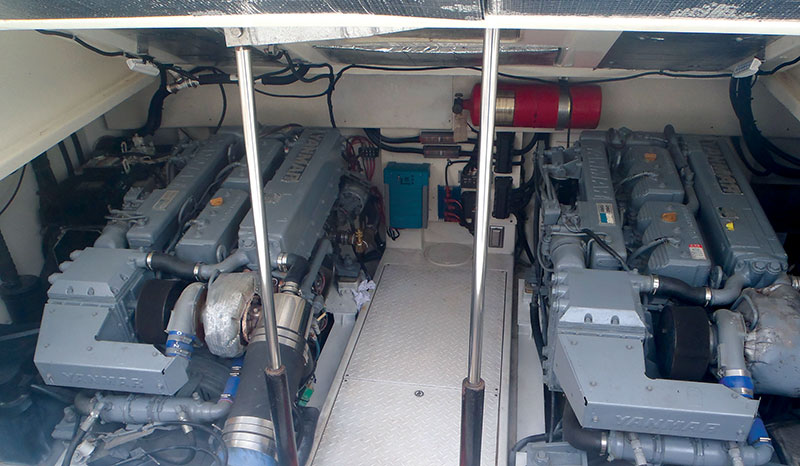
How to inspect the engine during the boat-buying process.
by Capt. Frank Lanier
The boat buying process can be an exhilarating, yet stressful experience — especially when it comes to deciding which ones are worthy of a closer look. Before spending your hard-earned money on a marine survey, it pays to eliminate the boats with major problems, such as potentially expensive engine issues. The engine is the single most expensive piece of gear onboard — a hard lesson to learn after purchasing that deal of a lifetime and finding out a rebuild or replacement is required.
Here’s how to weed out the unworthy when searching for your dreamboat.
What to check:
Start by looking for obvious problems such as leaks, excessive rust, broken components, etc.
Check coolant level and properties. Lack of antifreeze should raise red flags (possible leaks), as should coolant that’s gelled, has a rusty color or an unusual amount of suspended solids floating around in it.
Pull the dipstick and check the oil. A slightly low level might be okay, but higher than normal levels could be a sign of trouble, especially when the oil is milky or frothy (an indication that water, antifreeze or transmission fluid is present), which could mean anything from blown gaskets to a cracked block.
Smell the oil (burnt-smelling oil indicates over-heating), then wipe the dipstick on a clean white cloth or napkin. Oil that’s thick initially but then starts to spread out over the cloth indicates fuel contamination.
How difficult is the engine to start? Depending on the engine (gas or diesel), hard starting could be caused by anything from weak batteries to faulty plugs or a bad fuel pump.
How does the engine sound? Does it run smoothly at idle and under load, or does it idle unevenly and stall out when placed in gear? Rough running can be caused by anything from clogged fuel filters to compression problems. Note the engine idle RPM. If it’s greater than 800, it may have been set high to mask idling problems.
Ask that the engine be revved up to the 2,000-RPM range (unloaded) to see how smooth the throttles operate and how the engine itself responds, noting any hesitation or bucking when backed down.
While still firmly tied to the dock, ask that the vessel be placed in forward, neutral and reverse to check shifting, once again noting any unusual noises, such as hard shifting or chattering.
Verify proper oil pressure and operating temperature. Low oil pressure could be due to anything from faulty oil pumps to cam bearing failure. High water temperatures may be something as simple as a bad impeller, but could also be caused by corroded manifolds or exhaust risers.
Read the smoke signals — a well-maintained engine may smoke when initially cranked or while idling, but not when warmed up or under load. Smoke color can also indicate problems (blue for burning oil, black for incomplete combustion, etc.).
Come on and take a free ride:
Ask the seller to take you for a short test ride. Once underway, record the oil pressure, coolant temperature, volts, gearbox oil pressure, etc., for the engine during various speeds (slow throttle, half, full and cruising speed).
If you have a laser thermometer and are comfortable around engines, check the temperature of the engine oil pan. It should be between 190 to 220 degrees (depending on the engine). Higher pan oil temps could indicate a fouled oil cooler, something you may be able to verify by comparing oil temps at the oil cooler intake and discharge. Temperatures should differ significantly if they’re working properly. Sweep exhaust manifolds and risers for hot and cold spots. Manifold temps should be within 10% or so of each other, while riser temps should be fairly close to the cooled part of the manifolds. Hot spots noted in any of the above could indicate blockage.
While cruising, re-inspect all shaft logs, stuffing boxes and rudder stuffing tubes for leaks, and check the engine shaft for excessive vibration or wobble.
Note the engine manufacturer’s RPM at WOT, then ask that it be run at full throttle for a bit to verify. The engine RPM at WOT should be within 100 to 200 RPM of the manufacturer’s stated WOT. Higher than the listed max RPM could mean the prop is too small, while a slower RPM could indicate a prop that’s too large in pitch, diameter or both. While running at maximum speed, verify the vessel’s actual speed matches the advertised speed. This is also the time to look for any unusual sights and sounds, such as a burning smell, visible smoke, excessive vibration, etc.
Final thoughts:
Remember that hour meters mean nothing (they can be swapped out by an unscrupulous seller), and that an owner should eagerly provide invoices if claiming overhauls or major work has been done. Engines are a big-ticket item, so always weigh the cost of repair or replacement versus walking away.
All photos Capt. Frank Lanier
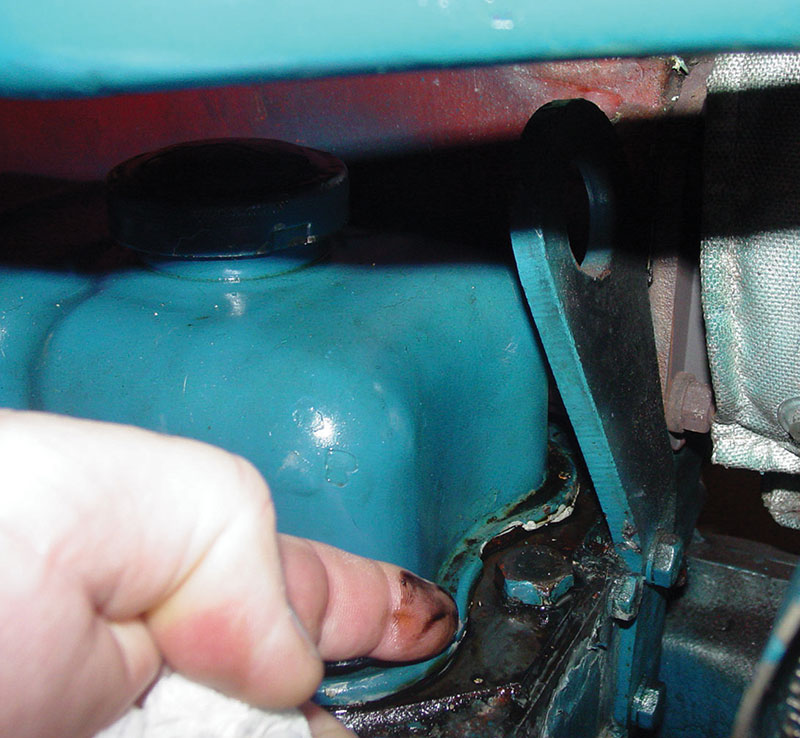
Valve cover oil leak
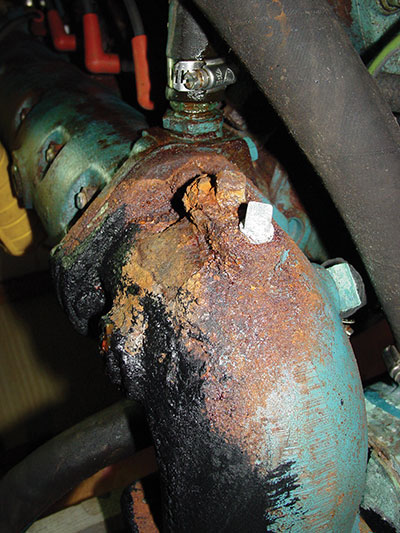
Corroded exhaust riser

CAPT. FRANK LANIER is an award-winner journalist, boat maintenance guru and owner of Capt. F.K. Lanier & Associates, Marine Surveyors and Consultants. Check out his YouTube channel “Everything Boats with Capt. Frank Lanier.” CAPTFKLANIER.COM