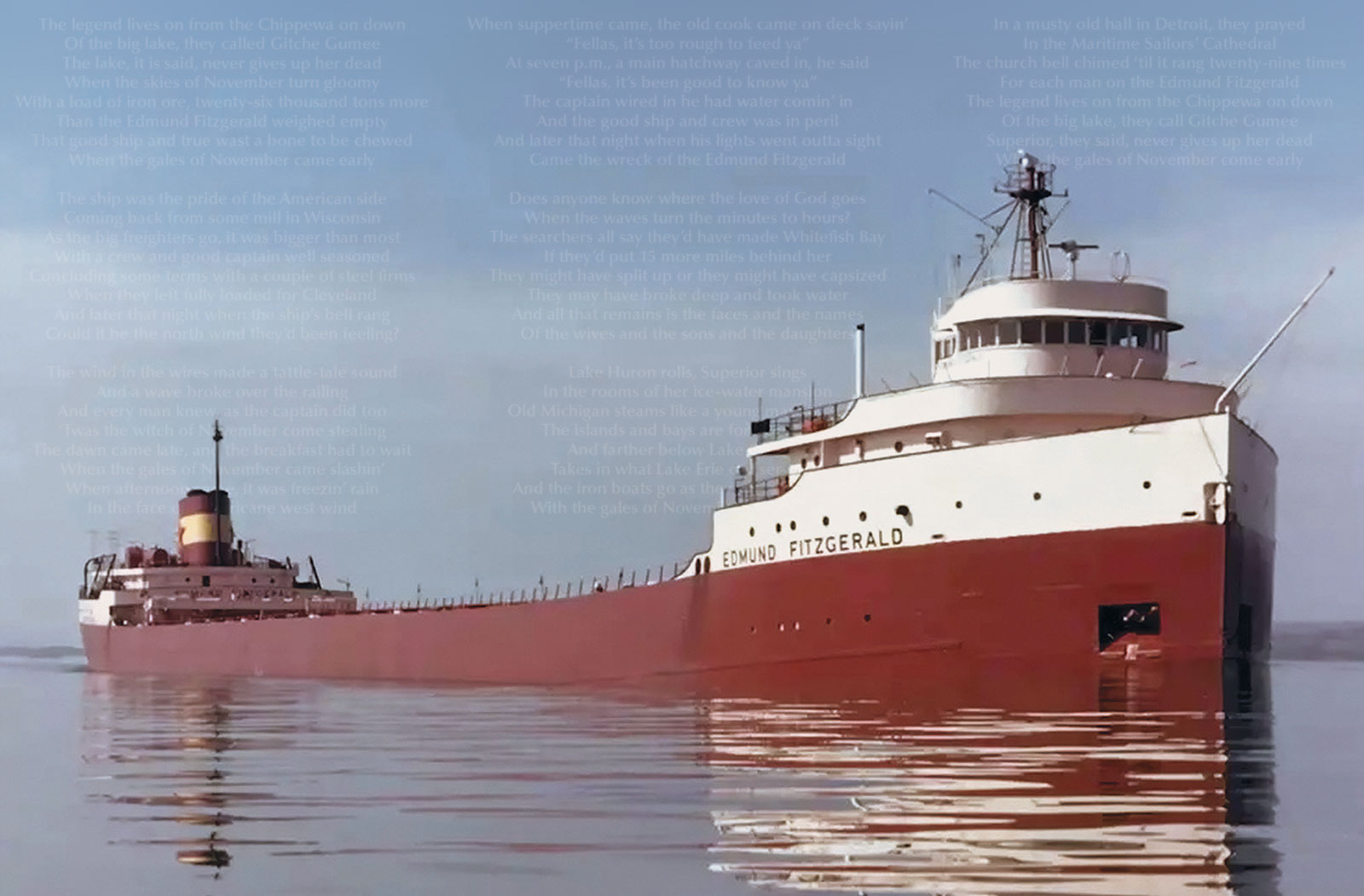
Commemorating the 50th Anniversary of the wreck of the Edmund Fitzgerald.
The motor vessel Saunter slipped out of harbor at 4 a.m. on July 26, 2025, her bow pointed into the vast darkness of Lake Superior. After two and a half hours, the captain called passengers to the bridge.
They had arrived at the final resting place of the Edmund Fitzgerald.
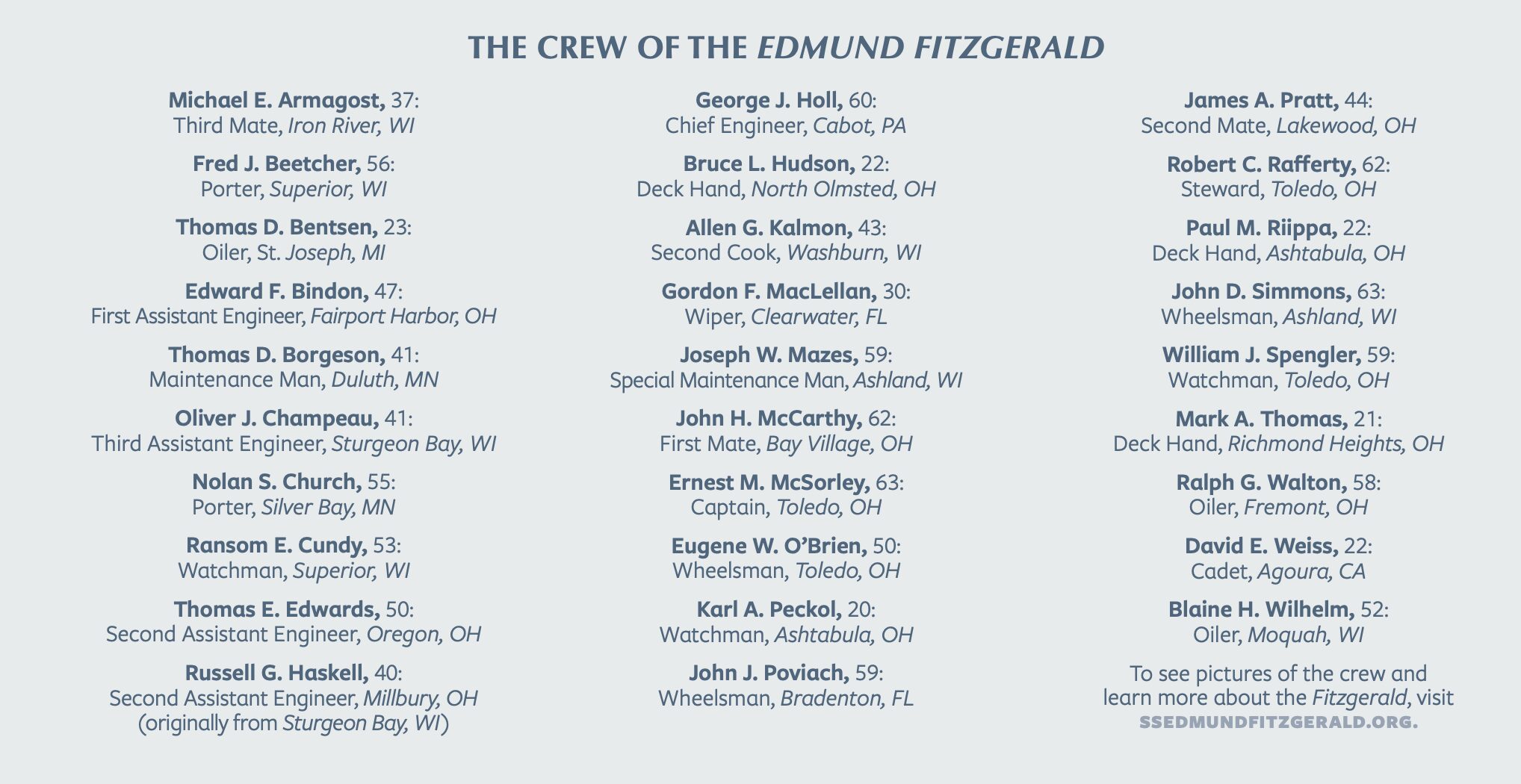
No one spoke. No one raised a camera. Instead, they listened to the names of the 29 husbands, fathers, sons and brothers who were lost on one violent November night a half-century ago.
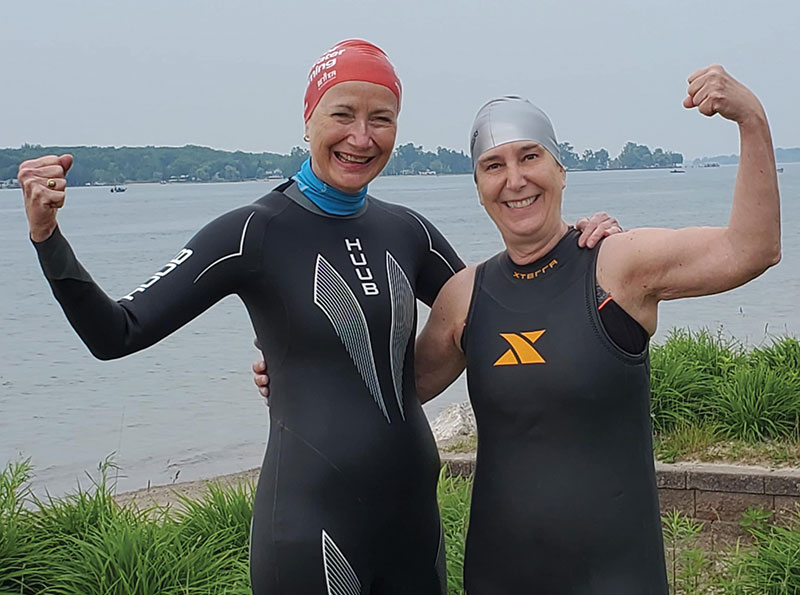
The ship’s bell rang 29 times, and white roses drifted across the choppy surface of the lake. Then, for Tammy Lenarz Carruth and three fellow swimmers, the moment of remembrance gave way to a moment of action, long in the making.
“As we slid off the back of the boat in over 500 feet of water, I was struck by what lay beneath us,” recalls Carruth, of Montevideo, Minnesota. “It was a somber and sacred time.”
One by one, the swimmers glided away into the bone-chilling, 53-degree lake. Each carrying a single taconite pellet, they set a course for Whitefish Bay, 17 miles away — the safe harbor that the great ore carrier never reached.
There, they would meet the next group of swimmers, the second of 17 relay stages in the Edmund Fitzgerald Memorial Swim. Over four weeks, they would complete the Fitzgerald’s final voyage, delivering their taconite pellets to Detroit.
Through their efforts, the swimmers raised funds for the Great Lakes Shipwreck Historical Society to preserve the Whitefish Point Light Station — the same lighthouse that went dark due to a power outage the night the mighty Fitz went down.
LIVING HISTORY
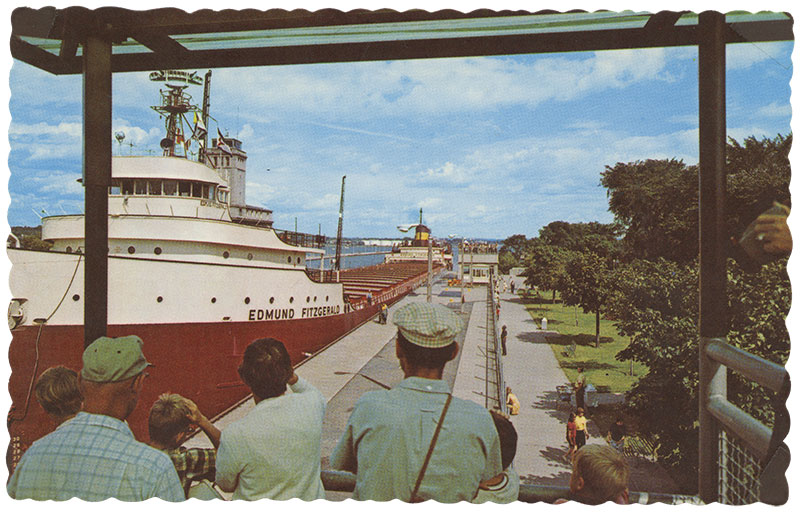
On Sunday afternoon, November 9, 1975, the Edmund Fitzgerald departed Superior, Wisconsin, with a full load of taconite pellets bound for Detroit. The next day, November 10, the 729-foot ore carrier vanished in a storm on Lake Superior.
As his ship battled monstrous seas topping 25 feet and nearly hurricane-force winds, Captain Ernest M. McSorley, 63, reported taking on water, developing a list and losing radar.
At 7:10 p.m., the Fitzgerald dropped from the radar screen of the Arthur M. Anderson, which was running 10 to 15 miles behind her.
In the months that followed, the wreck became more than a headline. Deeply moved, Canadian singer Gordon Lightfoot penned a ballad that became a cultural touchstone.
Released in 1976, “The Wreck of the Edmund Fitzgerald” rose to No. 2 on the Billboard charts and earned a Grammy nomination, etching the ship and the gales of November into the public imagination.
Launched in 1958 as the largest and fastest freighter on the Great Lakes, the “Queen of the Lakes” had been the flagship of Columbia Transportation’s fleet. And she was gone, lost with all hands.
Yet her crew live on — in the memories of those who knew and loved them, in the stories of shipmates who once worked alongside them, and in the hearts of those who searched or kept vigil in the hours and days after the wreck.
For everyone touched by this tragedy, the Edmund Fitzgerald does not belong to the past.
(Main photo) credit NOAA/Bob Campbell
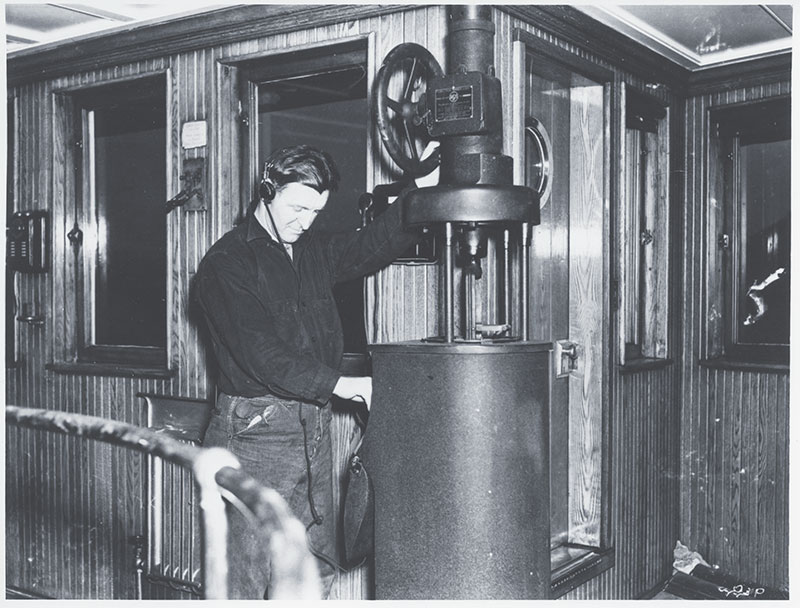
2nd Mate McSorley on another ship in 1943 / Bowling Green State University
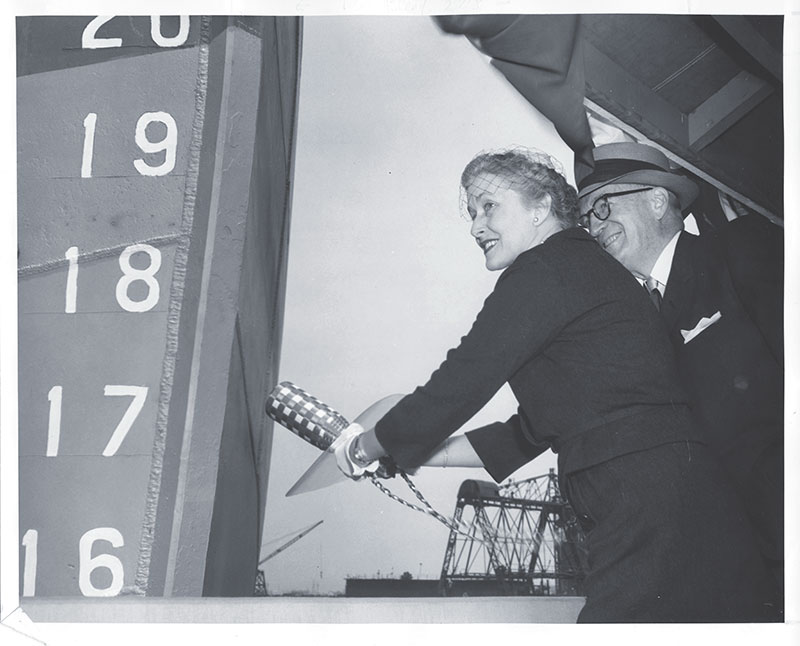
Christine and Edmund Fitzgerald christen the Edmund Fitzgerald in 1958 / Bowling Green State University

Captain Janet Provost Cummings and Captain Fred D. Leete III escort the bell of the Edmund Fitzgerald to the transfer ceremony in Sault Ste. Marie, MI/ Bowling Green State University
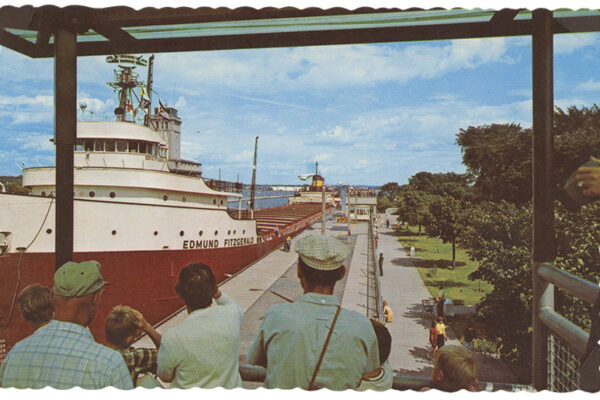
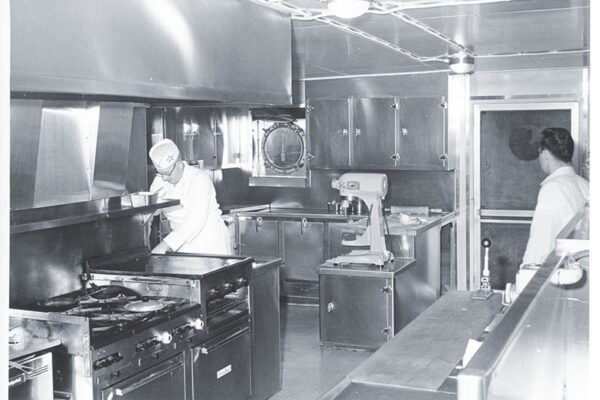
Top two photos credit Bowling Green State University
SWIMMING FOR LOVED ONES
The 411-mile Edmund Fitzgerald Memorial Swim kicked off at the wreck site on Saturday, July 26, 2025, and concluded at the Detroit Yacht Club on Wednesday, August 27, 2025.
Among the swimmers was Sheila Fitzgerald of London, England — a distant cousin of the ship’s namesake. Her Stage 16 team swam the St. Clair River.
“We had five freighters pass us during the swim,” she remembers. “They saluted us with their horns. That was a moving reminder of why we were there.”
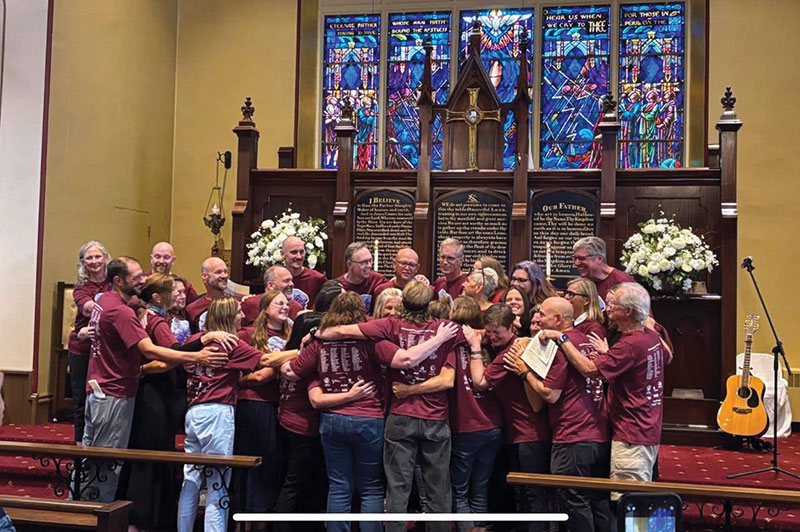
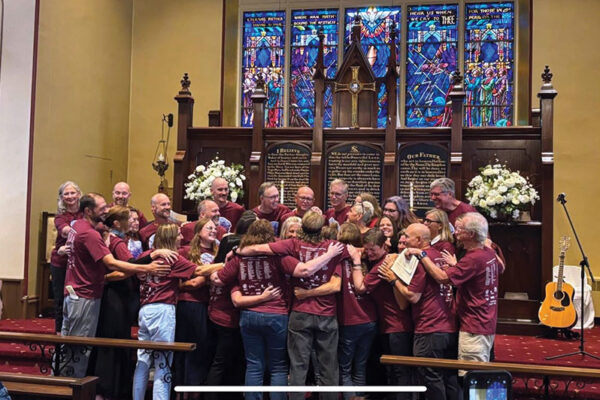
After delivering their taconite pellets to Detroit Mayor Mike Duggan, the teams gathered together on August 28 for a memorial service at the celebrated Mariners’ Church of Detroit, whose history is “forever intertwined with the story of the Edmund Fitzgerald,” according to Rev. Todd Meyer, the church’s pastor. As it does every year on the anniversary of the wreck, the church bell rang 29 times for each man on the ship.
Michael Bell of Plymouth, Michigan, swam two stages. He approached the event as just a swimming challenge at first, but as time went on, something changed.
“I thought about our family trips to the Great Lakes Shipwreck Museum at Whitefish Point, the stories my grandfather told me about his time working on a Great Lakes freighter, and the lives lost,” he says. “I realized I wasn’t doing the event for myself any longer.”
He says Stage 8 delivered cold air, strong headwinds and significant waves. Surprisingly, he felt mentally strong while dealing with the rough conditions.
“It was like looking into heaven,” he says of swimming backstroke under white clouds and a blue sky. “The cold and waves were brutal, but I was thinking about… friends and family that had passed away. It was like they were helping me along.”
Tammy Carruth notes that it’s important to recognize that 29 men died in the sinking, and they should not be forgotten. She swam for Fitzgerald deckhand Paul Riippa, 22, of Ashtabula, Ohio.
When she asked for his family’s permission, Paul’s sister, Elaine, shared that he had taken some time off from college after their father passed away. He took a position as a deckhand on the Fitzgerald to earn money.
“Swimming in Stage 1 was a special honor that we will never forget,” Carruth says. “There were a handful of family members of the Edmund Fitzgerald mariners on the beach, waiting for us to reach shore. We swam for them and their loved ones.”
COMMEMORATING 50 YEARS
The swimmers aren’t alone with their audacious, living tribute. This year, the Great Lakes region has become a stage for honoring the Fitzgerald’s crew. From Whitefish Point to Detroit to Toledo, institutions and communities are gathering to commemorate the 50th anniversary of the wreck — each a reminder that the story continues to reverberate well into the 21st century.
The National Museum of the Great Lakes in Toledo is planning a massive 50th anniversary weekend on November 7 – 10, 2025, offering Col. James M. Schoonmaker ship tours, a beer launch, a documentary screening, a guest panel, a memorial ceremony and a tribute concert with Meredith Moon, Lightfoot’s daughter. She quickly agreed to perform during the anniversary weekend, noting the song had been an important emotional outpouring for her father, who passed away in 2023.
Visitors will also be able to view artifacts in the museum’s collection, including one of the Fitzgerald’s two inflatable life rafts and a wooden sounding board from a ballast tank.
“It’s cracked in half,” says Chris Gillcrist, the museum’s director emeritus. “That shows the incredible destructive force of the accident.”
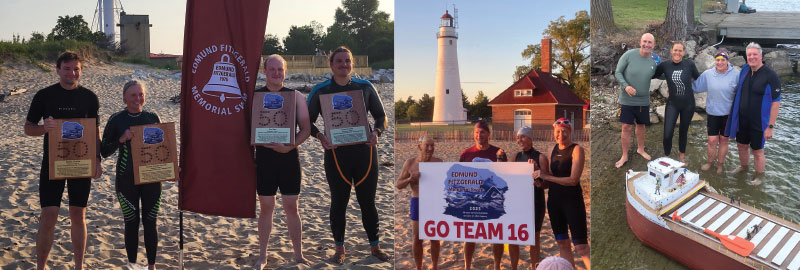
7 teams participated in the Edmund Fitzgerald Memorial Swim / Credit Edmund Fitzgerald Memorial Swim
While the weekend will explore the Fitzgerald’s story from every angle, the museum is dedicated to honoring the human beings who were the soul of the ship.
“So much emphasis has always been placed on why the Fitz sank,” Gillcrist says. “There are three major positions, but the best we’ll ever have is a probable cause.”
Journalist and author John U. Bacon, whose new book “The Gales of November” was released this fall, agreed.
“We’ll probably never know what happened,” he says. “Bruce Hudson’s mom, Ruth, probably said it best: ‘Only 30 know what happened — 29 men and God.’”
In 1977, the U.S. Coast Guard said the Edmund Fitzgerald likely sank after taking on water through unsecured or ineffective hatch covers. A year later, the National Transportation Safety Board said the Fitz likely suffered a catastrophic failure of those covers, leading to massive cargo hold flooding and a breakup when the bow struck the lake bed.
The Lake Carriers’ Association and Society of Naval Architects and Marine Engineers had their own theory. Their report suggested the ship bottomed out on a shoal or reef, perhaps Six Fathom Shoal near Caribou Island.
No matter what happened, the ship lies broken in two on the bottom of Lake Superior at a depth of 530 feet, where she remains a protected grave site.
“Let’s focus on the people and the lives they lived,” Gillcrist says. “Let’s not let the last five minutes be the sum total of their lives.”
He says the families of the Fitzgerald crew have been very forthcoming, despite their grief. The museum team is also in contact with friends and colleagues of the crew, because the tragedy aff ected many people beyond the immediate families.
Working together, they helped uncover the fact that the father of deckhand Mark A. Thomas of Richmond Heights, Ohio, was in-house counsel for Oglebay Norton, which managed the Columbia Transportation fleet for the Northwestern Mutual Life Insurance Company. In fact, he got his son the deckhand job.
“He had to handle the legal work related to all 29 men, including his own son, which speaks to the human tragedy beyond the Fitz,” Gillcrist says. “Storytelling of the crew and those associated with the boat should be the future of Fitzgerald research.”
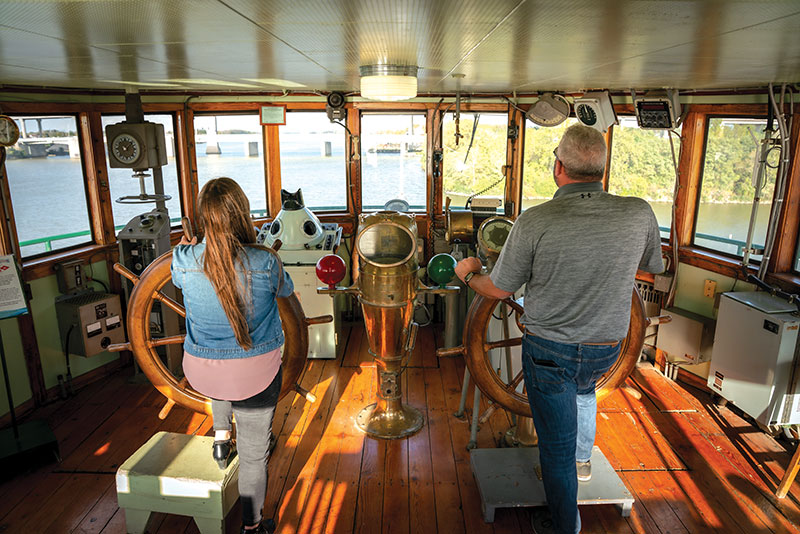
He is looking forward to welcoming guests to the 50th anniversary weekend, noting that the Schoonmaker offers opportunities to experience what life aboard the Fitzgerald might have felt like for her crew.
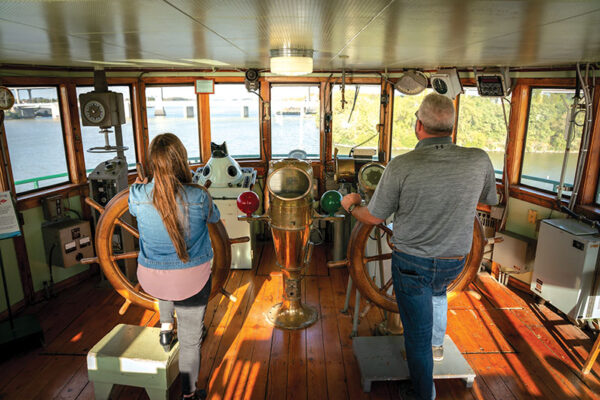
“The ships were built 47 years apart, but until 1980, freighters all were basically the same,” he says. “You can see and touch hatch clamps, see the ballast pumps that could pump 7,500 gallons per minute, and stand in the pilothouse, imagining how high a 30-foot wave might reach.”
In addition, the Dossin Great Lakes Museum in Detroit has scheduled two days of anniversary activities on November 9 – 10, including a commemorative maritime brunch, the premiere of a new Fitzgerald film by the Detroit Historical Society, a book talk with Thomas M. Nelson, author of “Wrecked: The Edmund Fitzgerald and the Sinking of the American Economy,” and the 26th Annual Lost Mariners Remembrance.
The Great Lakes Shipwreck Museum at Whitefish Point, Michigan, will recognize the memorial swimmers at its 50th Anniversary special event on November 10, and the same day, the annual Edmund Fitzgerald Memorial Beacon Lighting will take place at Split Rock Lighthouse on Lake Superior’s north shore.
NEW RELEASE: “THE GALES OF NOVEMBER”
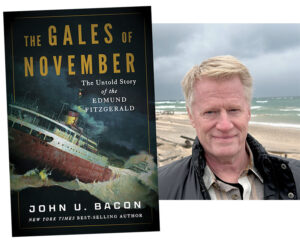 On October 7, award-winning journalist and author John U. Bacon released “The Gales of November,” a new book that he and the publisher call the definitive account of the Edmund Fitzgerald.
A Michigan native, Bacon grew up swimming, sailing and boating on all five Great Lakes. Like many in the region, he has long been fascinated by the Fitz.
“I was 11 years old when the ship went down,” he recalls. “I still remember it — and the haunting feeling it gave me whenever I looked out across any of the Great Lakes. Once you’ve caught the bug, it’s hard to shake.”
While the Fitzgerald’s sinking has inspired multiple theories and countless retellings, Bacon set out to write a book that would bring a fresh perspective.
“I knew I wanted to tell people about the Great Lakes, and how important shipping is,” he says. “But my main goal was to humanize the 29 men who went down with the ship.
“For that, fortunately, the families were willing to talk with me about their fathers, their uncles, their brothers, their cousins, and in a couple cases, their boyfriends,” he continues. “You won’t find their stories anywhere else, so I’m greatly appreciative of their help and trust. I think the readers will be, too.”
To learn more about Bacon and to order the book, visit JOHNUBACON.COM.
AN ENDURING LEGACY
Author John U. Bacon says the Fitzgerald still haunts us because of Lightfoot’s song, the mystery and the hidden romance of a life few understand.
“As John Tanner (former superintendent of the Great Lakes Maritime Academy, which had two sailors on the Fitzgerald) told me,
‘We know the farmer, the fisherman and the factory worker, but no one knows the sailor,’” he says. “The Great Lakes are bigger and more dangerous than most people realize, Great Lakes shipping is far more important than we know, [and] we depend on these sailors more than we think.”
For many of the Fitzgerald family members, the details of why the ship sank matter less than what has come since. Debbie Champeau, daughter of wheelsman Oliver “Buck” Champeau, told Bacon that someone once asked her, “Don’t you want to know the reasons why it went down?” Her response:
“None of us do. Not anymore.”
In the half-century since the Edmund Fitzgerald went down, the Great Lakes have not claimed a single commercial ship. It is by far the longest stretch of safety in four centuries of navigation, and Bacon credits the reforms that followed the tragedy — better forecasting, communication and decision-making. Families of the 29 men know this, and they take pride in it.
“As devastating as it was to lose their fathers, their uncles, their brothers, their cousins and their boyfriends, they are acutely aware that no commercial ships have suff ered a similar fate since,” Bacon says. “The immeasurable sacrifices of that day were not made in vain.”
50th Anniversary Resources
Detroit Historical Society/ Dossin Great Lakes Museum
DETROITHISTORICAL.ORG
Edmund Fitzgerald Memorial Swim
EDMUNDFITZGERALDSWIM.ORG
Great Lakes Shipwreck Museum
SHIPWRECKMUSEUM.COM
National Museum of the Great Lakes
NMGL.ORG
Split Rock Lighthouse
MNHS.ORG/SPLITROCK