
Shakespeare offers many VHF antenna options for your boat.
Story and photos by Glenn Hayes
A common mistake many boaters make is thinking that their VHF antenna is a simple piece of equipment that doesn’t require much thought, with little difference between models.
Although seemingly simple in design, there is, in fact, a wide array of VHF antennas available to those plying the waterways, and the materials they are made of can significantly affect their performance. Although VHF antennas may look similar on the outside, it’s what is inside that gives them their true worth. Knowing what to look for can make a huge difference when that important radio communication is needed.
Prioritize the antenna
It seems common practice to opt for a full-featured VHF radio with all the bells and whistles, then pair it with the cheapest antenna available. By doing so, you will never get the best performance from your radio, and as a piece of safety equipment aboard, it should perform to the best of its abilities. If working with a tight budget, the average boater would be better served spending less on the radio itself and more on the antenna.
VHF radios used for recreational boating transmit at the same maximum power level of 25 watts; this is true for $100 VHFs and $1,000 VHF radios. What a boater pays for with the more expensive radios is higher-quality components and added features.
Options from Shakespeare
Shakespeare is a well-known manufacturer of VHF antennas and is the most common brand aboard recreational vessels in the U.S. It carries a full range of antennas, from inexpensive models suitable for runabouts to high-end engineering masterpieces for superyachts.
Classic Series: Its Classic Series of antennas includes the lower-cost value models, which can be made up of a thin, hollow fiberglass tube that tapers to the top. The elements used in these antennas are basic brass and copper and are held in place by foam collars within the tube. On other, less expensive antennas, the element within the fiberglass casing may be the coaxial cable that extends to the radio; the shielding is stripped away, leaving the core exposed within the fiberglass. These types of antennas obviously do not transmit the same way as a better antenna would with solid copper or brass elements within the fiberglass housing or radome. Also, as time goes on, the cable drops within the antenna tube; although the tubes may be 8 feet long, the cable within them can drop, making the antenna effectively shorter, lessening its range. The coaxial cable on the Shakespeare Classic Series is RG58 and comes in a standard length of 15 feet. The Classic Series antennas come with a 2-year warranty.
Galaxy Series: Stepping up in performance and features is the Galaxy Series. These antennas feature a stainless base or ferrule and a thicker and better transmitting 20-foot coaxial cable (RG-8X low-loss coaxial). They are also made with a thicker fiberglass shell with a smooth finish and a UV coating. Inside, they have twin copper elements that run the full length of the antenna, improving signal transmission and reception. Holding a Galaxy antenna in one hand and a Classic of the same length, you can feel the heft of the Galaxy build. These additional features increase the price, but the performance boost is notable. Galaxy antennas offer a 5-year warranty.
Phase III Series: Shakespeare now offers a new line of antennas called the Phase III Series. These antennas are built extra rugged and stand up well against pounding from high speeds and strong winds. The antenna housing is extra sturdy, and the multiple internal silver-plated elements are well-supported by a special spacer system. The stainless ferrule is strong, indexed and designed not to work loose from the mount. It also has a quick-disconnect base, making removal easy. These high-end antennas offer an 8-year warranty.
Other options: Shakespeare offers another line of antennas that use a similar disconnect system to the Phase III antennas, but with a more value-oriented build and without the high performance obtained from the more expensive antenna line. They even offer a Dorsal (looks like a shark-fin) antenna for small craft where a regular antenna may not fit.
Shakespeare also recently introduced the Comm-Lite. This antenna is built similarly to the Classic line, but it lights up. Using an app, users can control colors and presets, and even have the antenna pulse to the music onboard.
If you’re in the market for a VHF antenna, it’s crucial to determine the performance you need. Spending a little more on the antenna and considering features like dB gain, build quality, high-quality connectors and performance could mean the difference between being heard and just talking to yourself.
(Main image) Superyacht VHF performance can be had with Shakespeare’s Galaxy antennas.
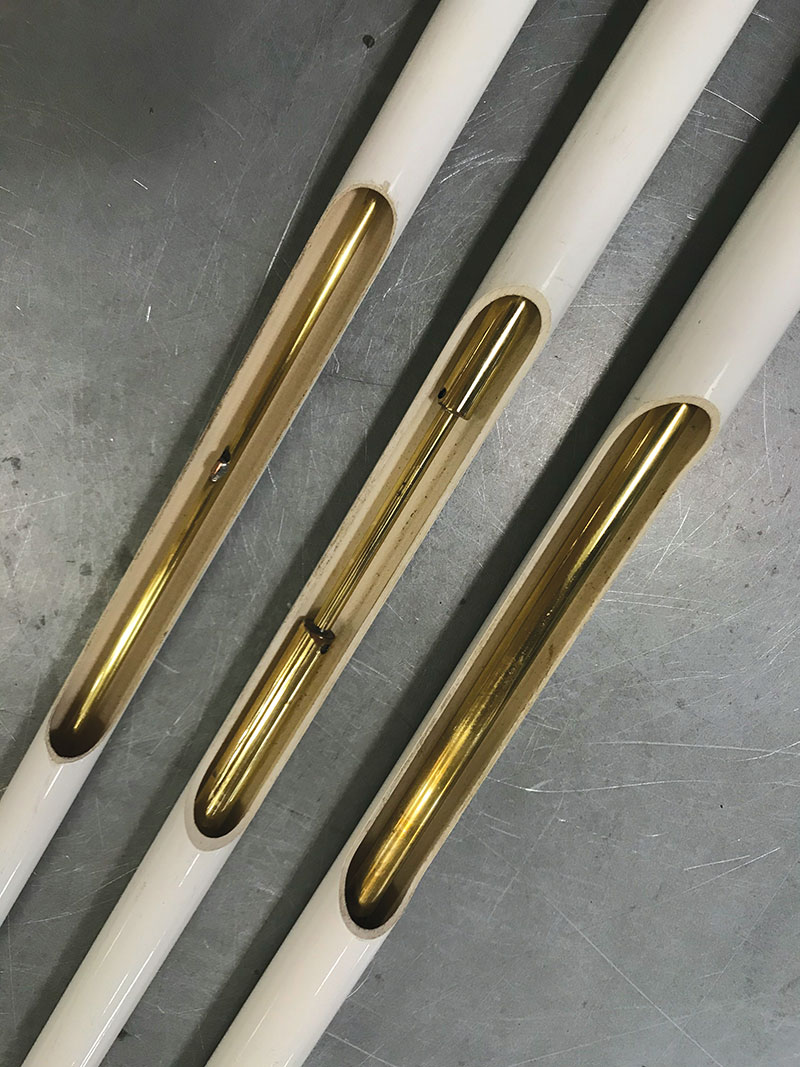
The internal elements of a VHF antenna will define its performance level

GLENN HAYES is a marine writer and photographer whose background in the marine industry and in marine electronics spans almost three decades and many thousands of miles at sea traveling the world. He can be reached at HAYESSTUDIOS.COM