Selecting new speakers for your boat.
by Capt. Frank Lanier
Music is a big part of on-the-water enjoyment for many boat owners. If your boat’s current speakers fail to deliver the sound you crave, you don’t have to suffer in silence. Here are some tips on how to rock your boat by selecting new or additional speakers.
What’s your type?
Speakers can be broken down into two basic types: Flush-mount or box speakers.
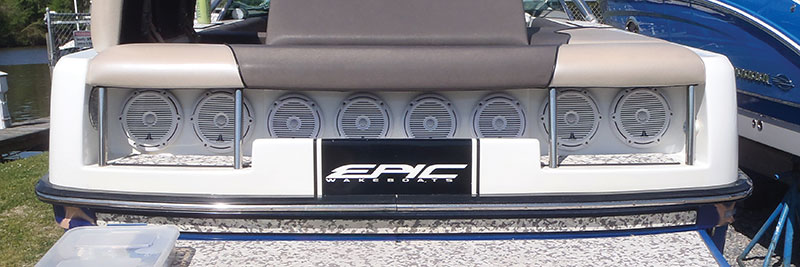
Flush-mount speakers can be installed in tight, out-of-the-way spaces and present a “cleaner” looking installation; however, installation requires you to cut a hole in your boat. For the best frequency response, flush-mount speakers must have sufficient air space around the cone. On the other hand, you don’t want an open-air path behind the speaker, which can reduce bass response. The speaker installation instructions should spell out minimal space requirements and other such considerations for best performance.
Box speakers are an attractive option for a number of reasons. They don’t require you to cut holes for mounting, and the box enclosure is already designed and set for optimal performance, meaning you don’t have to worry about the air space around the speaker. The only real downside to box speakers is that they take up more space than flush-mount units.
Three key selection factors
- Water resistance & durability: Stick with speakers that have a waterproof rating of IPX5 or higher. Avoid home/car speakers with paper cones, steel parts or exposed copper. Instead, choose speakers specifically designed for the harsh marine environment. A good example is the Kicker “Real Marine” line of Premium M-Class speakers, which feature carbon fiber-infused cones, glass-filled nylon woofer baskets, weather-resistant textile domes, and corrosion-resistant, waterproof connectors for speakers and lighting.
- RMS and peak power handling: Select speakers that match your marine receiver or head unit, amplifiers or subwoofers. At a minimum, they must be able to handle the RMS (Root Mean Square) of your stereo (or amplifier, if one is installed) to avoid damage. An RMS rating denotes the safe, everyday power level your speaker can handle. Peak power is the maximum wattage a speaker can handle for extremely brief moments (a drum hit or sound effect, for example) without being damaged. Of the two, RMS is of more use when selecting a speaker, as it reflects the speaker’s true, long-term power handling capability. A higher RMS power rating means the speaker can play louder without distortion.
- Sound quality — coaxial vs. component: Coaxial speakers are all-in-one (woofer/tweeter) units. They’re easier to install (as they are a single unit) and produce good overall sound quality. Component refers to speakers with a separate woofer and tweeter installation. They are a bit more complex to install; however, they provide superior, audiophile-grade sound. Other speaker selection considerations range from LED lighting options to Bluetooth-enabled units and battery life (more on this in a moment).
Speaker aiming and positioning
When planning speaker installations, keep in mind that most speakers are directional, meaning they project sound in the direction they’re pointed. As such, you want them to be directed to where your ears will be. This isn’t as critical in your car or home (as there are numerous surfaces for the sound to bounce off), but when installed in an open boat, the sound they produce can be easily lost. Stereo sound is way better than mono sound, so choose locations that allow you to hear at least two speakers at the same time. Otherwise, you’ll only be getting half of the music experience.
Finally, select speaker locations that not only optimize sound, but also minimize exposure to water as much as possible.
The benefits of Bluetooth
While some boaters prefer fixed speaker systems, it’s not the only game in town anymore. Portable battery-powered, waterproof speakers that connect directly to your stereo via Bluetooth provide easy installation options without the need for holes and wire runs. Things to look for in a portable Bluetooth speaker include durable construction, use of marine-grade materials, adequate waterproof rating, long battery life (more is better, but at least 10 hours), a fast charge rate and secure mounting options.
Speaker installation is a satisfying project that’s well within the ability of most any DIYer. Taking a little time to plan out the installation beforehand will help ensure you’ll be enjoying the sweet sound of success for years to come.
Top image: credit Capt. Frank Lanier
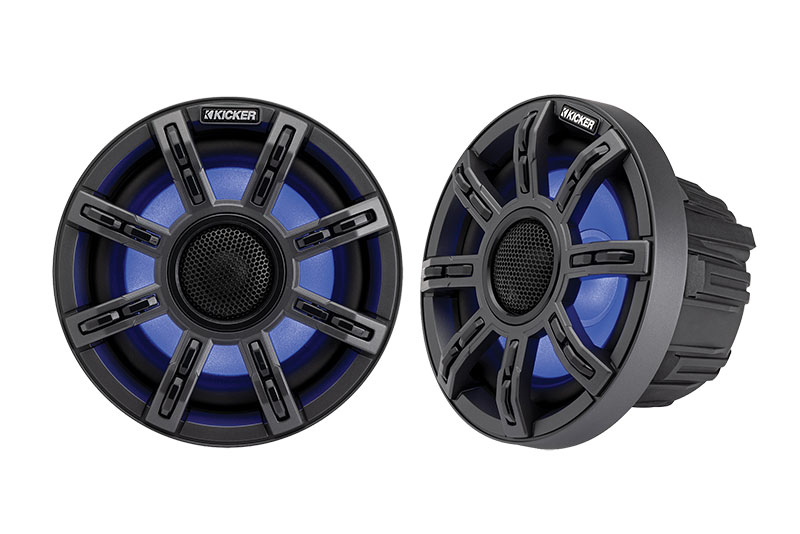
A pair of Kicker 51MSC LED M-Class speakers / credit KICKER Marine
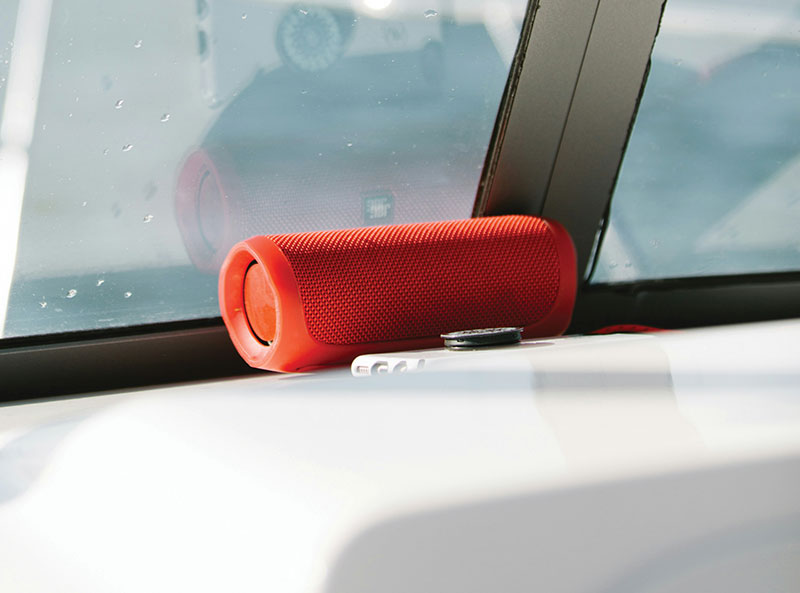
A Bluetooth-enabled portable speaker / credit Hunter Reilly

CAPT. FRANK LANIER is an award-winner journalist, boat maintenance guru and owner of Capt. F.K. Lanier & Associates, Marine Surveyors and Consultants. Check out his YouTube channel “Everything Boats with Capt. Frank Lanier.” CAPTFKLANIER.COM