How to select the right battery for your boat.
Story & photos by Glenn Hayes
When it comes time to select the right battery or batteries for your boat, going with the cheapest option or the closest look-alike replacement isn’t always the correct choice. By understanding the various chemical types of marine batteries, along with their advantages and disadvantages, you can more effectively select the best option within your budget.
Marine batteries are available from large battery manufacturers, such as Interstate and Deka, and others also offer high-quality lithium options.
The most common type is the traditional wet cell or lead-acid battery. Then there is the slightly more advanced AGM (Absorbed Glass Mat) battery. On the higher end but less common are gel batteries. The last category, the lithium battery, is one of the most expensive, advanced and least understood types of marine batteries.
Other key factors in battery selection include whether you need a deep-cycle battery, a starting battery, or one that can handle both functions. The battery’s physical size and energy output are also critical to choosing the right option for your application.
Selection considerations
Size and cold cranking amps or marine cranking amps (they are measured differently) are important considerations. It’s also important to get the right-sized battery with the correct terminals.
Battery sizes are categorized by group numbers set by the Battery Council International (BCI). These range from small PWC batteries to the most common marine sizes, groups 24 through 27, followed by the larger group 31 and the much bigger 4D and 8D batteries.
Correct terminals are also important. Many traditional batteries have lugs combined with threaded studs. Others have tabs, and others feature less common lugs. It’s also vital to make sure the positive and negative terminals are on the same side as your existing battery. Some overseas batteries have them reversed, which can lead to wiring issues.
• Wet cell or lead-acid battery: These batteries are the most common and are available in maintenance-free (no water needs to be added) or traditional versions; the latter is the least expensive. These have lead plates submerged in electrolyte-charged liquid (aka battery acid), and are available as starting batteries and as deep-cycle batteries.
• Absorbent Glass Mat (AGM) battery: AGM batteries are made up of electrolyte-infused fiberglass surrounding lead plates. Because there is no liquid sloshing around, these maintenance-free batteries are spill-proof and handle jolts and vibrations much better than traditional wet cell batteries. They charge faster and cycle more than deep-cycle wet cells, and AGM batteries tend to recover better from running very low. They cost more than wet cells but generally come with longer warranties. This is especially useful in harsh marine environments. AGM batteries serve well as both starting and deep-cycle batteries.
• Gel battery: This type of battery uses an electrolyte mixed with a silica additive, which forms a gel. Like AGMs, they too will not spill and do not produce gas when charged, so they work well in enclosed, low-ventilated areas. These batteries can be cycled more than a wet cell and can be brought back up to full charge from a low state with better results than wet cells. They tend to require slower charging, and it’s important to use a charger configured for gel batteries if that type is selected.
• Lithium battery: The complexities of the last battery type in this article, the lithium battery, could cover an article all its own. These batteries can be made up of different formulations, but the most common in marine circles is the lithium iron phosphate (LiFePO4, or LFP) battery. These have become popular because they are safer and less flammable than other lithium batteries.
Lithium batteries have the highest energy density and are the lightest batteries. They maintain the same voltage until they reach the maximum depletion point, unlike other batteries, which lose voltage as they deplete. They can take more cycles than most batteries and have a longer lifespan. Not all lithium batteries are the same, and getting a battery with high-quality cells, a robust construction and a good internal controller (BCU) will pay off in the long run. Well-regarded brands such as Abyss and RELiON offer good-quality batteries with respectable warranties. When considering switching to lithium batteries, it is also important to choose a charger that works with them, as they require specific charging parameters.
No matter which type of battery you end up with, they are the heart of your boat’s electrical system and a significant investment. Researching which is best for your application will pay off in power when you need it.
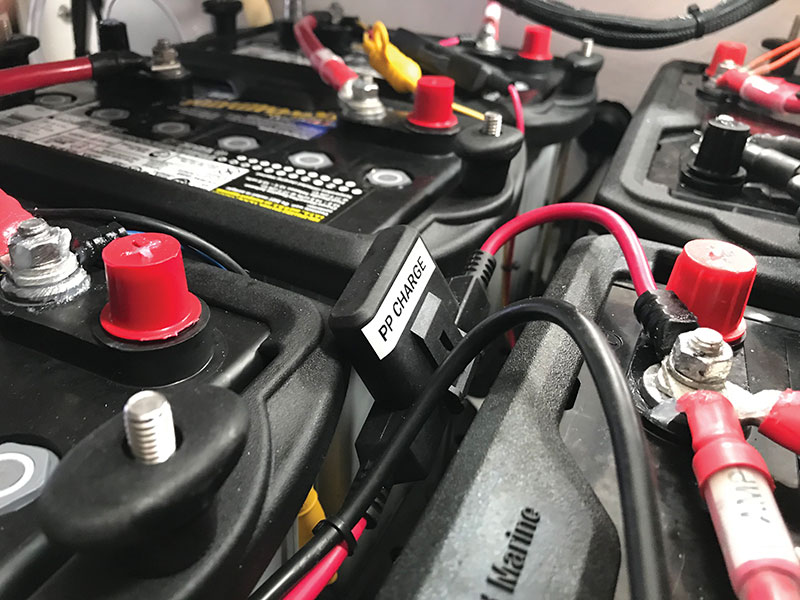
Top image: It’s important not to mix battery types in a battery bank
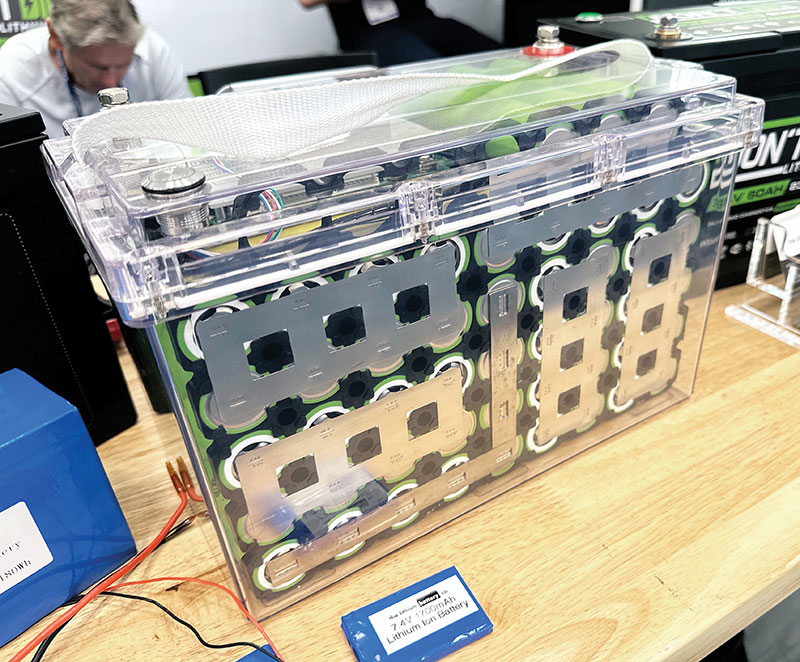
What a high-quality lithium battery looks like inside
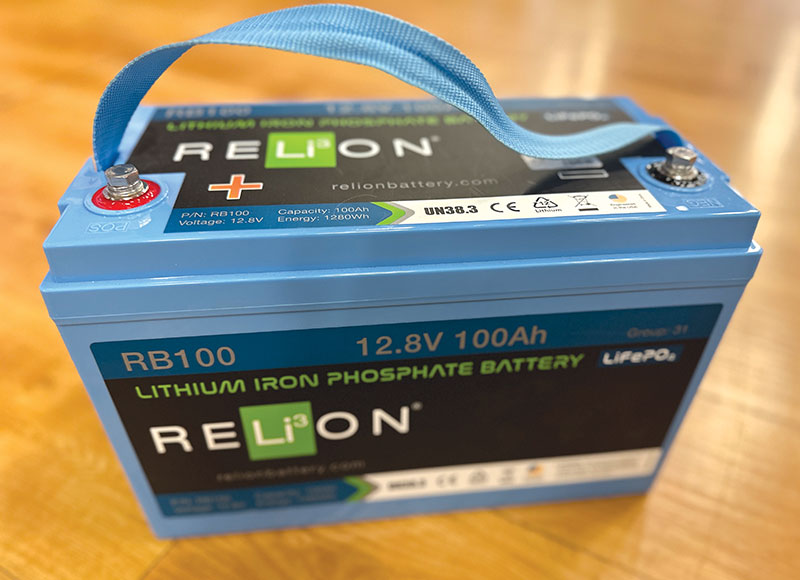
RELiON is one manufacturer of high-quality lithium batteries for marine use

GLENN HAYES is a marine writer and photographer whose background in the marine industry and in marine electronics spans almost three decades and many thousands of miles at sea traveling the world. He can be reached at HAYESSTUDIOS.COM