Which bottom paint is right for your boat?
Story & photos by Capt. Frank Lanier
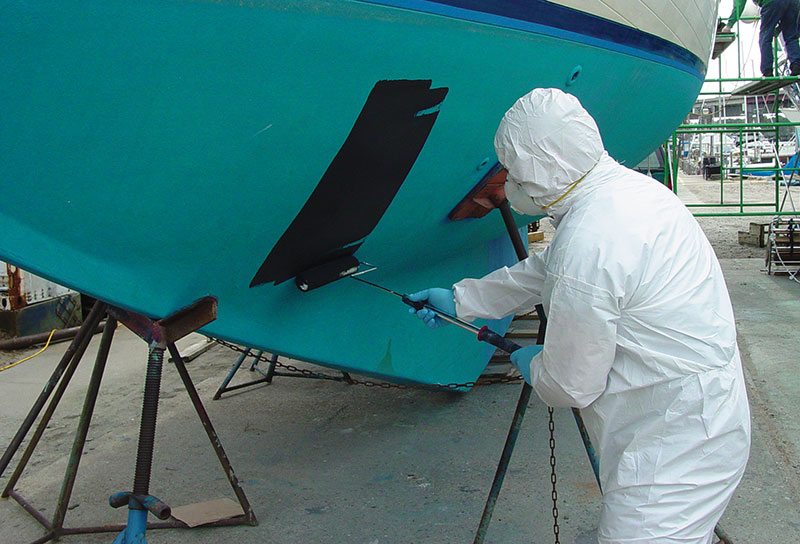
While death and taxes are better known, there’s a third certainty in life many boat owners face that’s often viewed with similar trepidation — bottom painting. Here’s a look at what bottom paint is, its application, and how to find the one that’s right for you.
Just what is bottom paint anyway?
Bottom paint (aka antifouling paint) is simply a coating designed to discourage aquatic growth and organisms from attaching themselves to the underwater portion of your boat’s hull. Bottom paints have traditionally accomplished this by inclusion of a biocide, with copper being the most common one in use today. In general, the more copper or other biocide a paint contains, the more effective (and costly) it is.
Copper replaced tin (the previous biocide of choice for decades), which was even more efficient, but has been banned in most marine applications due to the environmental damage it caused as it bleached into the world’s waters.
While copper may still be king, the latest generation of eco-friendly bottom paints utilizes little or no copper; this is in response to the increased scrutiny copper-based ablative bottom paints have received as environmental pollutants.
What’s your type?
Traditional bottom paints can be divided into three broad groups: Ablative, hard and hybrid paints.
Ablative (aka self-polishing) paint gradually wears away a tiny bit at a time, revealing fresh biocide as your boat moves through the water. Think of a bar of soap that wears away each time it’s used, yet still lathers up no matter how small it gets. One advantage to this constant wearing away is that there’s no buildup of old paint, which can be a pain to remove. As to disadvantages, ablative paints can be less effective if your boat remains idle for extended periods of time, which denies it the self-cleaning action provided by water movement. Ablatives are not a good choice for fast-moving boats, which would accelerate the ablation process and cause rapid paint loss.
With hard bottom paint, it’s the biocide that gradually wears away rather than the paint itself, allowing the water to penetrate deeper and deeper into the paint until all biocide is depleted. Hard bottom paints form a tough, hard coating that holds up well and doesn’t wear away, making them a good choice for fast-moving boats. However, when the biocide is depleted, the hard, tough coating remains, and it can be difficult to remove, particularly if multiple layers of paint have been added over the years.
Hybrid or semi-hard ablative paint bridges the gap between ablative and hard paint by incorporating the benefits of both into a single product. They provide a hard, smooth surface that resists buildup, yet holds up to faster speeds and repeated haul-outs without loss of protection.
The type of boat you have is crucial in bottom paint selection. High-speed boats should use a hard or possibly a hybrid bottom paint — ablative paints simply won’t last as long at speed. Trailer boats should consider a hybrid paint, which will hold up better throughout the constant launch and haulout cycles (most hard paints can’t tolerate being out of the water for extended lengths of time). Slower craft can use hard, hybrid or ablative type paints, but may want to consider the benefits of the latter two (no buildup, self-cleaning) when deciding.
Application considerations
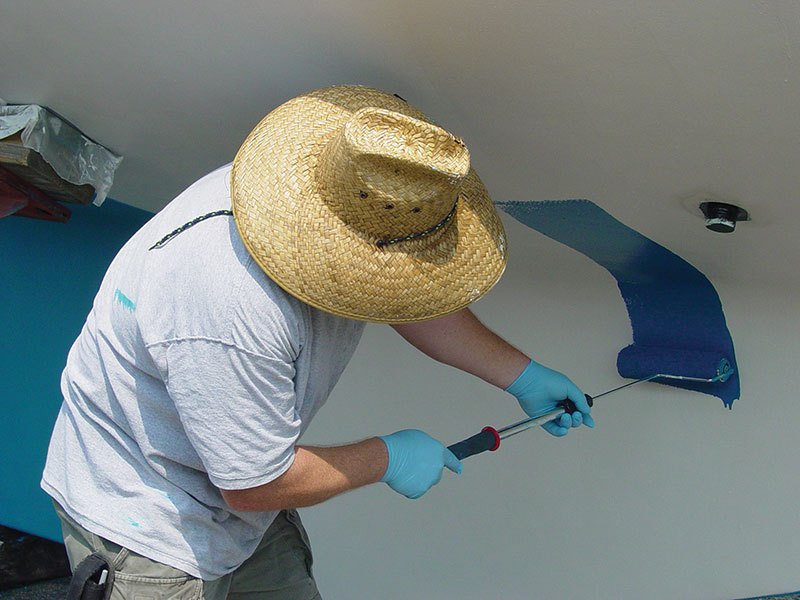
Not all bottom paint types are compatible, so unless you plan on removing all of the existing bottom paint, the paint you currently have will influence your choice of new paint. If you know the brand and type of bottom paint that’s on your boat now, the options are pretty straightforward — either continue to use the same paint or consult the manufacturer’s specifications for both old and new paints to ensure compatibility.
If you don’t know who the manufacturer of your current bottom paint is, at a minimum, you’ll need to determine its type. One straightforward way to do this is by rubbing the existing bottom paint with a wet rag. If the paint readily rubs off, it’s most likely an ablative type.
The general rule is that ablative paints can be applied over properly prepared hard or semi-hard paints, but hard or semi-hard paints can’t be applied over ablative paints. For those wanting to switch from ablative to hard paint, this means the ablative paint would need to be completely removed first.
Choosing a bottom paint
No one type or brand works best in all locations. One of the best sources of information on which bottom paints work best for a particular area is your local boatyard. Fellow boat owners can also provide valuable knowledge regarding which paints work best in your location.

CAPT. FRANK LANIER is an award-winner journalist, boat maintenance guru and owner of Capt. F.K. Lanier & Associates, Marine Surveyors and Consultants. Check out his YouTube channel “Everything Boats with Capt. Frank Lanier.” CAPTFKLANIER.COM