Tips for selecting and mounting a life raft.
Story & photos by Capt. Frank Lanier
While the decision to buy a life raft is typically preceded by considerable thought, where it will be stowed or mounted once purchased is often an afterthought. The best life raft money can buy will be reduced to more liability than asset if it can’t be easily accessed and launched when needed. Here’s a look at mounting and stowing strategies to ensure your life raft is always ready, willing and able.
Mounting goals
The holy grail of life raft stowage can be boiled down into four basic requirements:
- Is easy to access and launch
- Can be deployed without becoming trapped or entangled
- Is protected from the elements
- Has security against vandalism or theft
Life raft lowdown
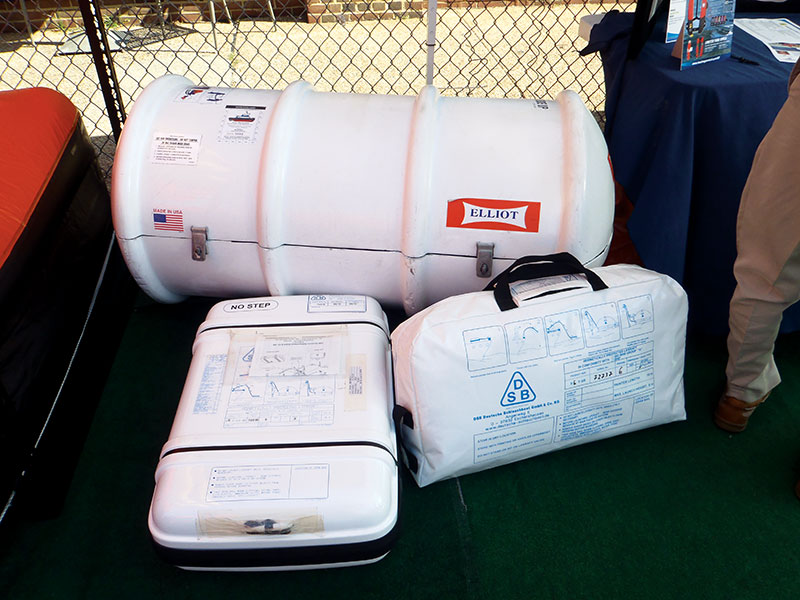
Life rafts come in two styles: Valise and canister.
Valise rafts come packaged in a soft, flexible case designed for below-deck storage. Canister-style rafts are stowed within a rigid canister for mounting on deck.
The valise-style raft is popular due to its greater compactness, lighter weight, and the additional protection offered by stowing a life raft down below. This option keeps the decks clear while protecting the raft from weather and theft.
Below-deck storage can be problematic on smaller vessels, however, as many boats lack sufficient space near the companionway to stow a bulky raft without impeding the normal flow of traffic. Another downside is the need to lug the raft on deck to deploy. Most life rafts are heavy and may be too much for smaller crewmembers to handle, particularly in rough weather.
When selecting a below-deck stowage space or locker, choose one that’s accessible, convenient, free of clutter (lines, sails, etc.), and that allows the raft to be easily launched by any crewmember.
While a valise life raft can be temporarily stored above deck during offshore passages for easier deployment, rafts permanently stowed above deck should be housed within a canister. Canisters (which are typically of molded fiberglass) offer greater protection from physical damage and the elements than a fabric valise, while allowing them to be mounted at any suitable location above deck.
The cons associated with canister life rafts include being larger, heavier and more expensive than a valise container. The loss of valuable deck space can also be an issue — particularly with smaller vessels. While they offer more protection against spray, canisters are also prone to flooding if submerged (such as while taking on water over the decks) — one reason the cockpit or upper decks may be a better mounting option than an exposed foredeck.
Canister life rafts must be securely mounted to prevent damage or, worse yet, loss during heavy weather. Unless your vessel has a dedicated life raft storage locker (the ultimate storage solution), they require the installation of a cradle or mount for the container. This means drilling holes into the deck or wherever the raft will be located. As with mounting any heavily loaded piece of deck gear, ensure all raft mounts and cradles are secured with sufficiently robust through-bolts and backing plates.
Finally…
Regardless of the style of life raft you have, inspect any possible stowage area or mounting location with a critical eye, while trying to visualize potential problems. If mounted near that engine deck hatch, will you be able to reach and deploy the raft in the event of an engine fire or explosion? Will that spot beneath the boom allow the raft to deploy without becoming tangled in the rigging? Don’t be afraid to simulate a launch using the raft (or a cardboard box of similar size) to develop a launching procedure and ferret out problems beforehand. Your life (as well as your crew’s) may depend on it.
Top image: Canister (top and bottom left) and valise (bottom right) life rafts
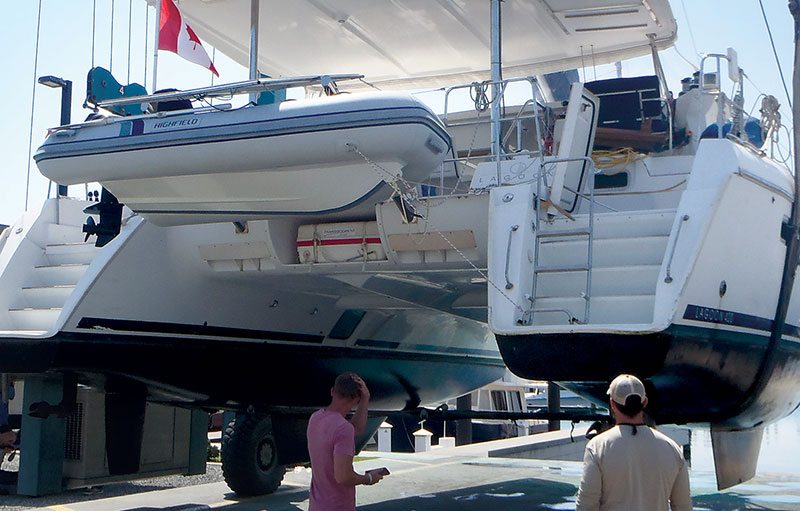
Dedicated stern life raft stowage locker
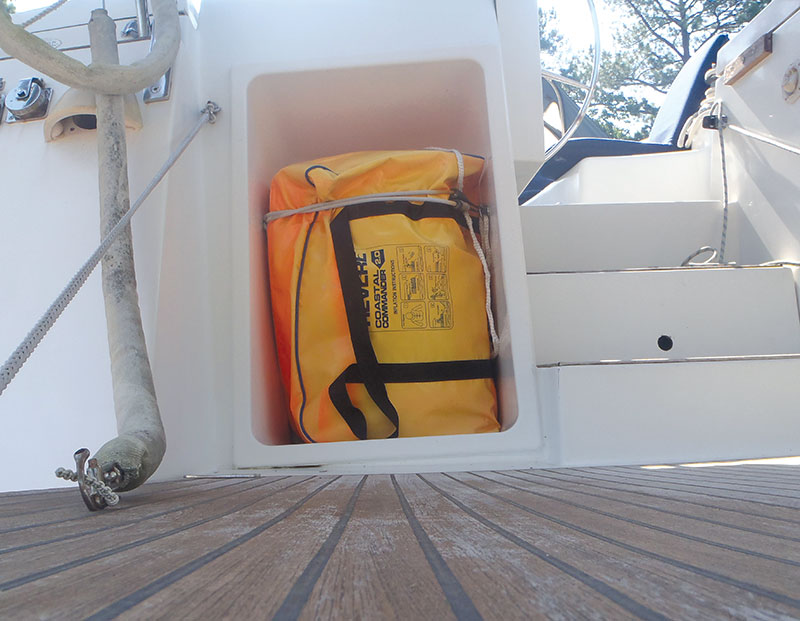
Valise in dedicated storage
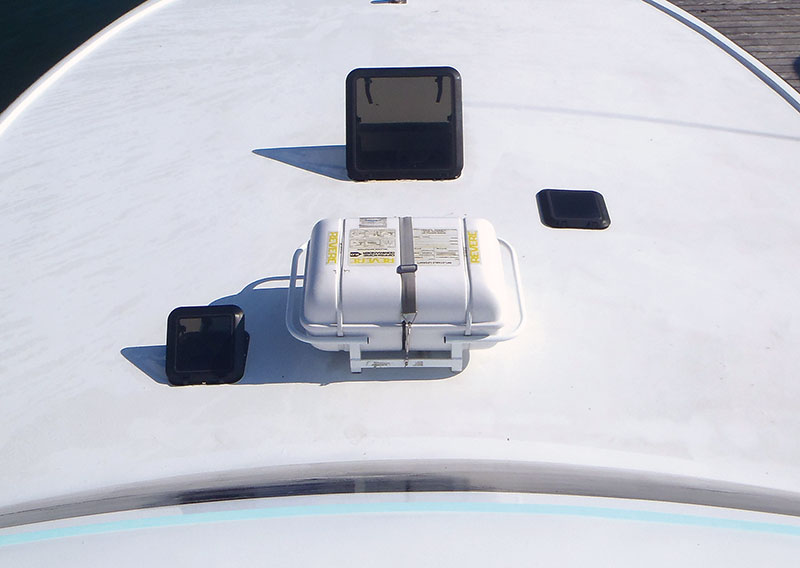
Canister mounted on foredeck

CAPT. FRANK LANIER is an award-winner journalist, boat maintenance guru and owner of Capt. F.K. Lanier & Associates, Marine Surveyors and Consultants. Check out his YouTube channel “Everything Boats with Capt. Frank Lanier.” CAPTFKLANIER.COM