Michigan’s Inland Waterway is a 38.2-mile-long aquatic playground with three rivers, four lakes and a fascinating history
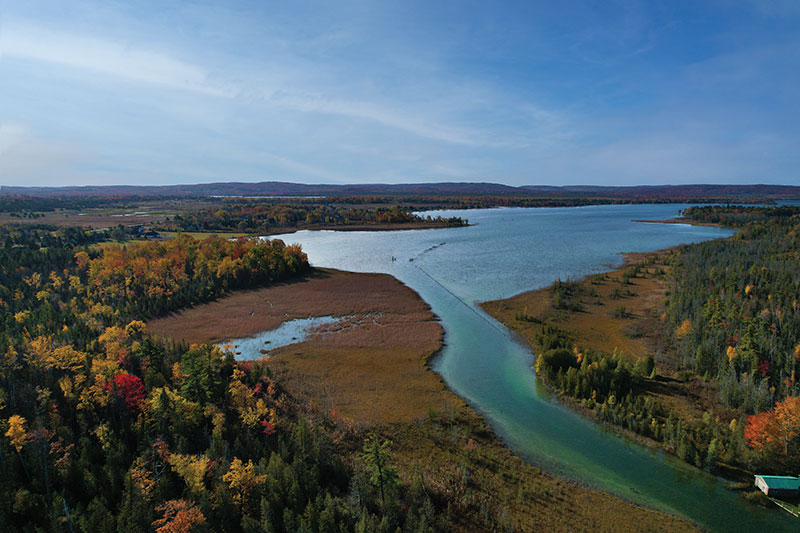
Crooked River into Crooked Lake / little traverse conservancy
**Weather report: Heavy rainfall in April 2026 led to significant flooding along the Inland Waterway, forcing widespread closures. At press time, the route remains inaccessible, with significant floating debris and locks closed until further notice. Cheboygan River (south of the dam), Black River and Indian River are all closed to boat traffic until May 8, 2026. Lakes remain open, but boaters are strongly urged to use extreme caution. Boaters should check current conditions
through local resources
(see p. 46) before planning
any travel. **
CLICK TO ENLARGE MAP
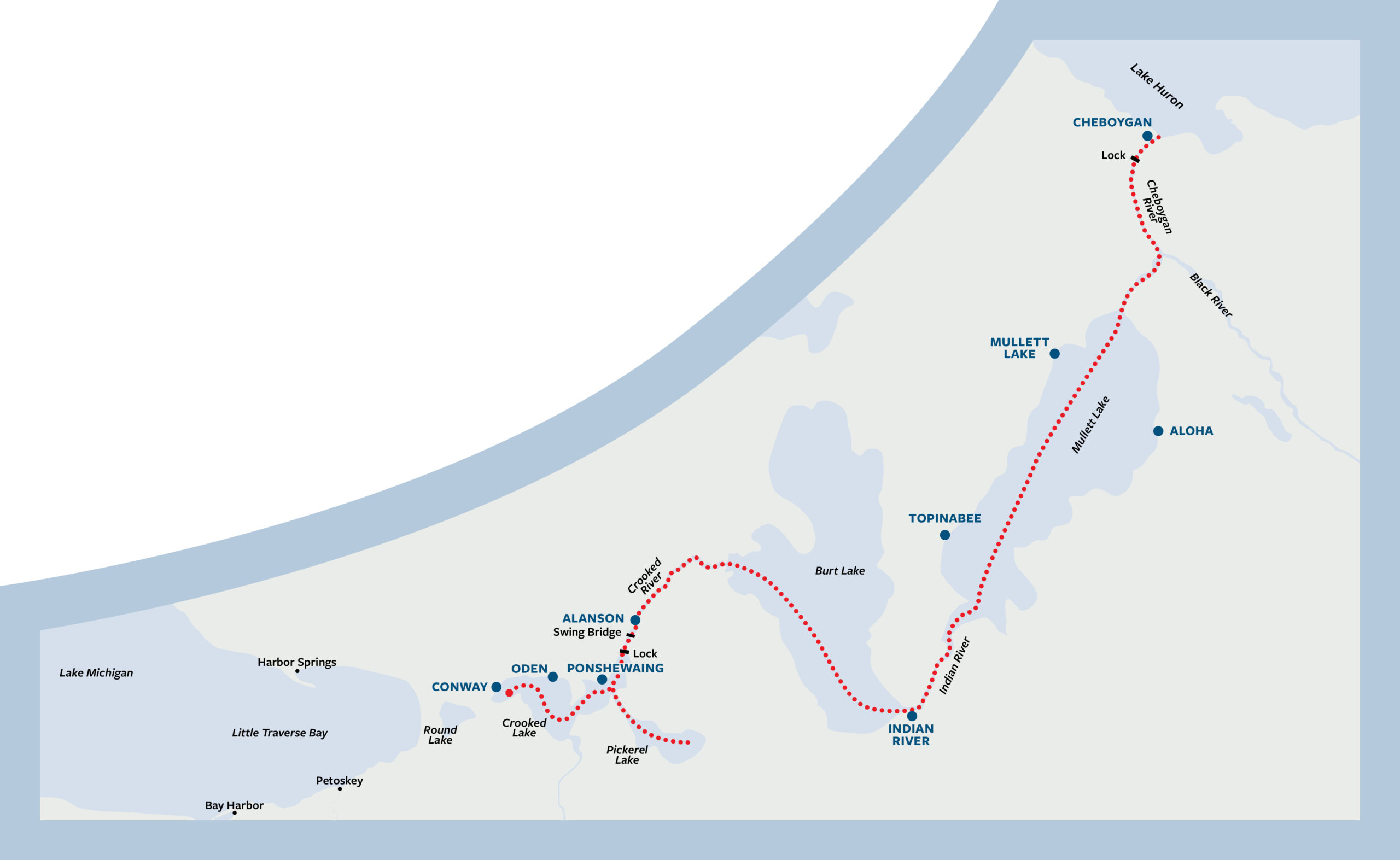
Stretching from Cheboygan, near the tip of the Great Lake State’s mitten, southwestwardly for nearly 40 miles, the Inland Waterway is Michigan’s longest chain of lakes and rivers, and has shaped the area’s cultural and commercial history.
Via the Cheboygan, Crooked and Indian rivers, the waterway links Mullett, Burt, Pickerel and Crooked lakes with Lake Huron, just shy of completing a cross-peninsula connection with Lake Michigan. It was an important route for Native Americans, with evidence of about 50 encampments found in the area and one site dating to 3,000 years ago.
During the region’s 19th-century logging boom, settlements and sawmills dotted the water’s edge, and lumber was transported along the waterway to Lake Huron and beyond. In 1873, rail service arrived, and settlers and tourists began to rediscover the area. Soon, the railroad and steamship companies realized tourism’s potential, touting The Inland Route (as it was once known) as “The most picturesque trip in the world.” Resort hotels sprang up in the depot towns, accompanied by dance halls, bowling lanes, yacht clubs and ice cream parlors. While little remains of the historic structures, the communities of Cheboygan, Topinabee, Indian River, Alanson, Ponshewaing, Oden and Conway continue to welcome visitors with a wide range of accommodations, dining and attractions.
The Inland Water Route storytellers
The story of the region is preserved and shared by the all-volunteer Inland Water Route Historical Society (IWRHS), from early Native American life to the development of the tourism economy.
“The railroads really marketed vacation tourism — the pure air and water, great fishing, scenery, and a lot of lakeshore that could be exploited for cottages and camping,” says Wayne Blomberg. He and Mark Hill led the IWRHS effort to open a museum in Alanson, which displays a wealth of photographs, maps, navigational charts, advertisements, models and artifacts, including woodworking tools used by a builder who crafted several of the early vacationer boats.
 The launch of Marilyn Jean is another major undertaking of IWRHS. A replica of a 1898 Truscott-style boat, at 30 feet with an 8-foot beam, it is similar to passenger vessels of more than a century ago. It was constructed for educational purposes and pleasure cruises, although it only occasionally gets out on the water; the goal is to retain the licensed captain required to offer public tours. The boat is named for Jean Fairbairn, whose family is a pillar of the community and, since 1895, has operated W.W. Fairbairn & Sons Hardware in Alanson. Still in its original location, the fifth-generation business is worth a stop for its historical structure and home and garden merchandise. Then stroll up the block to Bob’s Place for homemade soup, prime rib dinner, or a burger and onion rings.
About the route
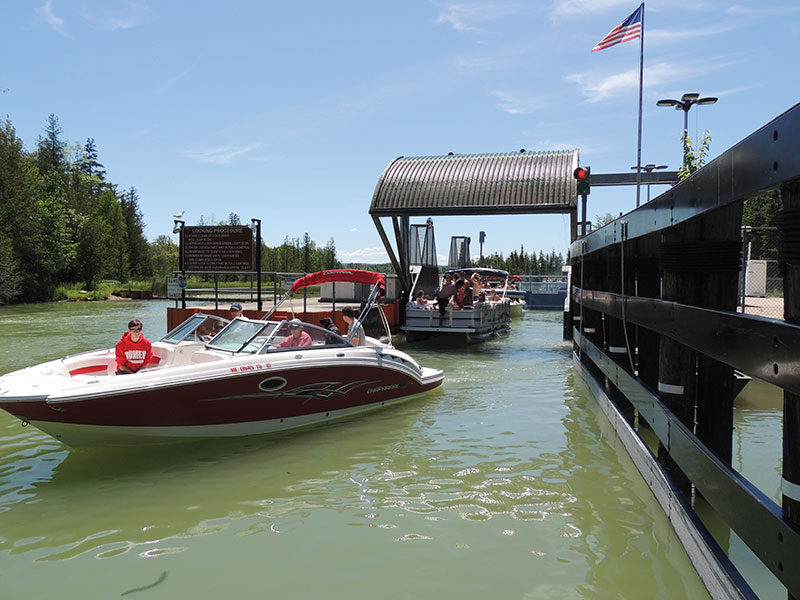
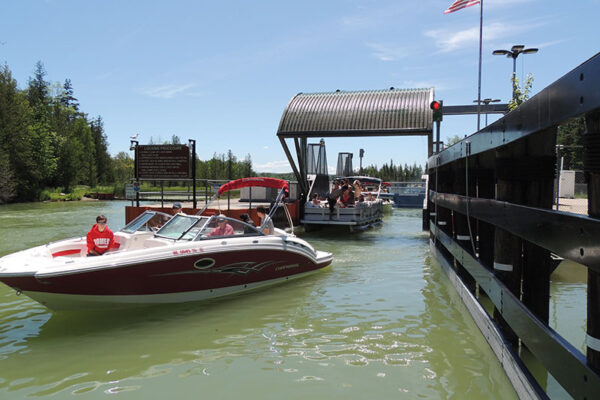
With 50,000 acres of water surface, two locks (in the Cheboygan and Crooked rivers) and a swing bridge at Alanson, the waterway accommodates paddlers to powerboaters, but it’s important to allow time to plan navigation. Vertical clearance for the four stationary bridges ranges from 14.7 to 20 feet, according to the Indian River Chamber of Commerce. The locks accommodate boats up to 65 feet long with an 18-foot beam and 5-foot draft (although Crooked River sometimes limits boats to 25 feet). However, boater Ken Grabowski of the Detroit area, with a 40-foot 35 Open, advises that the squeeze through the locks can be tight, and he has opted to take his dinghy instead.
One question that Indian River Marina owner Mike Ryan gets from people planning an Inland Waterway trip: “Can I do it in a day?”
“It’s doable, if you want to go from point A to point B just to accomplish it,” Ryan says. He suggests it’s best to plan at least two days to experience the waterway at a slower pace. “The marina is located almost at the center point, between Burt and Mullett lakes. I recommend at least a couple of days. Go to Cheboygan, enjoy the sandbars along the way. Day two, go in the opposite direction, to Burt Lake along the Crooked River, stop at downtown Indian River, enjoy the beautiful homes and the undeveloped scenery.”
There are also multiple beaches to enjoy, including at Burt Lake and Aloha State Parks. And with 17 species of fish in the waters, you might want to allow time to drop a line.
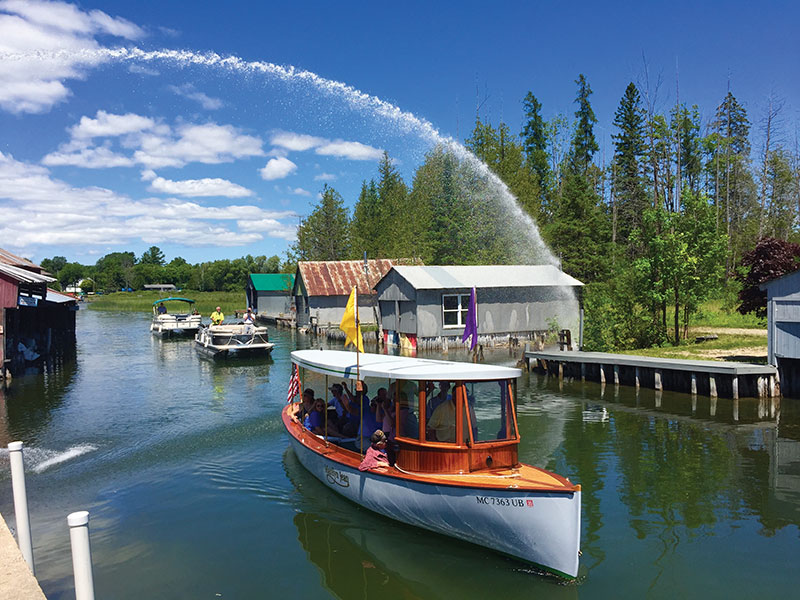
Marilyn Jean / Marta fonger
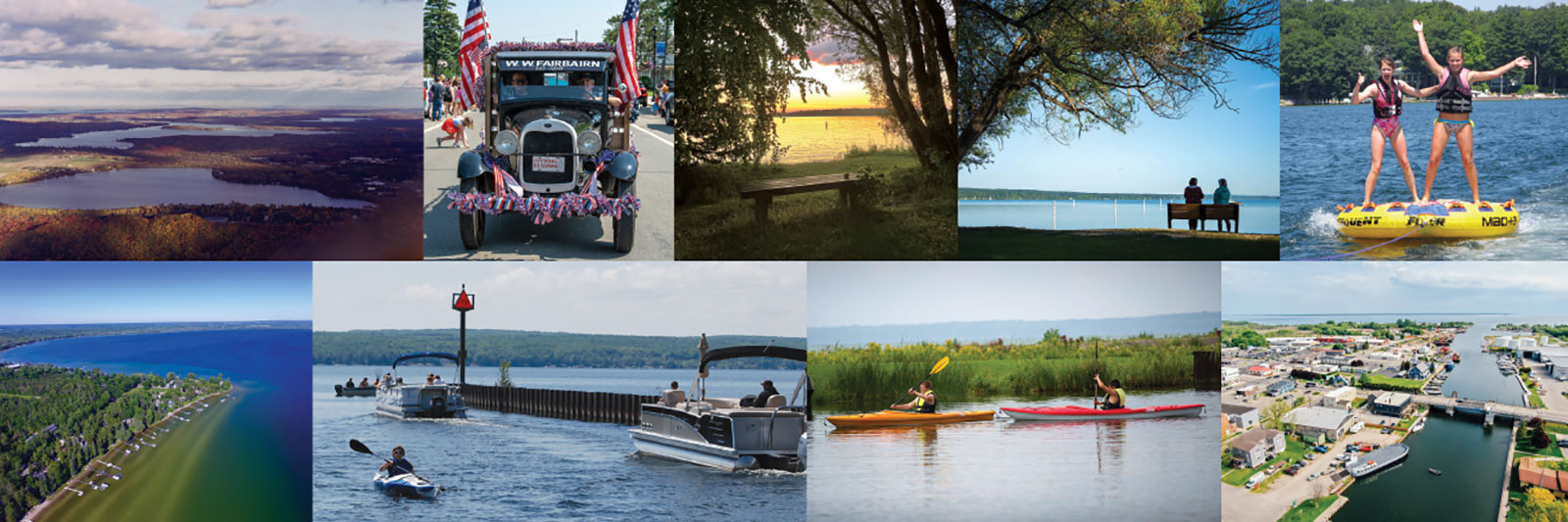
ROW 1, left-right: Round, Crooked and Pickerel lakes / Doug Houseworth, fireandicephotography.us; Alanson Fourth of July parade / Billy McNamara; Pickerel Lake / Gail Greenwell; Burt Lake State Park / Burt lake state park website; Topinabee water fun / topinabee.org;
ROW 2, left-right: Dodge Point on Mullett Lake / Wiki; Indian River into Burt Lake / Devoe Beach website; Aloha State Park / Pure Michigan; Cheboygan River into Lake Huron / Pure Michigan
A sampling of the Inland Waterway’s many marinas and launches:
Cheboygan County Marina
cheboygancounty.net
Indian River Marina
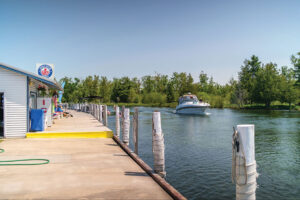
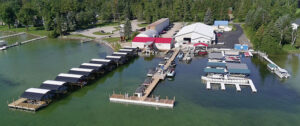
Jack’s Mullett Lake Marina
Marina Park, Indian River
tuscaroratwp.com
Cheboygan Area Chamber of Commerce
cheboygan.com
Experience Indian River
experienceindianriver.com
Inland Water Route Historical Society
iwrhs.org
Indian River Chamber of Commerce
irchamber.com
Topinabee
topinabeecommunity@gmail.com
Walstrom Marine
walstrom.com
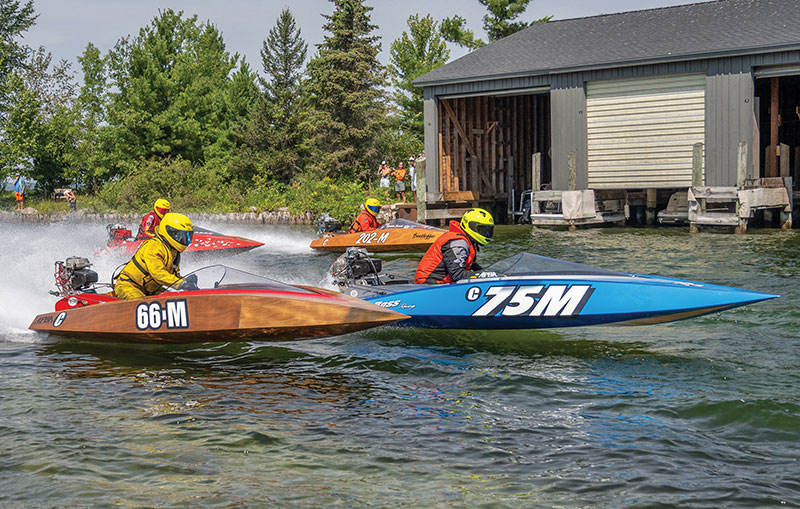
Top O’Michigan Outboard Marathon / jschwartz photography
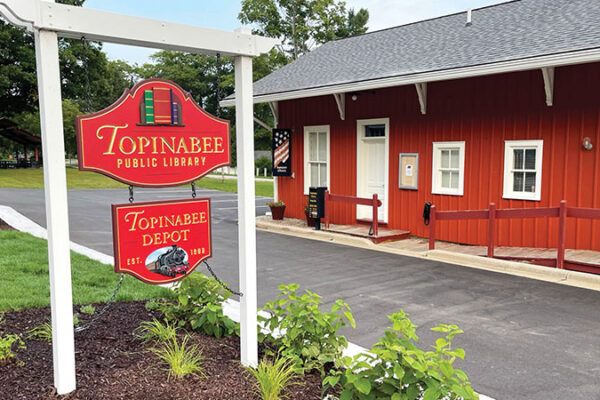
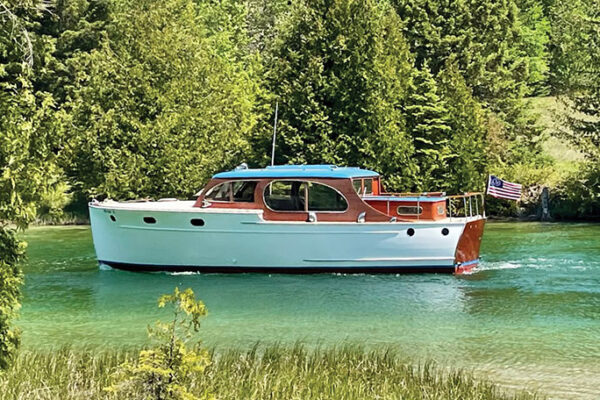
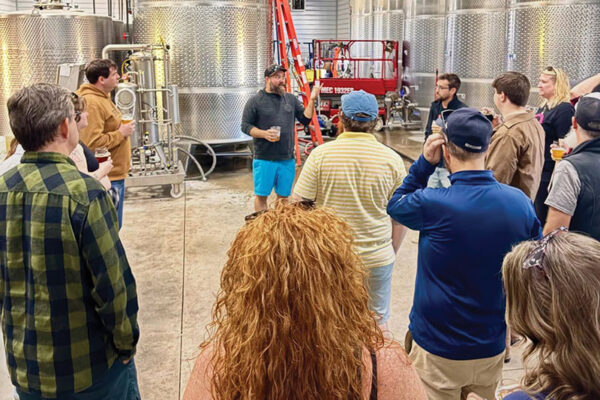
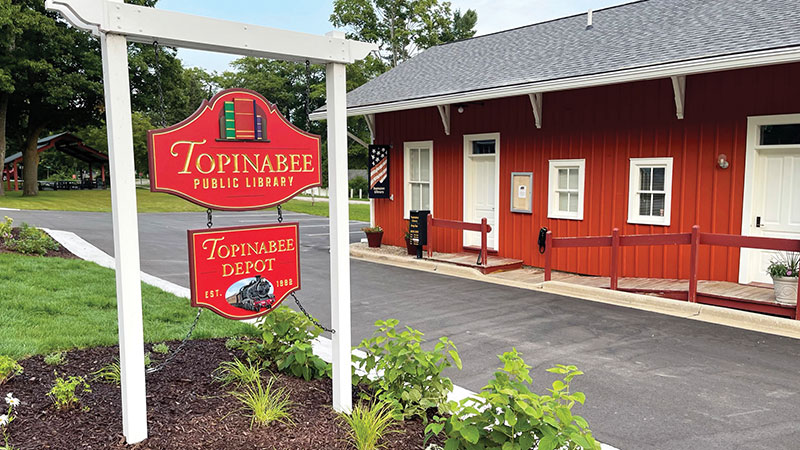
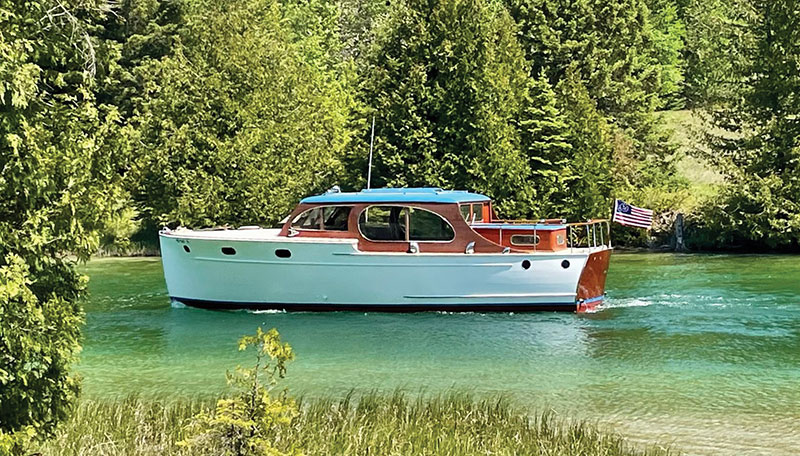
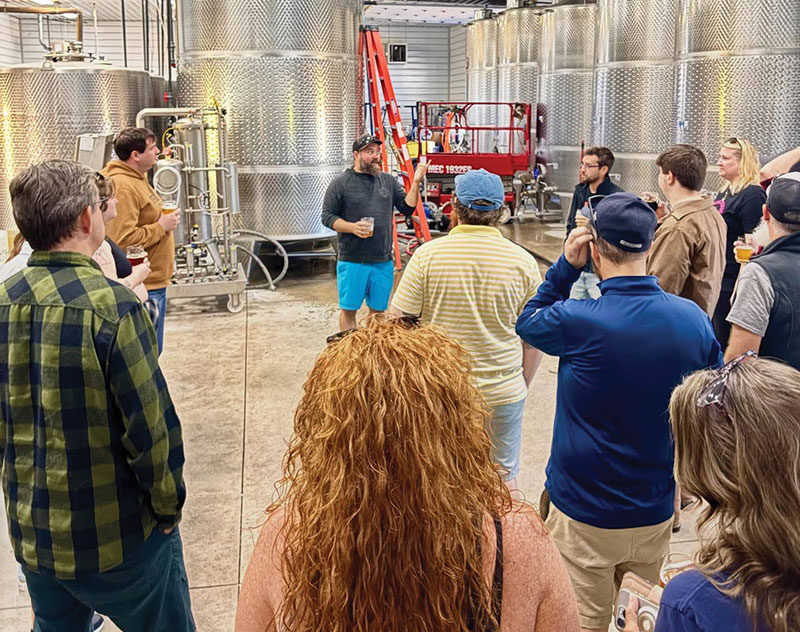
Left – Right: Topinabee Public Library and Depot / mullet township; Mrs. Jones / Mrs. jones facebook Cheboygan Brewing / brewery facebook
What’s so special
Carved by glaciers some 25,000 years ago, Burt Lake and Pickerel Lake are the fourth and fifth largest of Michigan’s 11,000-plus inland lakes.
“Burt Lake is almost a mini inland sea,” Blomberg says. Although you’ll find private cottages and homes and rental lodgings all along the waterway, much of the route’s shoreline is lowlands and is hard to develop. “It is still very scenic and has a natural beauty, especially along the Crooked River,” he continues. “About half of the route is natural. It’s not much different than it was a hundred years ago.”
More than a century ago, Jack Woudenberg’s ancestors discovered Mullett Lake and established a family connection with the waterway that thrives today.
“It was in the late 1800s, three or four guys took a train from Ohio to go fishing and camping,” he says. “They set up their canvas tents that first year, and the next year brought their wives, started bringing family. They built cabins.”
Woudenberg grew up spending summers at Mullett Lake and carries fond memories of himself at 8 years old with his 11-foot Boston Whaler visiting the marina at the north end. “I loved looking at the boats in the showroom as a kid,” he says.
Four years ago, Jack, who lives in Arizona, purchased and has made major investments to that marina, now called Jack’s Mullett Lake Marina, including adding slips, a dock fueling station, a service department, rental boats and a food truck. “We supersized the whole deal,” says Woudenberg. “It’s a real passion project, to be able to improve people’s summers.”
The selection of rental watercraft is varied, with jet skis, pontoons, sportboats, kayaks, paddleboards and paddle bikes. “We try to have a boat for everybody’s different lake day,” he says.
For a one-of-a-kind on-the-water experience, charter Mrs. Jones, a 1941 34-foot Chris-Craft that tours the Cheboygan River and Mullett Lake. Owner Sharen Lange says it may be the last of only four made, and it was in nearly original condition when she and her husband Brian, who is a licensed captain, found it. “We’re a fourth-generation wood boat family and have owned many over the years,” she says. “I do all of the restoration work, as taught by my father.”
A taste of the waterway
The Langes also own the boat-themed Nauti Inn Barstro (bar and bistro), a popular spot in Cheboygan, the gateway to the Inland Waterway. A stop at Cheboygan Brewing Company for a Blood Orange Honey or Lighthouse Amber is a must. The Queens Head Wine Pub gets rave reviews for its small plates and adult beverages. It’s one of several businesses, including shops and a cozy theater, under the “Crown on Main” umbrella.
Diners cruising the Cheboygan River can dock at Pier M33 and enjoy a full menu with international flair. Boaters with a taste for escargot, filet mignon, whitefish almondine and roasted duck can tie up at the rustic Hack-Ma-Tack Inn, a 1894 hunting and fishing lodge on the Cheboygan River at Mullett Lake. Breakers in Topinabee serves more casual fare, from wings and a perch sandwich to pizza and house-smoked ribs, with a selection of Michigan beers to wash it all down. Go to River’s Edge in Indian River for a hearty breakfast or lunch with a comfy cabin feel.
Only on the Inland Waterway
Every August, more than 100 racers take to the waters for the two-day Top O’ Michigan Outboard Marathon. Billed as the world’s toughest, it’s based at DeVoe Beach on Burt Lake.
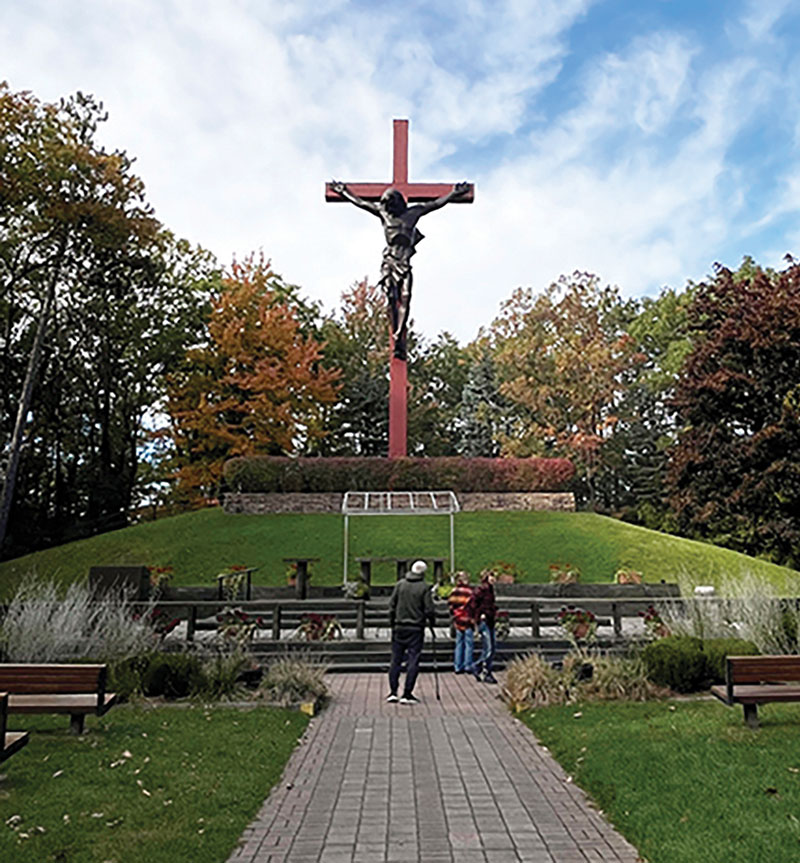
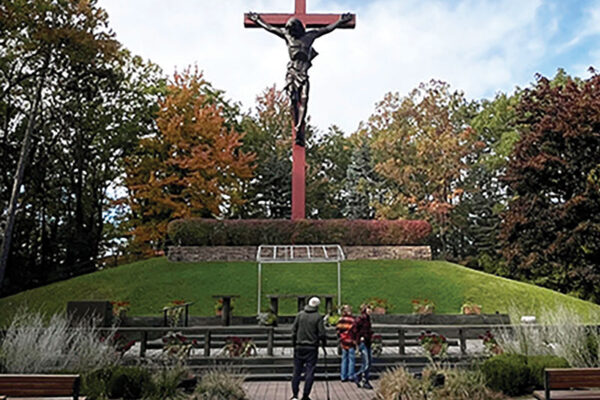
Off the water, Indian River is home to Cross in the Woods, a Catholic National Shrine that is the world’s second-largest crucifix. Dedicated in 1959, the significant work of Michigan sculptor Marshall Fredericks is a 55-foot redwood cross bearing a 28-foot-tall bronze figure of Christ. There are additional shrines on the peaceful grounds, as well as the church, gift shop and Nun Doll Museum, which displays more than 525 dolls dressed in the clothing of different religious orders.
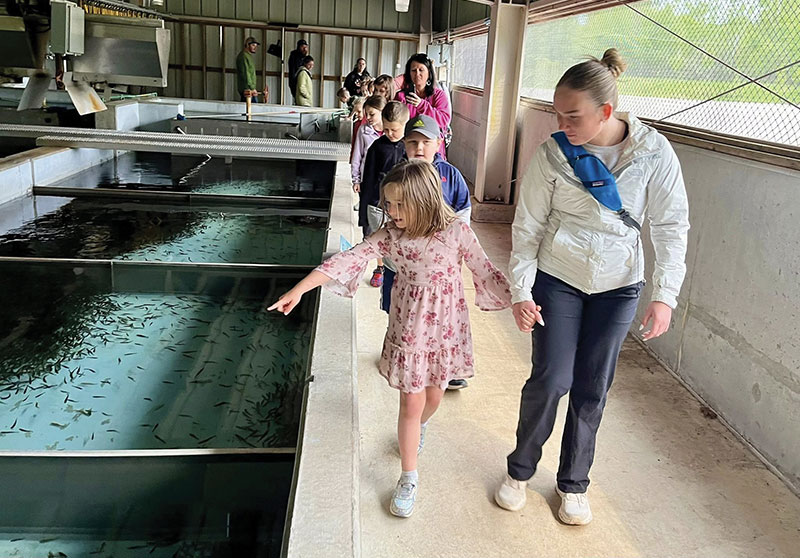
Oden State Fish Hatchery & Visitor Center features free guided tours of the hatchery for brown and rainbow trout, a fishing pond, an underwater viewing chamber, a replica of a 1920 fish transport rail car and more.
Topinabee is the home of Chillermania, where fans of Johnathan Rand’s “Michigan Chillers and American Chillers” thriller book series for young readers can add to their collections and may meet the author in person.
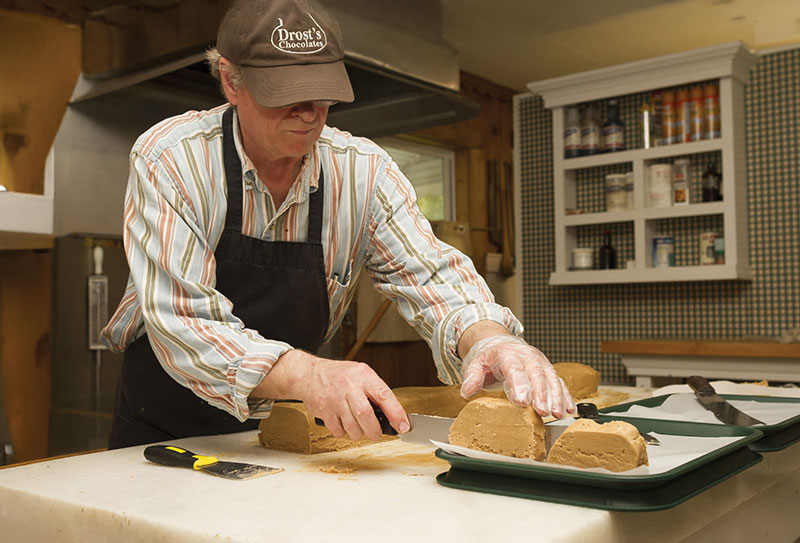
Sweet tooths head to Drost’s Chocolates, an Indian River landmark that still uses original family candy recipes from the 1900s, and scoops ice cream made locally in small batches. A specialty is penuche fudge, an old-fashioned recipe that is brown sugar-based.
Carry an empty jug to fill with cold, clear water from the artesian well in Alanson, and take home a sip of the Inland Waterway.
Michigan’s Inland Waterway delivers the kind of cruising experience that keeps boaters coming back year after year. With its blend of natural beauty, welcoming towns and easy navigation, it’s a journey that strikes the perfect balance between adventure and relaxation.
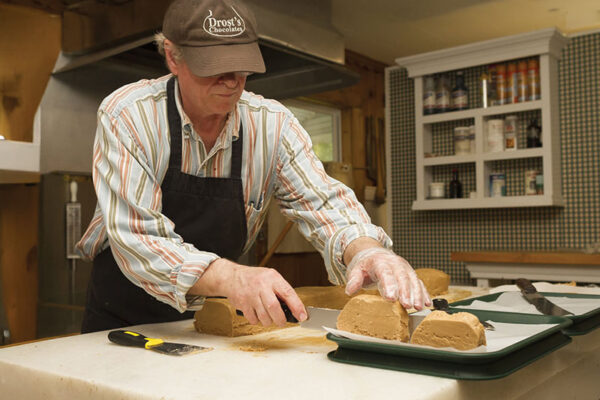
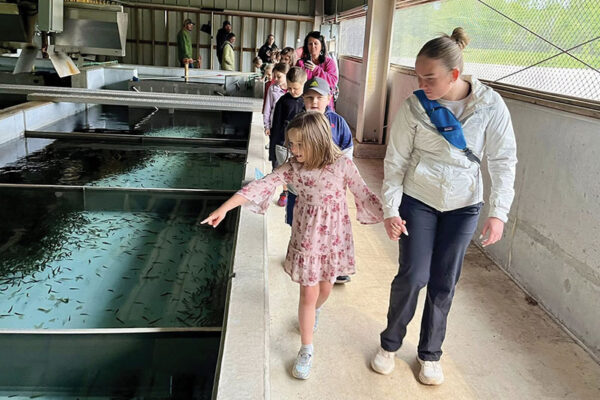
Left – Right: Drost’s Chocolates / Drost website; Oden State Fishery & Vistor Center / fishery facebook;
Cross in the Woods/ Kath Usitalo; Alanson lock / doug houseworth of fireandicephotography.us
The world’s shortest swing bridge walk
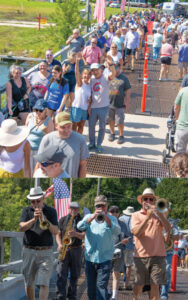 On Labor Day, September 7, 2026 at 1 p.m., The Rivertown Jazz Band will lead several hundred people across a span of 60 feet, known as “The World’s Shortest Swing Bridge Walk,” in Alanson, Michigan.
It all started in our living room, when my wife and I were talking with musician friends. We jokingly said, “Let’s start a flash mob,” and decided to parody the annual 5-mile Mackinac Bridge Walk. So we took instruments (tuba, trumpet and banjo) down to the bridge, and marched across playing, “When The Saints Go Marching In.” The only witness was the Bridge Tender. Since then, it has become a signature event with a free concert from 12 – 2 p.m, arts and craft booths, and food trucks.
—Doug Houseworth, founder
Billy McNamara photos