Ditch those old flares for a safer, modern solution with eVDSDs.
Each spring, I go through a routine before launching my boat, checking flares, fire extinguishers, life jackets and throwables, and ensuring the proper operation of horns, lights, bilge pumps and engine compartment blowers.
This year, I discovered the flares aboard my boat had expired, so I decided it was the perfect opportunity to upgrade to a safer, more modern alternative.
As a vintage wooden boat owner, I’ve always been uneasy about carrying traditional pyrotechnic flares. The idea of storing these high-temperature devices — essentially small fire hazards — on a wooden vessel is concerning, to say the least.
With today’s eVDSDs (electronic visual distress signal devices), a safer alternative to pyrotechnic flares, boaters have a new way to alert nearby vessels in the event of an emergency.
Historical background
The U.S. Coast Guard requires vessels longer than 16 feet operating on coastal waters, the Great Lakes, territorial seas and waters directly connected to them (up to where the water is less than 2 miles wide) to carry Coast Guard-approved visual distress signals, such as pyrotechnic flares.
The two most commonly used types of marine pyrotechnic flares are handheld flares and aerial flares, which are fired into the air with a flare gun. A minimum of three pyrotechnic flares approved for daytime use and three flares approved for nighttime use are required to meet the visual distress signal requirements. Boaters only need three pyrotechnic flares if the flares are approved for both daytime and nighttime use. Red-colored handheld and aerial pyrotechnic flares are approved for both daytime and nighttime use; however, orange-colored flares are approved for daytime use only.
Recreational boats less than 16 feet in length, open sailboats less than 26 feet in length not equipped with propulsion machinery, and manually propelled boats are exceptions to these requirements. These vessels are only required to carry nighttime distress signals when operating from sunset to sunrise. Failure to have visual distress signals, or having only expired pyrotechnic flares onboard, could result in a large fine. Marine pyrotechnic flares must be in a usable condition, stowed where readily accessible, and not expired.
According to U.S. Coast Guard regulations, the average shelf life for pyrotechnic devices is between 36 and 42 months from the manufacture date. The Code of Federal Regulations (33 CFR 175.125) states: “No person may use a boat unless each signal required by 175.110 is in serviceable condition and the service life of the signal, if indicated by a date marked on the signal, has not expired.”
The idea behind eVDSDs started gaining traction in the early 2000s as LED technology improved, becoming brighter, more energy efficient and more reliable. Manufacturers began developing electronic SOS beacons that could mimic the visibility and signaling pattern of flares without the downsides: Expiration dates, fire risk and hazardous disposal. While several companies experimented with electronic flare technology, Sirius Signal is widely credited with bringing the first truly viable, and eventually U.S. Coast Guard-recognized, eVDSD to market.
A major turning point came in 2016, when the U.S. Coast Guard officially approved certain eVDSDs as compliant alternatives to traditional nighttime flares, as long as they meet specific performance standards. This marked the first time electronic devices could legally replace some pyrotechnic signals for recreational boaters in U.S. waters. Transport Canada followed suit in 2018.
In 2025, the U.S. Coast Guard announced plans to phase out pyrotechnic MK 124 flares aboard its vessels by April 1, 2026, replacing them with U.S. Coast Guard–approved eVDSDs instead. The move signals a significant turning point: The agency itself is transitioning to eVDSDs as its primary handheld nighttime signaling method — an evolution many boaters may soon follow.
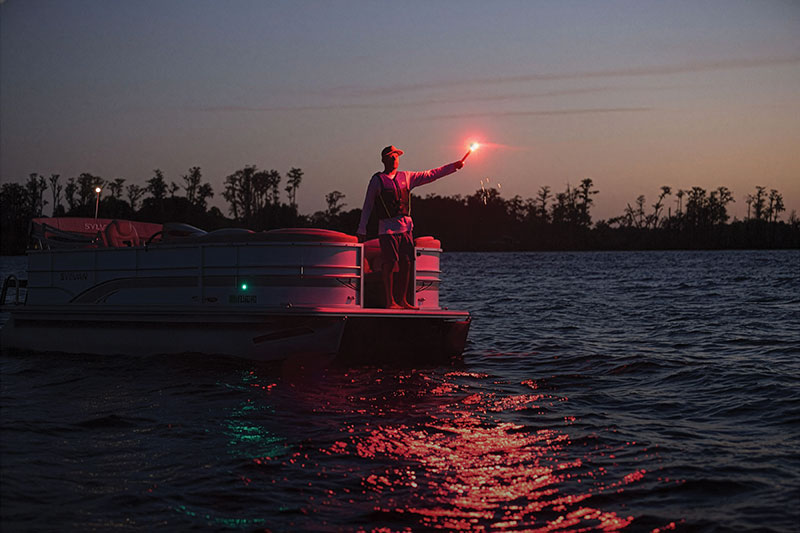
(Main photo) A pyrotechnic flare was previously the go-to for on-water visual distress signals before modern alternatives | water sports foundation
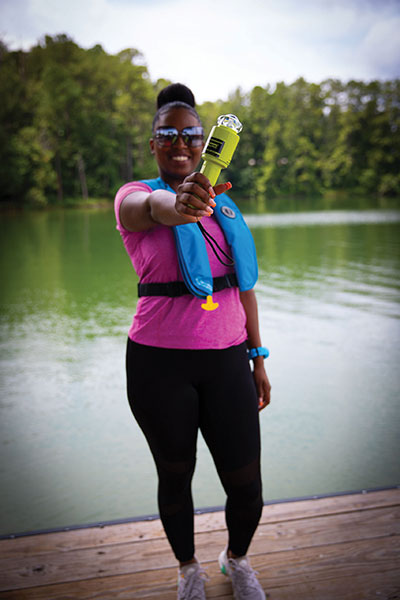
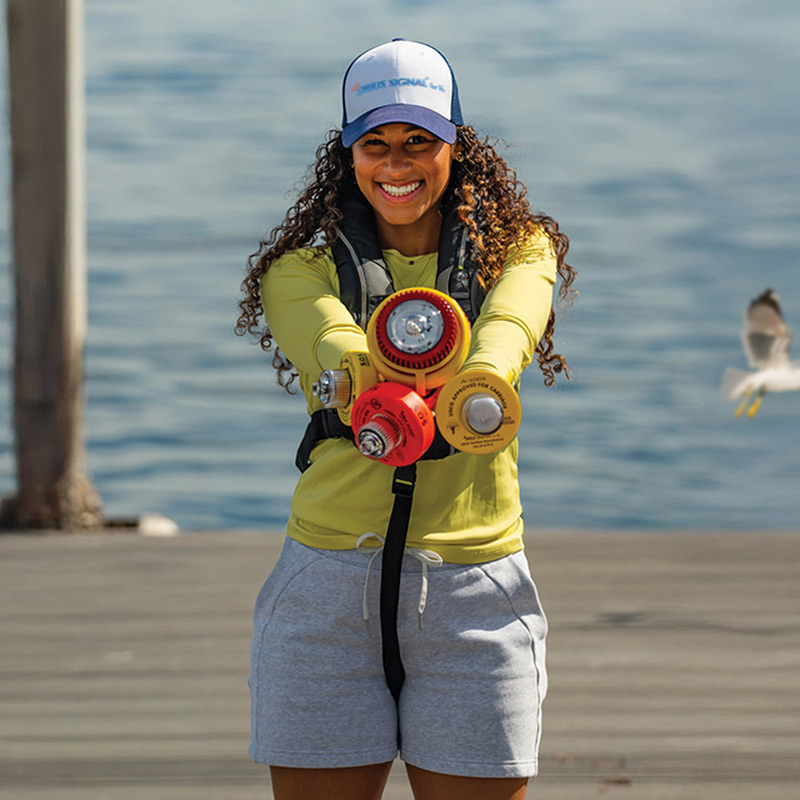
Many boaters are choosing eVDSDs over pyrotechnic flares | National Safe Boating Council
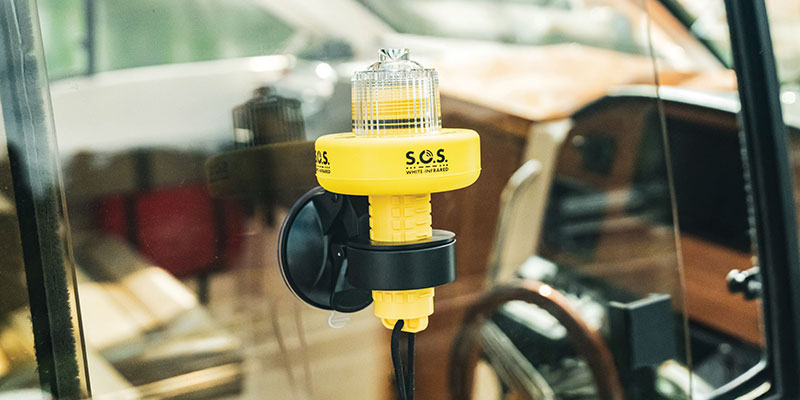
An eVDSD mounted in an easily accessible location onboard | Sirius Signal
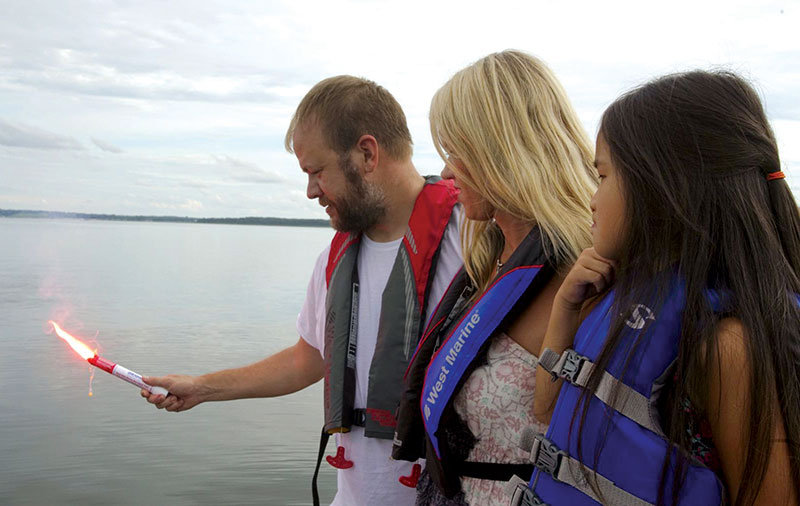
Pyrotechnic flares need to be handled with care as they burn at extremely high temperatures | Water Sports Foundation
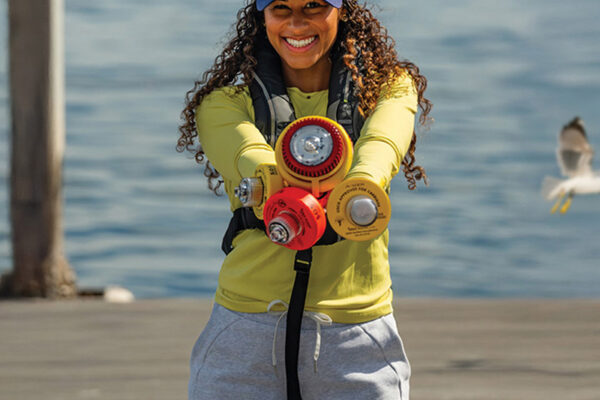
(Left): Several manufacturers, such as Sirius Signal, ACR and Orion, offer eVDSDs | Sirius Signal
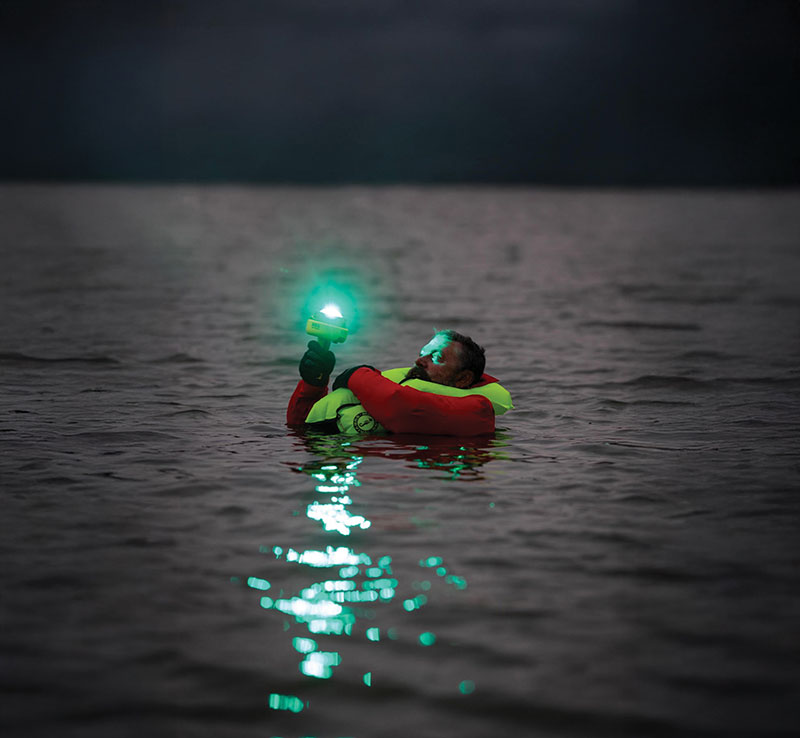
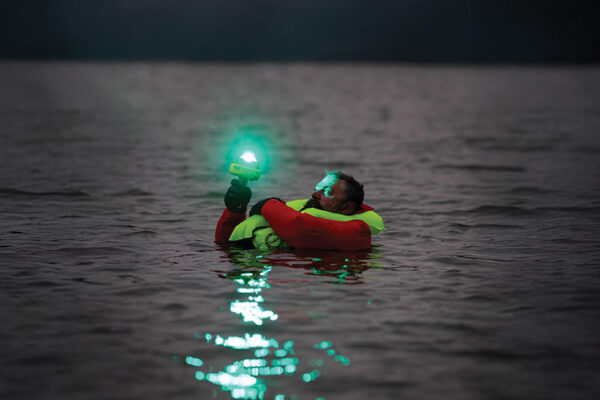
(Right): Unlike pyrotechnic flares, eVDSDs can be used in the water, and most even float upright | Sirius Signal
Why make the switch?
Switching to eVDSDs offers several advantages over traditional flares, with safety being the most important advantage. You no longer need to store devices that burn up to 3,000 degrees Fahrenheit on your boat.
Ease of use is the next benefit. Even children can safely activate an eVDSD, as there is no open flame.
The best news is that you will no longer need to worry about the hassles of disposing of your expired pyrotechnic flares, since eVDSDs do not expire. You may want to replace the batteries periodically for peace of mind, but that is the only maintenance item.
Many manufacturers offer complete kits that include both the electronic light and the distress flag, often packaged in a waterproof storage bag. Adding these to your spring launch checklist is an easy way to stay compliant and ensure your safety on the water.
There are several manufacturers of these new devices. Some of the more recognizable names are Sirius Signal, ACR Electronics, Tektite and Orion. These are readily available on the company websites, as well as through local and online marine retailers.
Usage guidelines
The U.S. Coast Guard and Transport Canada have both approved eVDSDs as replacements for traditional pyrotechnic flares, but the requirements differ depending on where you’re boating. Here is a simplified breakdown:
🇺🇸 To meet USCG requirements in U.S. waters, you’ll need two items:
- Night Signal: A handheld electronic distress light that flashes the International Morse Code S-O-S in white light. It must be waterproof, float in freshwater, and have its own power source.
- Day Signal: An orange distress flag with a black square and black circle. This flag serves as your daytime visual distress signal.
🇨🇦 In Canadian waters, Transport Canada’s standards (updated in November 2021) are stricter:
- Night Signal: The electronic distress light must flash a two-color SOS sequence: Cyan and red-orange. A white-only SOS light, which is acceptable in the U.S., does not meet Canadian requirements.
- Day Signal: Canada does not accept the orange distress flag as a standalone daytime signal. Instead, you’ll need to carry a USCG/Transport Canada-approved smoke signal (pyrotechnic) for daytime use, even if you have a two-color electronic light.
Disposing of the old Flares
Expired pyrotechnic flares are considered household hazardous waste and must be disposed of carefully. State laws and regulations prohibit the disposal of hazardous waste in waterways, trash and landfills. Setting off old flares may also result in false distress reports. The best way to dispose of expired flares is to contact your local
public works department or fire department. Alternatively, you could check with your local USCG Auxiliary flotilla. They often use old flares for educational training purposes. As a last resort, you can soak them in a bucket of water overnight to ensure that they will not accidentally ignite.
LEARN MORE
For a more detailed explanation of these requirements and how to comply, check out the U.S. Coast Guard’s 2023 “A Boater’s Guide to the Federal Requirements for Recreational Boats.” It’s a user-friendly resource designed to help boaters navigate safety regulations without the legal jargon.
Upgrading to these modern devices is a simple step toward safer boating. Whether you’re cruising the Great Lakes or exploring new waters, you’ll have peace of mind knowing you’re prepared for any situation.
Read the guide here: bit.ly/FedRecBoats.