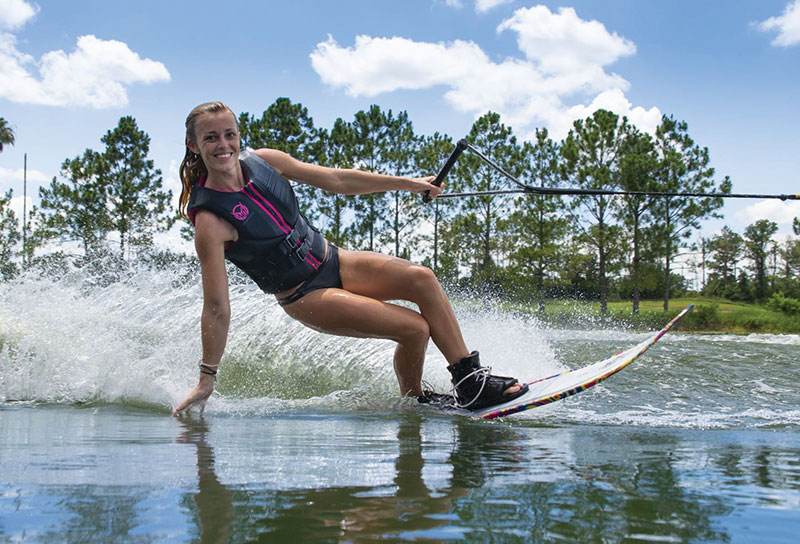
Education vs. regulation in the age of the wakeboat.
Around 2015, sales of towed watersport boats began to grow. Lee Gatts, executive director of the Water Sports Industry Association (WSIA), notes that while sales grew steadily through 2018, the 2020 pandemic sent unit totals “skyrocketing,” leaving builders struggling to meet unprecedented demand.
While builders welcomed the growth, it brought unanticipated consequences.
“Suddenly, the sheer number of boats on lakes and rivers increased dramatically,” Gatts explains. “We also had many first-time boaters out there who perhaps didn’t understand proper etiquette.”
The increase in boat activity on the busy inland lakes and rivers, particularly wakeboats and personal watercraft (PWCs), was met with growing pushback from marinas, waterfront property owners and municipalities.
The industry hears the message — and acts
Recognizing that operator education was the missing link, the WSIA launched the Wake Responsibly campaign in 2017. The initiative was a direct response to rising tensions over shoreline erosion, dock damage and noise pollution caused by wakeboats — complaints that threatened to trigger restrictive government bans. By formalizing a set of “best practices,” the industry aimed to foster a culture of courtesy and safety, mitigating conflicts between towed watersports enthusiasts and other waterway users before regulation could take hold.
The campaign, which encompasses signage, a video, a website, and educational materials and events, is built on three core pillars: Distance, volume and repetitive passes.
Backed by wave energy studies from ocean engineer Clifford Goudey, the guidelines provide a science-based framework for wave dissipation. By educating the boating community about these empirical principles, the WSIA seeks to preserve public water access rights and ensure the industry’s long-term sustainability.
A unified industry front
To maximize reach, the WSIA partnered with major manufacturers like MasterCraft and organizations such as the World Wake Association to integrate these messages into dealer networks and competitive events.
“To date, every one of our member manufacturers has adopted and committed to sharing the responsibility messages and materials throughout their dealer networks in North America,” Gatts reports.
The initiative has evolved into a nationwide model for boater education, earning accolades such as the National Association of State Boating Law Administrators (NASBLA) “Seal of Safe Boating Practices,” and influencing state-level legislation that favors education and setback requirements over outright bans. Ultimately, the campaign functions as a self-regulatory tool designed to protect the “freedom to ride” by holding the community accountable for its impact on shared waterways.
Beginning in May 2026, West Marine will partner with the association to distribute Wake Responsibly program counter cards, postcards and stickers at the company’s 180 stores.
“Our partnership is essential,” says Krista Schipner, VP of marketing for MasterCraft Holdings. “No single brand can address the complexity of water access alone. It requires alignment between manufacturers, the WSIA, and our dealer network to ensure consistent, fact-based messaging at every level.”
As an industry leader, MasterCraft views Wake Responsibly as a vital tool for long-term access.
“Many proposed local restrictions are driven by perceptions regarding shoreline impact or safety,” Schipner continues. “The most effective way to address those concerns is through data-backed science and consistent behavior.”
From the showroom to the state house
“Dealers are on the front lines in their local communities, engaging directly with lake associations, local officials and new boaters every day,” Schipner explains.
When equipped with the right tools, education and messaging, initiatives like Wake Responsibly create a multiplier effect that extends far beyond what any national campaign could achieve alone. The Wake Responsibly program has made significant inroads. WSIA’s boater education initiatives, along with its other advocacy and lawmaker engagement efforts, have successfully protected waterway access rights in state capitols across the nation. In 2024, WSIA actively engaged and educated legislators in 24 states. Today, that number has been halved to just 12.
“Far from seeing restrictions on the rise, we’re actually seeing fewer threats to access today than earlier in the decade. Wake Responsibly is a big part of why,” Schipner asserts.
Schipner says success starts with behavior.
“If we can meaningfully shift how people operate on the water — where they ride, how they interact with shorelines and how they respect other users — that creates a ripple effect.”
Schipner’s five-year benchmarks for success include a more informed community, universal adoption of the program’s principles, fewer restrictive local ordinances and continued participation growth.
Wake Responsibly provides clear, actionable guidance rooted in research and real-world environments. It gives boaters guidelines for operating in a way that minimizes impact while still enjoying the sport. Just as importantly, it gives industry stakeholders (dealers, manufacturers and organizations) a unified platform to engage with regulators and communities from a position of credibility.
Protecting access isn’t just about today’s boaters; it’s about making sure those traditions continue.
“This is about stewardship,” Schipner says. “The responsibility to protect access to our waterways doesn’t sit with one group; it’s shared across everyone who builds, sells and enjoys these boats. When we show up together with a unified voice, we’re protecting the experiences that bring people to the water in the first place.”
To learn more, visit wakeresponsibly.com.
(Main photo) Water Sports Foundation
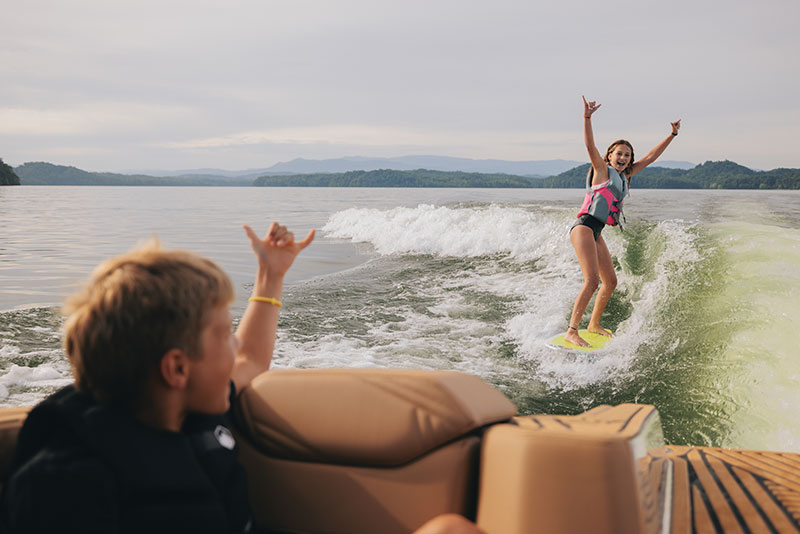
Mastercraft
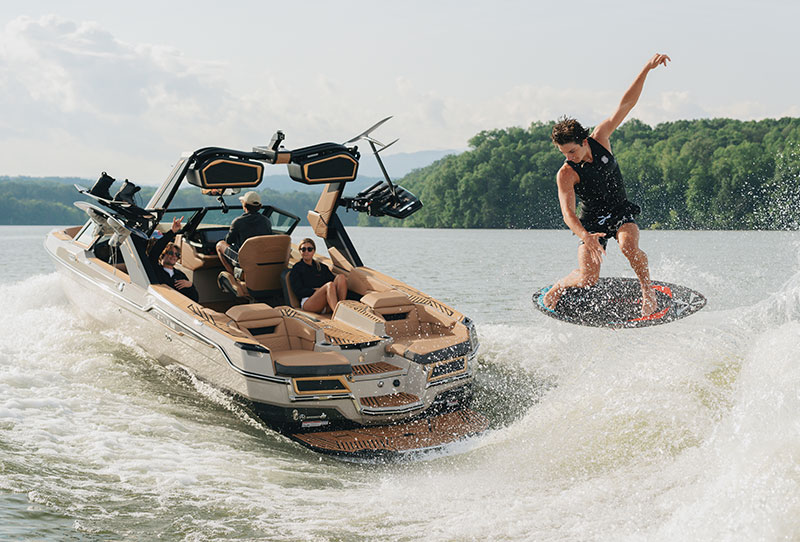
Mastercraft
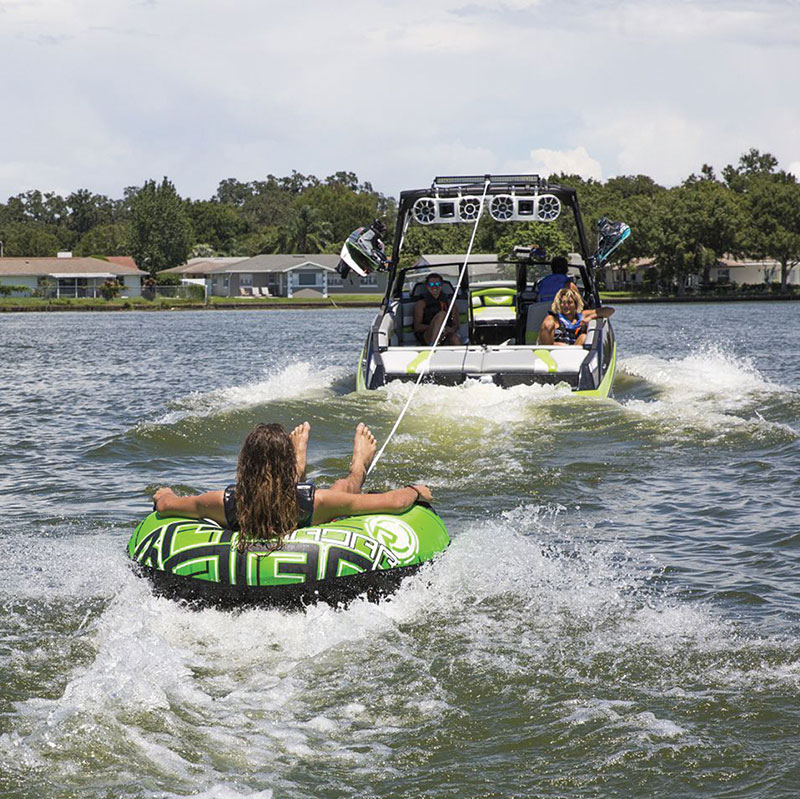
Water Sports Foundation
The Three Pillars of Wake Responsibility
Nautique
1. Stay 200 feet away: Operators are encouraged to stay at least 200 feet from shorelines, docks and other vessels. A best practice, the 200-foot suggestion allows wakes to dissipate, reducing the risk of shoreline erosion and property damage.
2. Keep music at a reasonable level: Because sound travels significantly farther over water, the program urges boaters to keep music volume respectful so as not to disturb residents or other lake users.
3. Minimize repetitive passes: To reduce the cumulative impact of large waves on a specific area, boaters are advised to vary their routes rather than staying in one “line” or cove for an extended period.
At the end of the day, your wake is your responsibility. When a wake causes damage to a dock or another vessel, the boat operator can be held legally accountable.