How the invention of jet propulsion redefined speed, handling and adventure on the water.
Some people are just naturally born to solve problems. They look at the world in a different way than the average person. This was especially true of Bill Hamilton.
Maybe it helped that he lived in a very remote area of New Zealand with a lot of geographical challenges, or maybe it was simply built into his personality. But, just like Thomas Edison or Henry Ford, Hamilton just needed to solve the problems that lay in front of him.
His first ideas were simple. He needed to level his property, so he developed an attachment for his tractor to grade the ground. This led to other such inventions, and soon he put together a company to help others with similar mechanical issues.
Even though you might call Hamilton a bit of a workaholic, he did spend his off-hours as an avid sportsman. He loved to fish the waters surrounding his village in New Zealand, but he soon realized that the rivers in this area would be hard to navigate with the boat engines available at that time. The problem was that these rivers were very shallow most of the season, and standard propeller boats could not navigate in such little water.
So, in typical Hamilton fashion, he looked for some type of system that could move his boat under these difficult conditions.
The origins of jet power
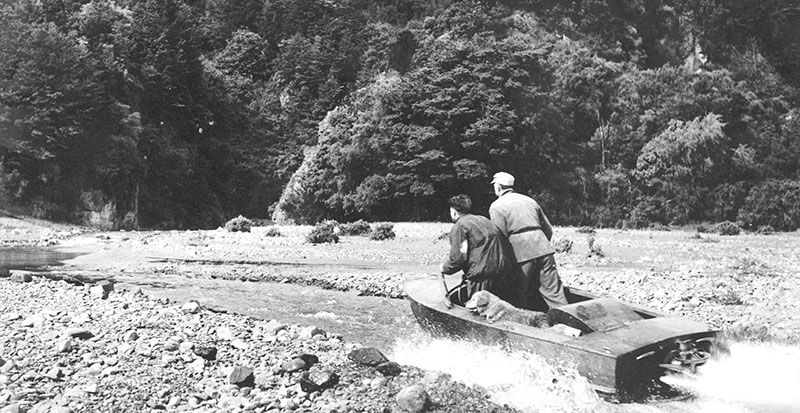
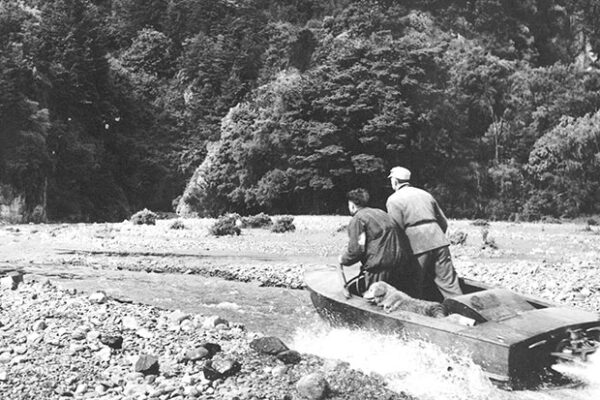
Placing pen to paper and hammer to iron, Hamilton developed several ideas. In the 1950s, using a small hand-built wooden boat, he started to test each of those designs on a river behind his house. As the months progressed, each unique idea would lead to less than optimal results.
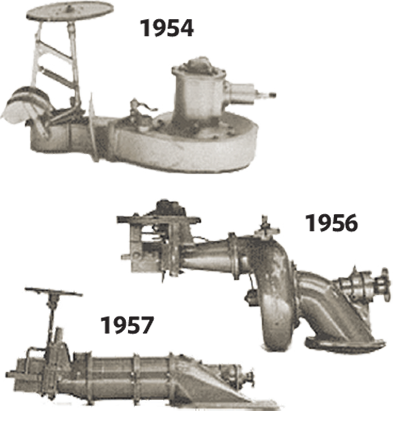
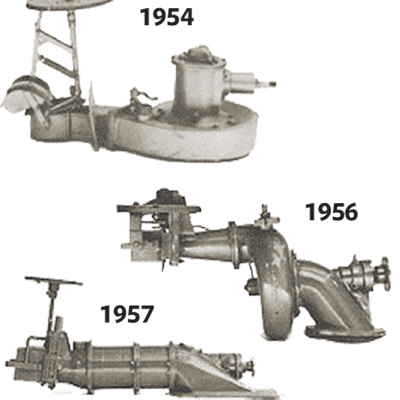
The one idea that showed the most promise was using a pump-like device attached to the motor that would take in water under the boat and pump it out behind the stern. It did move the boat well and worked in the shallow water, but the performance was lackluster at best. It seemed to Hamilton that pushing water against water required too much energy, which led to an interesting idea. After consulting with his newly hired engineering assistant, George Davison, they asked: “What if the water exited above the waterline of the boat and pushed against the air instead?”
Again, back to the workshop, and after some changes to the design, Hamilton and Davison had this new water path integrated into the design. With the new pump mounted to the wooden test boat — with fingers crossed and his wife watching from the shore — Mrs. Hamilton became the first to witness a practical jetboat skimming across the water on plane! Encouraged by this small success, Hamilton and his team further refined the water pump system until he had added a larger engine, built a new boat, was regularly plying the river system in all manner of water, and could maneuver the tightest turns and the shallowest depths.
Word spreads and business booms
Even though Hamilton lived in a remote area of New Zealand, his new boat propulsion system did not remain a secret for long. Word reached outside of the back country of New Zealand about this strange new boat pump system.
About this time, a hard-driving industrialist from the U.S. named John Buehler heard about this jetboat idea from one of his representatives who happened to travel to New Zealand. He told Buehler about the unique abilities of this water jet and how it could be operated in the shallowest of water.
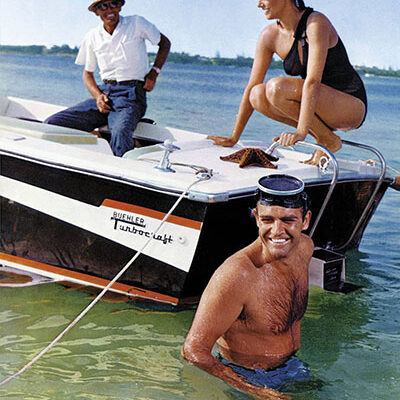
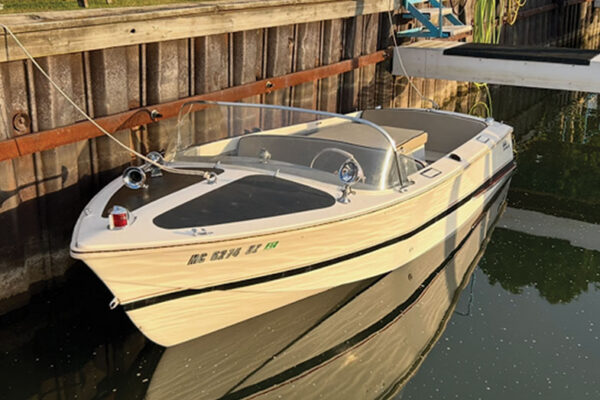
Buehler was not in the boat business. In fact, he manufactured aircraft components for the military. However, he could see the potential of this system, and he had the money to further develop the concept. So, he licensed the design, bought a fiberglass boat manufacturer in his home state of Indiana and began to develop the first jet-powered boat in America, which he called the Turbocraft.
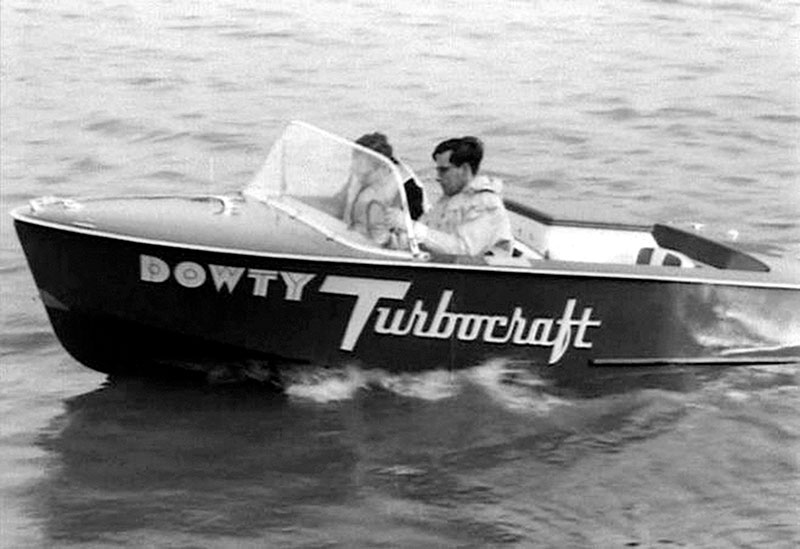
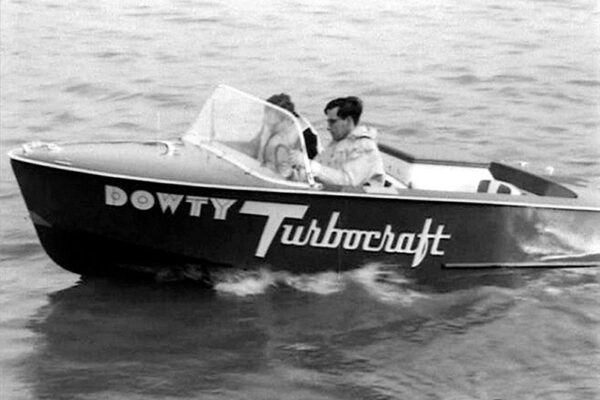
At the same time, Donald Campbell at Dowty Marine, which was part of Dowty Group in Great Britain, also caught wind of this unique water jet system and decided to license the design, as well. Dowty, like Buehler, was also involved in military manufacturing and was not really in the boat business, but was able to go into production fairly rapidly with this new technology.
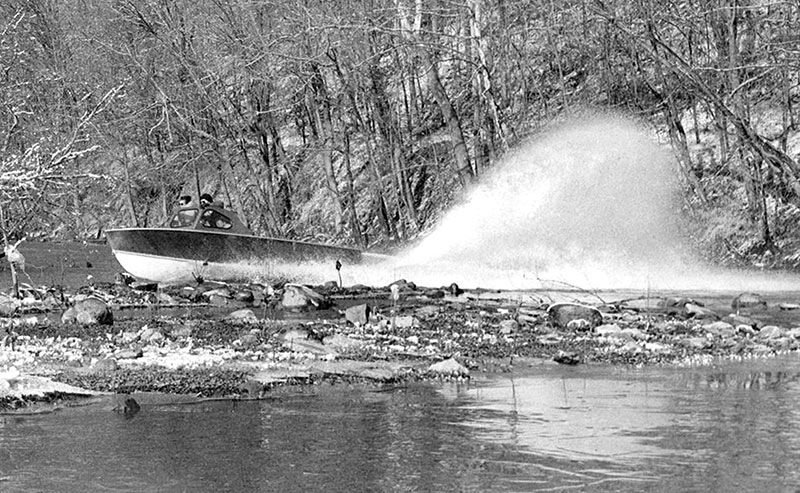
(Main image) Testing on the Green River with Bill Austin, 1958-59 | credit HamiltonJet
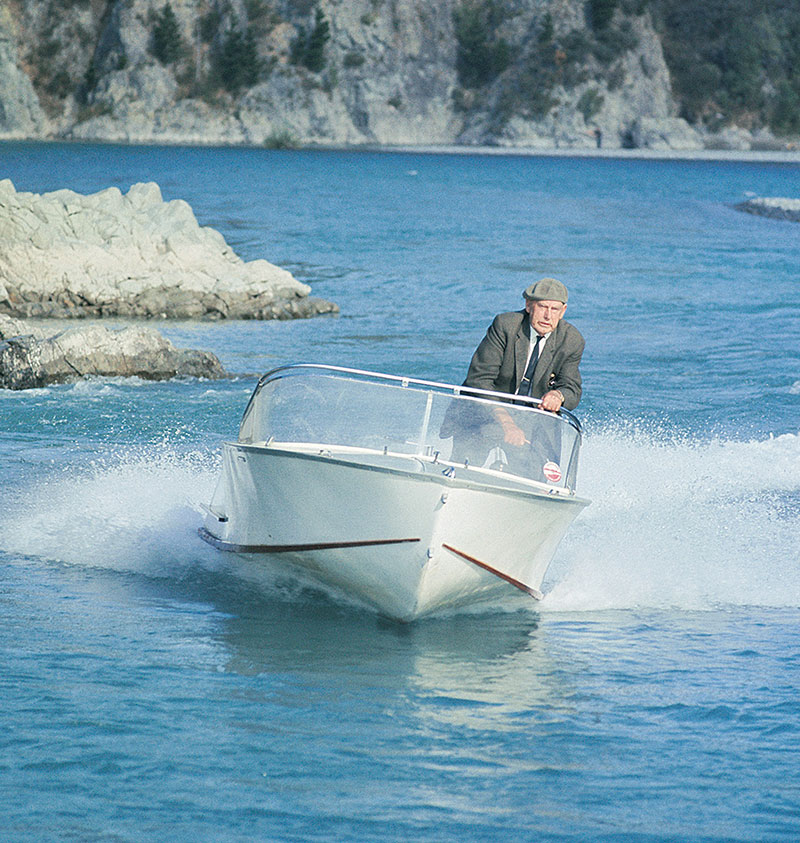
Bill Hamilton | credit HamiltonJet
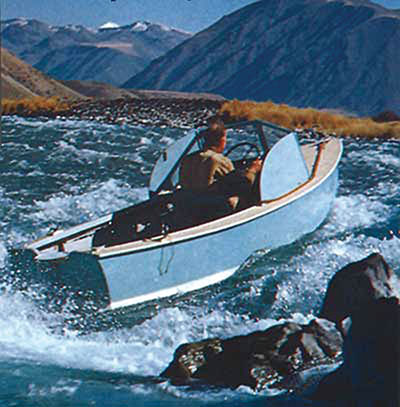
Bill Hamilton in early jetboat | credit HamiltonJet
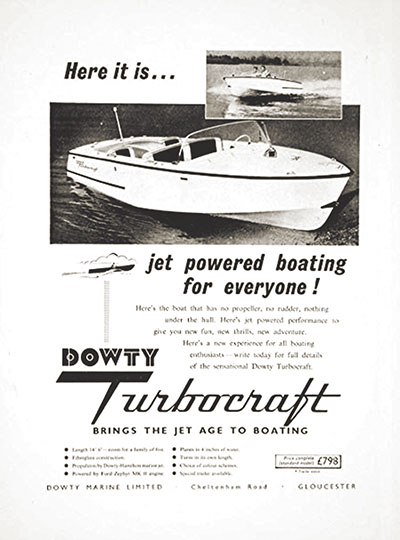
Early Dowty ad | credit dowtyheritage.org
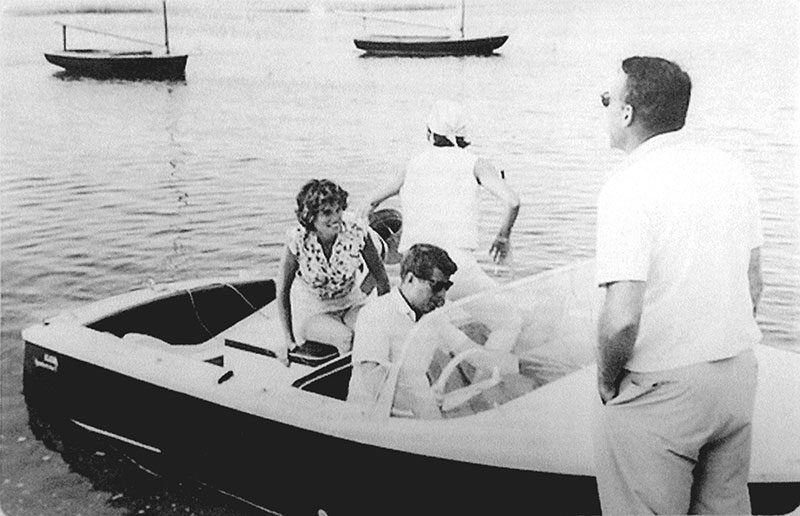
Top: The Kennedy family’s Buehler jetboat in Cape Cod | credit HamiltonJet
Bottom left: Bill Hamilton in shallow waters | credit HamiltonJet
Bottom right: Early jet engines | credit HamiltonJet
The Jet Age
Both companies started by building a small 16-foot sportboat design capable of pulling waterskiers and beach hopping. Both of their boats debuted in the 1959 season and rode the coattails of the new “Jet Age” that swept across the world at that time. This was when popular car designs started to get tailfins and resembled
a rocket about to take flight, so introducing a “Jet” boat only seemed natural.
To put this timing into perspective, the first jet-powered Sea-Doo personal watercraft did not debut until 1969, a full 10 years later, and this segment really did not become widely accepted until Kawasaki introduced the stand-up Jet Ski in the mid-70s. So, these early Turbocraft jetboats were blazing new trails at the end of the 1950s.
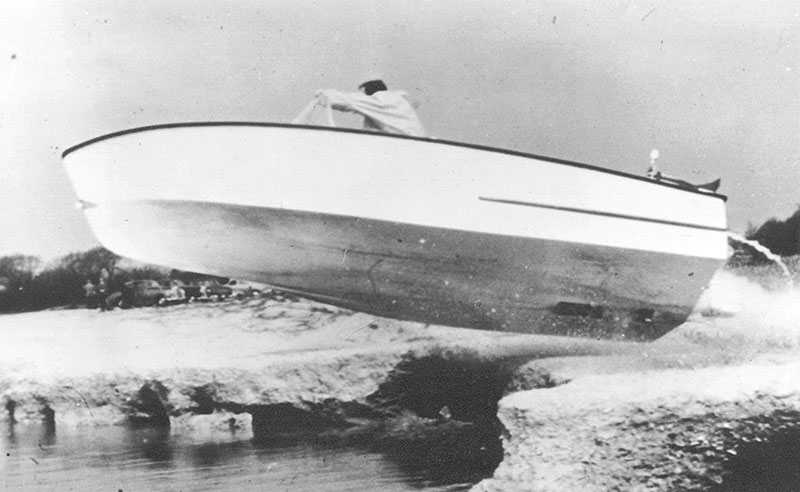
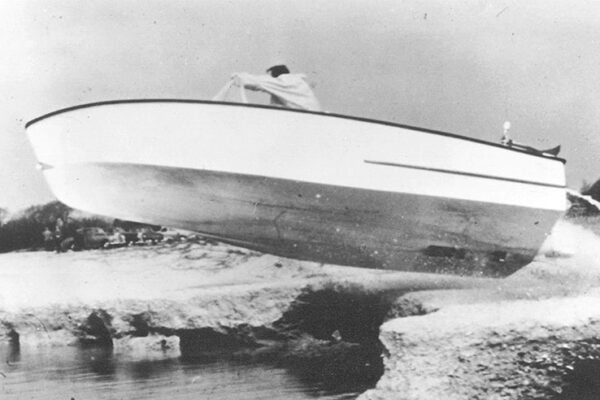
In order to build interest in this new form of boat propulsion, both Buehler and Dowty did some unique things to gain publicity. Ads would often show the boats running in 3 inches of water while racing past a person standing ankle deep just a few feet away. Dowty filmed a boat running right over a section of beach and back into the water on the other side while hardly slowing down.
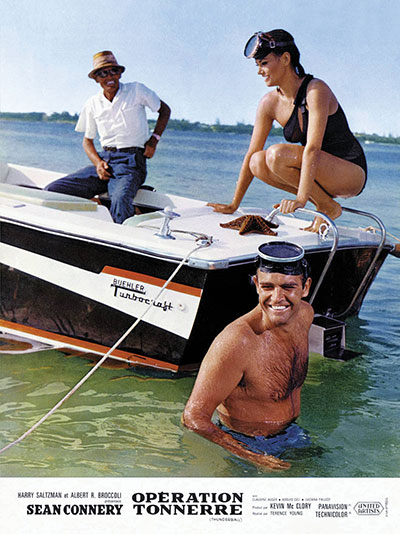
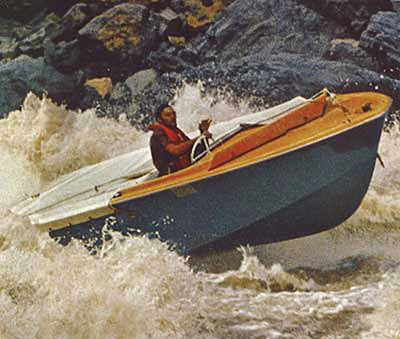
In 1960, Buehler, along with the full support of the Hamilton family, staged a successful run up the Colorado River at the Grand Canyon — a dangerous feat that had never been completed before with a boat of any kind. National Geographic filmed the run and wrote a full story about the accomplishment, and it was documented in a book written by Hamilton’s daughter-in-law, Joyce. Buehler also managed to get one of his boats featured in the James Bond movie “Thunderball,” where it starred in a famous diving scene with Sean Connery and Claudine Auger.
An early adopter of the Turbocraft boats was President John F. Kennedy and his family, who used the boats for watersports at their beach home in Hyannis Port, Massachusetts. The Secret Service had purchased another one just so they could keep up with them on the water. Dowty’s boat was featured in the British show called “The Prisoner,” and Prince Charles also owned a Dowty.
Still going strong
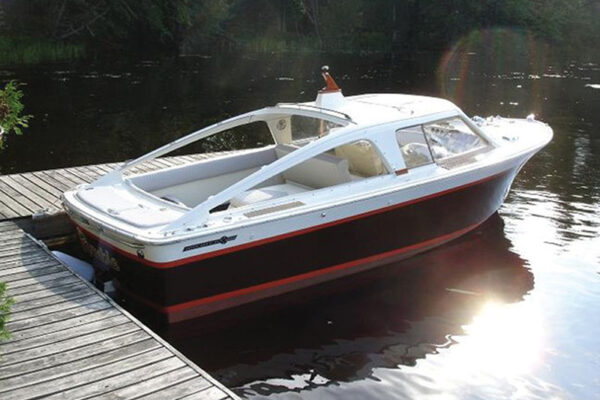
As the popularity of jet propulsion grew, Buehler continued to expand his line of boats. In the late ’60s, he even enlisted notable car designer Virgil Exner to design a few futuristic models, which were probably more works of art than practical boats, but they did attract a lot of attention at the dock.
As with all good things, Buehler’s attention moved to keeping his struggling manufacturing empire running, and so ended his boat production in 1971. Dowty closed its boat shop a little earlier in 1965.
Many of these boats still ply the waters all over the world today and are somewhat of a bargain for boat collectors. For drivers of these historic craft, nothing really beats the thrill of gliding over the water on only the hull of the boat with a rush of water streaming out behind.
Hamilton’s company continues to this day, building jet units big enough to power large ships and still small enough to be used in pleasure boats like Hinckley’s line of Picnic Boats.
If you are using a jet-powered boat or personal watercraft today, you have Hamilton, Buehler and Dowty to thank for that stream of water pushing the vessel over the surface of the lake. Just look out at any all-sports lake, and you will see one rocketing past on a burst of pure water power!
The Jet Age may have started in the ’50s, but it’s still going strong today.
Top left: “Thunderball” movie poster | credit HamiltonJet
Top right: Jon Hamilton, Bill’s son, during Colorado River run | credit HamiltonJet
Middle left: Dowty demo boat | credit HamiltonJet
Middle right: Dowty Turbocraft flying over the beach | credit HamiltonJet
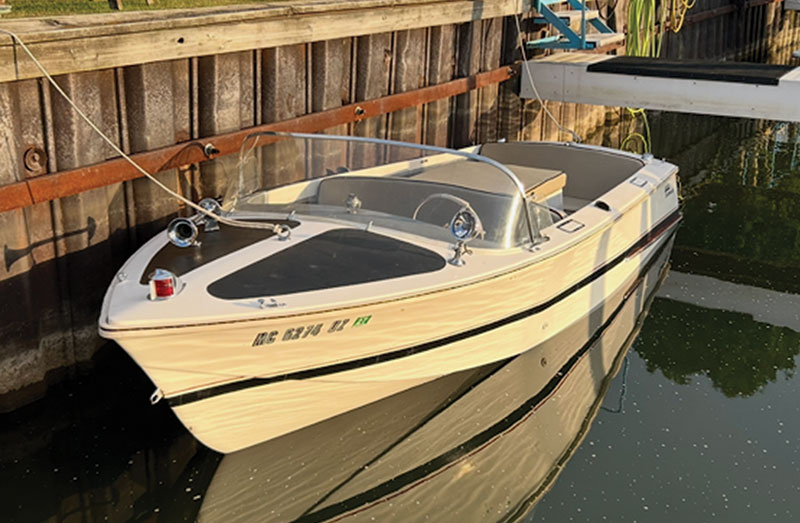
Bottom left: Restored 1959 Buehler| credit Bill Kranker
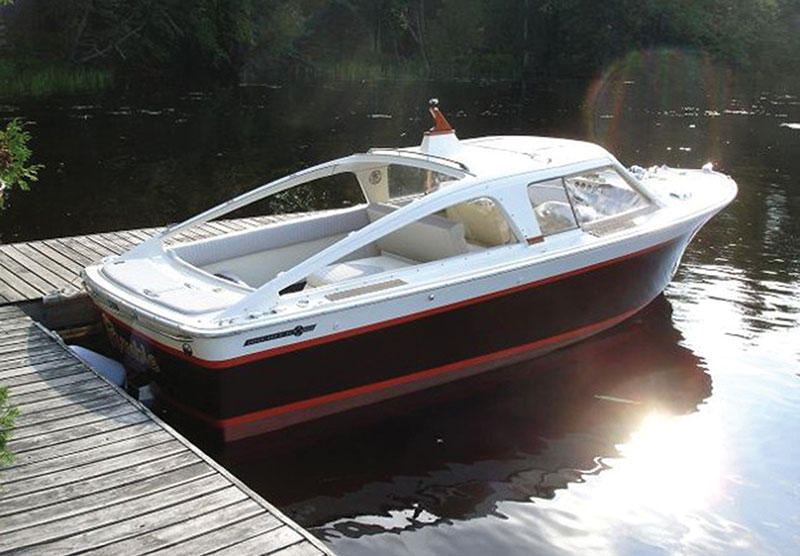
Bottom right: Exner-designed Buehler Turbocraft | credit antiqueboatamerica.com