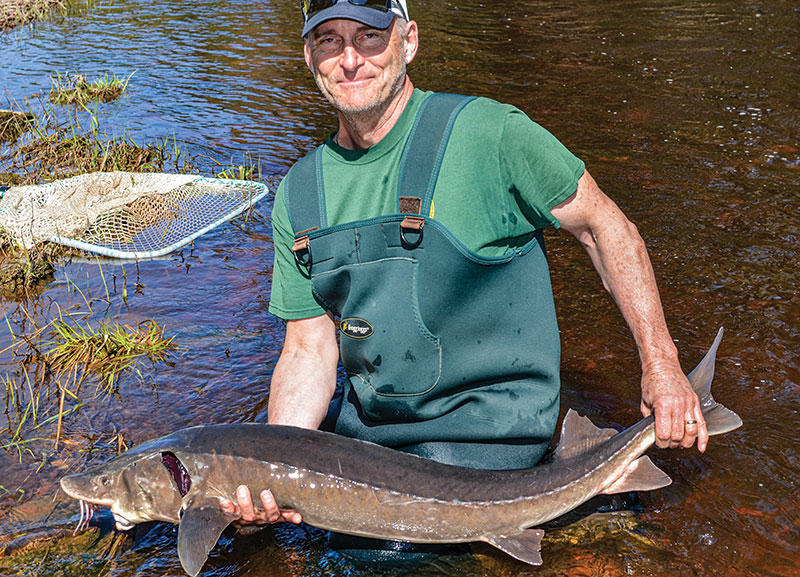
Lake sturgeon are making a comeback.
by Dave Mull
When Great Lakes anglers talk about targeting really big fish, the species mentioned most often are likely lake trout, chinook salmon, flathead catfish and muskies.
While all of those species grow big and are readily available through most of the Sweetwater Seas, they are little guys when compared to lake sturgeon.
For instance, in 1997, the biggest lake trout ever recorded was caught in Lake Superior, weighing an impressive 63.1 pounds. The biggest sturgeon legally harvested in Michigan was a 193-pounder speared through the ice in 1974, at Mullet Lake, one of the waters in Michigan’s Inland Waterway. That fish was more than three times the size of the largest laker.
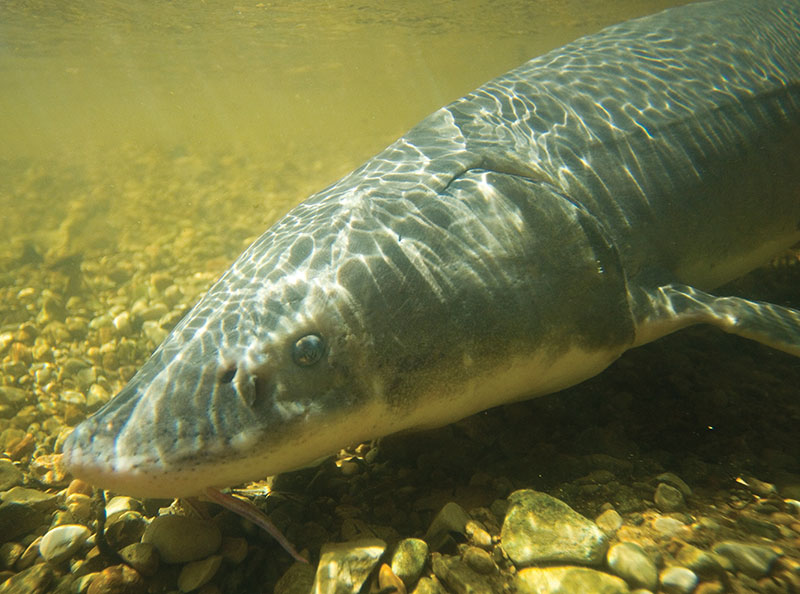
Living fossils
Paleontologists have determined that sturgeon first appeared roughly 100 to 150 million years ago and have survived largely unchanged to the present day. No wonder they are often referred to as “living fossils.”
Part of the reason lake sturgeon rarely come up in big fish conversations is that they are listed as threatened or endangered in most of the Midwestern states and are therefore protected from fishing, so there are not many around. Several states, including Minnesota, Wisconsin, Michigan, Ohio and New York, have sturgeon stocking programs to bolster the populations of these fish, which once were fairly common throughout the Great Lakes.
The story goes that sturgeon used to be considered nuisances, wrecking nets set for other species back in the 1800s. But then folks started valuing their meat and eggs, which are the main ingredient in caviar. Commercial fishing, loss of river spawning habitat due to dams, plus water pollution caused their numbers to decline dramatically.
Catch and release
In very few places is sturgeon fishing allowed. Although states and most charter captains suggest the immediate release of any sturgeons caught, there are two Michigan fisheries where anglers may harvest a single sturgeon per year. In the American waters of the St. Clair River, which connects Lake Huron to Lake St. Clair, anglers may tag and keep one sturgeon between 42 and 50 inches. In the Menominee River, which creates the border between Northern Wisconsin and Michigan’s Upper Peninsula, anglers are allowed one sturgeon of at least 60 inches per year. The St. Clair harvest season runs from July 16 through September 30, while the Menominee River season begins the first Saturday in September and ends September 30. All kept fish must be registered with the Michigan DNR within 24 hours of being caught.
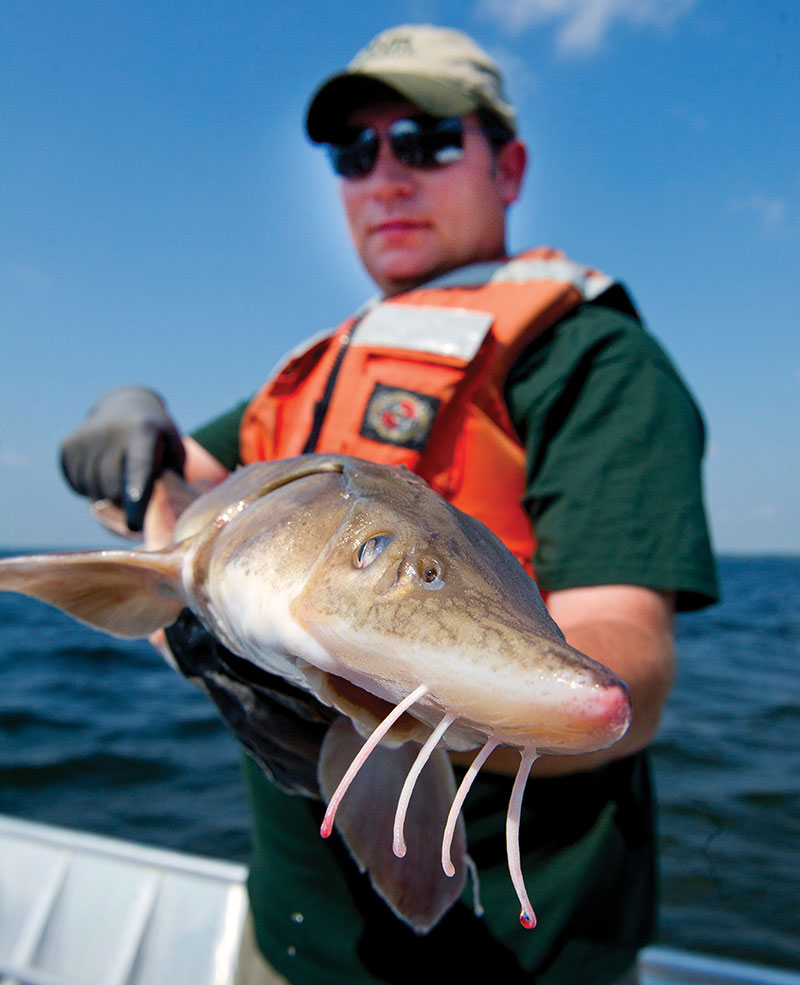
If and when you catch a sturgeon you plan to release, handle it with care. The Michigan DNR says to support the fish under its pectoral fins without touching the gills and always hold the fish horizontally. Take a picture if you can, then put the fish back in the water, holding it upright until it can swim away.
As you might guess, when targeting a fish that might weigh 50 to 100 pounds, use heavy tackle. My Canadian friend Richard Ofner has caught sturgeon up to 50 inches long at night from his Hobie kayak. He says heavy catfish gear is the way to go. A heavy rod with a big saltwater-style reel, 50-pound braided main line and a heavy fluorocarbon on monofilament leader are good choices. The fishing tactic is simple. Just thread a few nightcrawlers on a 5/0 circle hook and put a sliding weight above the leader, heavy enough to keep the weight pegged to the bottom. Cast and hold the rod to feel for bites. Lots of other smaller fish will peck at your worms and can quickly clean off the hook. Check it often.
A great way to learn the nuances of sturgeon fishing is to hire a charter. Several specialize in sturgeon fishing on the St. Clair River. For a list, check out fishingbooker.com.
All photos credit Michigan DNR
DAVE MULL Diehard angler Dave of Kalamazoo, Michigan, has contributed boat tests and features to Lakeland Boating for three decades. His current goal is catching a 30-plus-pound Great Lakes denizen from his Old Town kayak.