Affordable low-light and thermal imaging systems change the way boaters see the water.
by Glenn Hayes
It’s not uncommon to see thermal or low-light imaging cameras onboard larger vessels. Their popularity has grown among owners of larger boats because of the added visibility they offer, the ease of night operation, and the peace of mind they provide. Until recently, they were often too costly for midsized and smaller craft, but that is no longer the case.
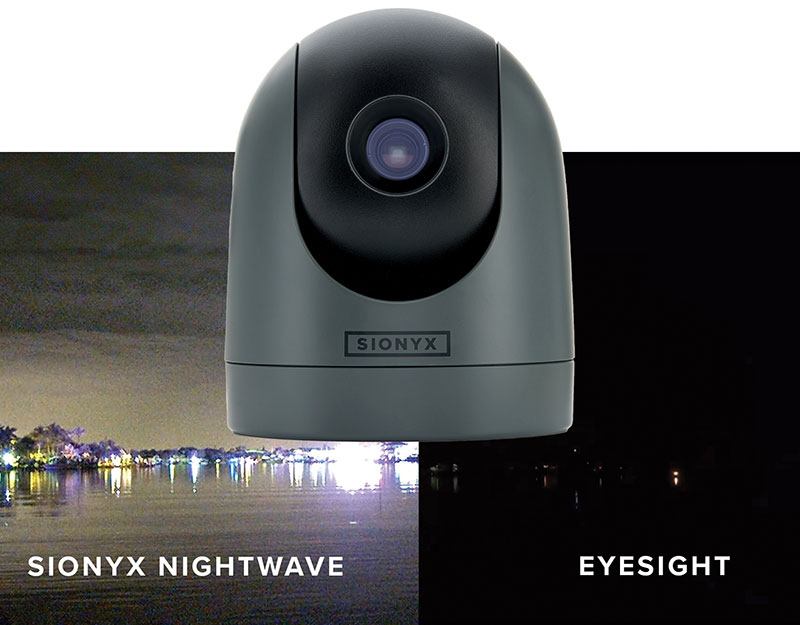
Sionyx Nightwave Analog
Thanks to products such as the Sionyx Nightwave Analog Camera, stress-free night navigation is now possible at a price many can afford. Using new lower-cost technology, low-light imagers can produce excellent results for night navigation. Even traditional thermal imagers have come down in price to a level that helps trailer boaters navigate safely and avoid roadside trailer troubles.
Sionyx has developed a good reputation in the night vision market and has a wide and impressive line. The Sionyx Nightwave Analog Camera can display an enhanced full-color view on a multifunction display, tablet or smartphone in very low-light conditions. Unlike thermal imagers, which operate on temperature differences, the Nightwave uses a special COSMOS image sensor that amplifies any available ambient light and colorizes the resulting image. The result is impressive, with almost daylight-quality imaging where there might otherwise be darkness.
These cameras can be mounted just about anywhere. Weighing just 2 pounds, the Sionyx Nightwave can be permanently surface-mounted or attached to a removable clamp-style mount. This flexibility makes it a practical option for smaller boats that lack a hardtop or ideal mounting location.
It operates on 12V and is easy to power on any boat. It can connect to a smart device via Bluetooth or to a remote display or multifunction display via an analog or USB cable. It has an IPX7 rating, making it waterproof and resistant to the elements. When mounted, its high-quality lens offers a 44-degree field of view and can detect a human on a quarter-moon night at nearly 500 feet. All that extreme low-light capability is available for under $2,000.
Sionyx Aurora Pro
If that camera is still out of budget, Sionyx also offers a handheld scope. The Sionyx Aurora Pro offers similar low-light color vision to the Nightwave, but in a compact handheld scope. It, too, has an IPX7 rating that will shrug off the elements and can also see a human at nearly 500 feet in almost pitch-black darkness. Its diminutive size makes it easily portable, and it can run for over two hours on a single charge or run continuously if plugged into a USB outlet. It has a built-in GPS and accelerometer, and it can take stills and video, with storage up to 250 GB. This handy little scope even has an optional IR illuminator if the less-than-1 MLX low-light capability is not enough to get a good nighttime image. This impressive little scope is available with an MSRP of $999.
FLIR One
Another handheld device that operates as a thermal camera and can save a lot of heartache is the FLIR One. This tiny thermal device attaches to the bottom of an iPhone or Android phone and displays a thermal image on the phone’s screen.
Although this camera will not work at an effective range to navigate or run a boat at night, it’s still extremely useful to any boater. Because of its ultra-high-temperature sensitivity, it can clearly detect and display temperature differences, making it very effective at identifying mechanical and electrical issues before they become major problems. By pointing the camera at onboard batteries, electrical components, engines, cooling systems and even trailer bearings, these tiny and inexpensive devices are excellent at finding and helping diagnose problems early on. The thermal image is clear, thanks to Multi-Spectral Dynamic Imaging.
Simply put, the FLIR One overlays a version of your phone’s camera image onto the thermal image, making individual wires, connectors and components clear and easy to see. With a low cost of just $214, boaters can have peace of mind by diagnosing issues early on. On a recent long road trip with my trailered boat, I checked the bearings periodically to ensure there were no issues and their temperature remained constant. I was also able to tell that one of my onboard batteries would need to be replaced before it failed, as it was operating at higher temperatures than the others. The FLIR One has proved its worth and now remains in my boat’s tool bag.
Now everyone can reap the benefits of low-light and thermal technology, making time on and off the water more enjoyable and worry-free.
Top image: Sionyx Nightwave | credit SiOnyx
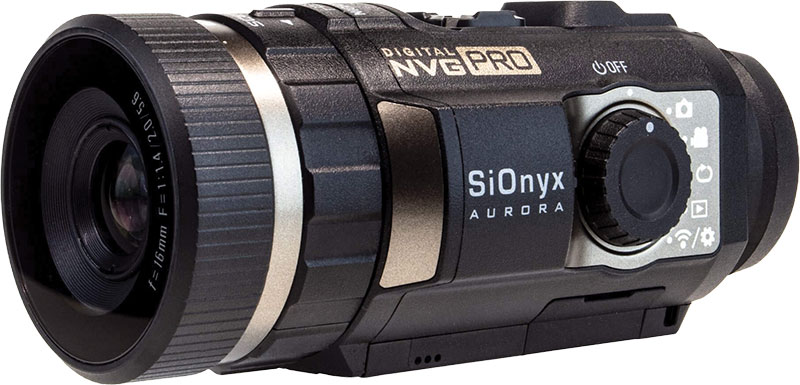
Sionyx Aurora Pro | credit Sionyx
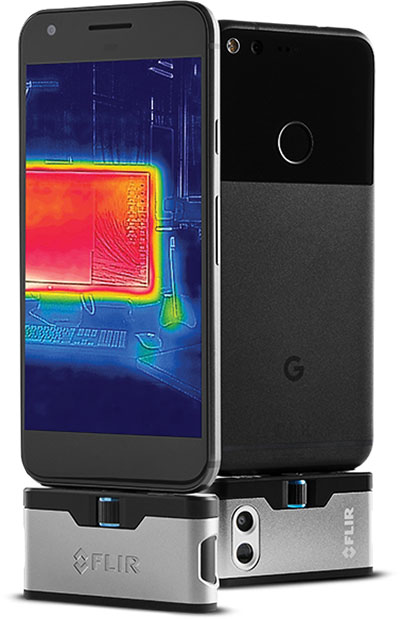
FLIR One | credit FLIR

GLENN HAYES is a marine writer and photographer whose background in the marine industry and in marine electronics spans almost three decades and many thousands of miles at sea traveling the world. He can be reached at HAYESSTUDIOS.COM