Discover the East Coast’s most memorable Great Loop cruising destinations.
Story & photos by Tom & Brenda Lahey
In our last installment, we left you in Fernandina Beach, Florida, right on the Georgia border. In this installment, we will take you from Georgia to New York City.
Georgia
Many cruisers, especially those who travel the East Coast regularly, either love Georgia or try to avoid it. The Intracoastal Waterway (ICW) route in Georgia is 150 miles of mostly winding creeks, rivers and bays through pristine salt marshes.
The tidal swing through Georgia averages 8 feet, making passage at low tide tricky in places. There are very few marinas in the southern section, and they are located a mile or two up the side channels. For those who like to anchor, however, there are many excellent anchorages as long as you watch depths at low tide.
As you near Savannah, the northern part of Georgia becomes more built up with several excellent marinas, including the new IGY Savannah Harbor Marina right in downtown Savannah.
For Brenda and me, Georgia is a must-visit part of the route. We like stopping at the small marinas with lots of local charm. Two of our favorites are Sunbury Crab Company, with its excellent restaurant, and Kilkenny Marina, with lots of Old Georgia charm. The view across miles of undisturbed salt marsh is beautiful, with lots of wildlife along the way. The trick is to time your travel to the tides.
Crossing into Georgia, you will first pass the Kings Bay Submarine Base. It’s probably the closest you’ll ever get to a nuclear submarine in your boat (we hope!). Next is Cumberland Island with the remains of the Carnegie Family estate. Watch for the wild horses strolling along the beach!
Jekyll Island State Park is a very popular stop with an excellent marina. This was the playground of the rich and famous in the 1920s and ‘30s. It features a beautifully restored hotel, walking and biking paths, and a nice selection of restaurants. We always try to spend an extra night there. After Jekyll, you will enter the salt marshes until you near Savannah.
For those who would rather avoid Georgia, there are several major inlets where you can go outside. St. Mary’s Inlet near Fernandina and Saint Simons Sound, just after Jekyll, are both popular transit points. Those bypassing Georgia can also avoid the shallow sections in southern South Carolina and head directly to Charleston Harbor. You can also come back into the ICW at the Savannah River on the South Carolina border or at Port Royal Sound for access to Hilton Head Island or Beaufort, South Carolina.
The Carolinas
South Carolina and North Carolina have some of the most popular sections of the Loop. Charleston Harbor is rich in history, with many things to see and do, and it has fantastic southern restaurants. A ferry trip to Fort Sumter in Charleston Harbor is on many Loopers’ to-do lists, and the downtown market is a shopping experience not to be missed. You can also visit the USS Yorktown Aircraft Carrier at the Patriots Point Naval & Maritime Museum. The Charleston Harbor Marina is right next door with excellent facilities.
From Charleston, the ICW crosses Charleston Harbor and enters an area that, before the Civil War, was the largest rice-producing area in the United States, with large plantations lining the rivers. The famous Carolina Rice was cultivated in fields that line the ICW. You can still see the remains of the rice fields as you cruise through. Georgetown is a popular stop, with the Rice Museum and a quaint downtown. Between Georgetown and Myrtle Beach, you will travel the Waccamaw River, which many consider to be one of the most beautiful sections of the Loop.
After passing through the famous Myrtle Beach area, you will cross into North Carolina, second only to Florida on the ICW in length, at approximately 300 miles. North Carolina has several Looper destinations and side trips. Popular stops on the main ICW route include Southport on the Cape Fear River, Morehead City and Beaufort, as well as Coinjock at the Virginia border, famous for its prime rib!
When you leave Beaufort and Morehead City, you will cross Pamlico Sound. A popular side trip here is up the Neuse River to New Bern — the birthplace of Pepsi Cola and the Hatteras Boat factory! After crossing the sound, you will reach a 21-mile man-made canal connecting the Pungo and Alligator Rivers. Once you pass under the Alligator River bridge, you will enter the Albemarle Sound. Here you can choose to head north toward Elizabeth City and the Dismal Swamp Canal, or continue to Coinjock and the Virginia Cut. Both routes lead to Norfolk, Virginia.
The Coinjock route is probably the most popular and the shortest route to Norfolk. After Coinjock, on the Virginia Cut, you will pass through the Great Bridge Lock. This bridge and lock have been plagued by mechanical issues over the last few years, so check ahead for the status.
The Dismal Swamp route is a beautiful historic waterway, originally surveyed by George Washington. There are two locks, one at either end, with some of the friendliest lockkeepers on the Loop! It has a bit of a reputation for being shallow and narrow, with hidden debris lurking out of sight. The waterway partially lives up to its reputation. It is narrow. In places, it can be tight for boats to pass. It is shallow. If you have more than a 4-foot draft, we would not recommend it. There is hidden debris underwater. Submerged logs are quite common. On our last passage, we “bumped” at least four or five “somethings” with our 3.5-foot draft. There was no damage, but it was a bit unnerving. It is beautiful! The trees arch over the canal, forming a tunnel. The sides of the canal are mostly a wildlife refuge. It’s common to see deer and bear along the banks or swimming across the canal. If you arrive for the first lock-through of the day, you can make it all the way through in a day. The speed limit in the canal is idle speed only, so it takes a full day to transit the 22 miles of the canal. There is a very nice overnight dock (without power) available at the visitor center, about halfway through, as well as at the north end of the canal, just before the lock. We’ve taken both routes and find the Dismal Swamp to be the more scenic, if slightly riskier, route.
Also, before making your Dismal Swamp vs. Coinjock decision, you may consider a side trip on the Albemarle Loop. This is a mini-loop consisting of six city docks that offer free dockage to attract visitors. Just stay at two or more for free dockage! Find out more at AlbemarleLoop.com.
The Chesapeake Bay
Once you cross into Virginia, it’s a short cruise to Norfolk, the northern terminus of the Intracoastal Waterway, and the gateway to the Chesapeake. Norfolk is also the home of the America’s Great Loop Cruisers’ Association (AGLCA) Spring Rendezvous in May, the kickoff event for Looper season. Both Norfolk and nearby Hampton offer several large marinas and anchorages, making them popular Looper stops for waiting out good weather before venturing into the Chesapeake.
The Chesapeake Bay would take an entire book to cover properly. We’ve cruised the Chesapeake on four trips of our various Loop trips, and we spent an entire summer cruising in the Chesapeake, and we still have not visited all of the quaint villages and metropolitan areas that line both the eastern and western shores.
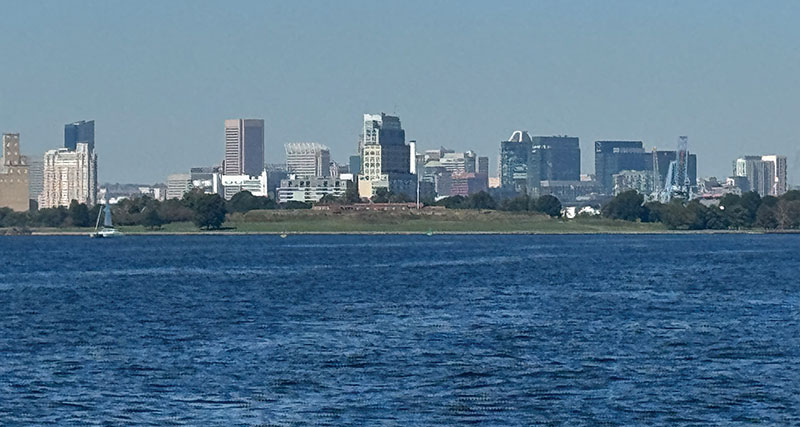
We’ll just mention a few of our favorite stops. Deltaville, Virginia, and Deale, Maryland, are great stops if you need work done. Both have several boatyards and many marinas. Solomons Island is probably the most popular destination on the Chesapeake, with many marinas and lots to see and do. On the east side of the Bay, Oxford, Tilghman Island, St. Michaels and Rock Hall are all great stops with a small-town feel. The two big stops in the Chesapeake are Annapolis and Baltimore. Both have rich histories, large marinas and sightseeing! When entering Baltimore Harbor, be sure to watch for the Flag Buoy on the north side, just after where the Key Bridge used to be. It marks the spot where Francis Scott Key wrote the “Star-Spangled Banner” during the bombardment of Fort McHenry.
On the west shore, past Baltimore, Havre de Grace is a fun small town. And be sure to say hello to Foster Shucker, the AGLCA Harbor Host, if you stop in Bohemia Bay at the entrance to the C&D Canal. He is a great resource for all things Chesapeake!
Delaware Bay & Cape May
After you explore the Chesapeake, you will continue your trip through the Chesapeake and Delaware Bay Canal (C&D Canal), which connects the two bodies of water. Chesapeake City, in the middle of the canal, and Delaware City, at the eastern end of the canal, are both regular Looper stops before heading down Delaware Bay to Cape May, New Jersey. The staff at the Delaware City Marina offers a Looper briefing each evening with tips for navigating the Delaware Bay and the trip up the coast to New York.
From the exit of the C&D and Delaware City, you can reach Philadelphia in a day’s cruising. This is another popular side trip to visit another of America’s historic cities.
At the end of Delaware Bay is Cape May, New Jersey. A historic vacation mecca with a small-town feel. There are several large marinas and a few good anchorages to choose from. Downtown Cape May has many historic Victorian homes and offers tours. The downtown has been converted into a pedestrian zone and offers hundreds of shops and restaurants to explore. Cape May Harbor is well-protected and is where Loopers will wait for a weather window to make the jump up the coast to the Hudson River and New York City.
New Jersey & New York City
From Cape May, there is an inside route called the “New Jersey Intracoastal Waterway” that leads from Cape May 117 miles to Manasquan Inlet in the north. Hurricane Sandy caused major shoaling along this route, and it has never really recovered. There are stretches where the depth can be less than 4 feet, even at high tide. Unless you are in a very shallow-draft boat, it is not recommended.
The majority of Loopers will take the offshore route in the Atlantic, leaving from Cape May and making a series of hops to Sandy Hook and New York City. The distance from Cape May to Sandy Hook is about 130 miles. You don’t need to do the entire 130 miles in one shot. Several inlets let you take shorter hops to break up the trip or dive in should the weather turn.
- Ocean City: 35 miles
- Atlantic City: 40 miles
- Barnegat Bay: 75 miles
- Manasquan: 100 miles
We tend to travel 3 to 5 miles offshore. The water near the beaches is shallow, around 15-30 feet, causing the waves to build up. At 3 to 5 miles, you will be in about 50 to 60 feet of water, which we find smooths out the ride.
Once you round Sandy Hook, you are into New York Bay and the start of the Hudson River. Depending on their itinerary, Loopers may head directly into New York Harbor to anchor behind the Statue of Liberty, or to Liberty Landing Marina with easy access to Manhattan. Some choose to go to either Atlantic Highlands or Great Kills, New Jersey, both of which have large marinas with anchorages and mooring fields, and are more economical than in the City.
Be sure to find a buddy boat when entering New York Harbor and going past the Statue of Liberty to take each other’s requisite “My Boat in Front of the Statue Photo!”
In our next installment, we will bring you up the Hudson River to the Canadian border and talk about our experience on the Erie, Oswego and Champlain Canals.
Top image: Fort McHenry & Baltimore Skyline, Baltimore, MD
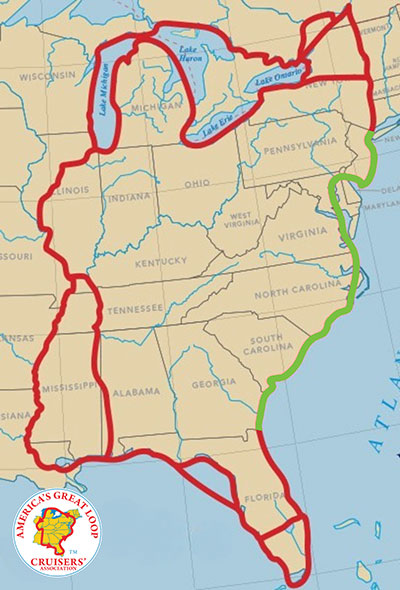
East Coast portion of the Great Loop
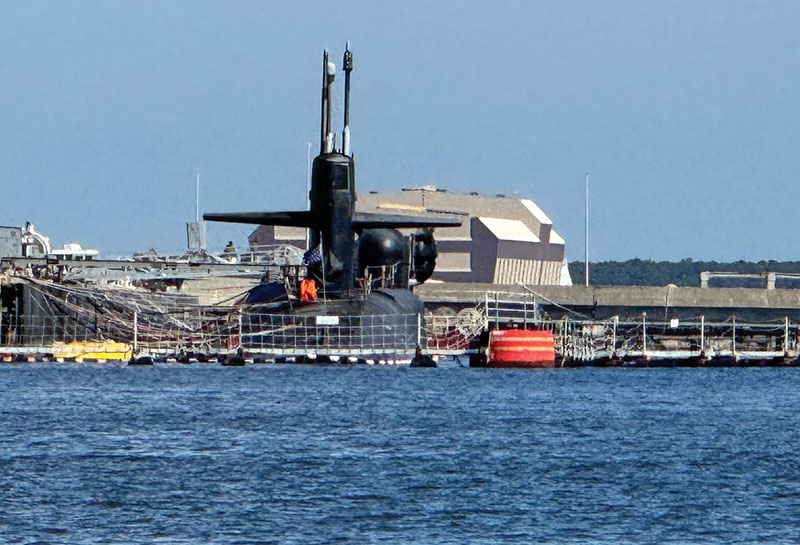
Kings Bay Submarine Base, St. Marys, GA
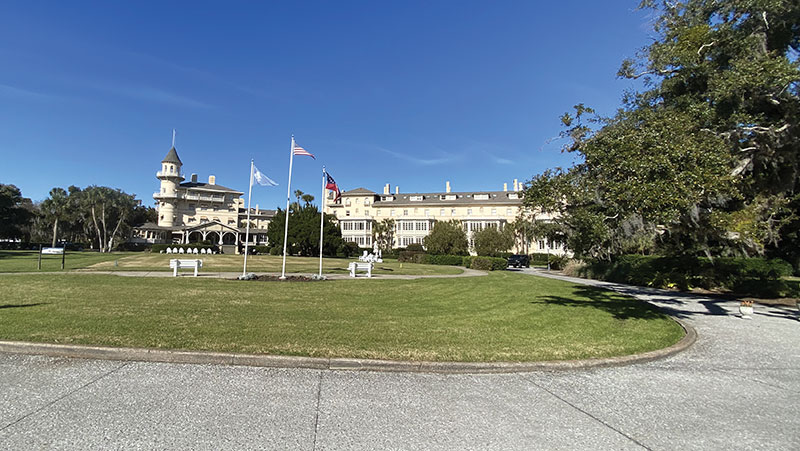
Jekyll Island Club Resort, Jekyll Island, GA
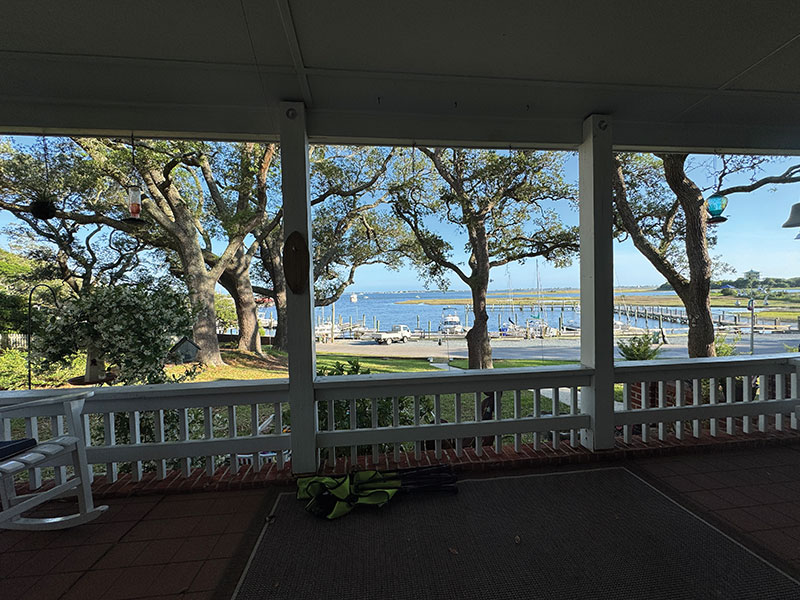
View from the Creech’s Front Porch, Beaufort, SC
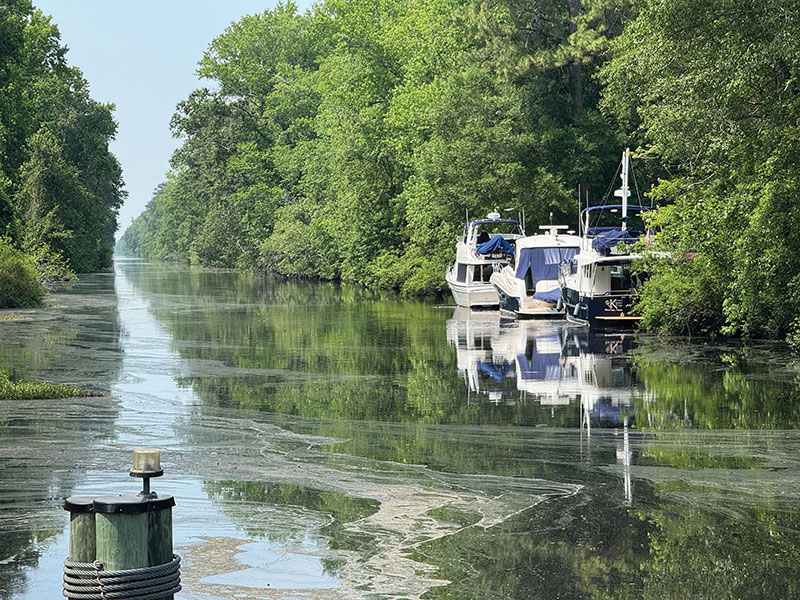
Docked in the Dismal Swamp Canal, South Mills, NC
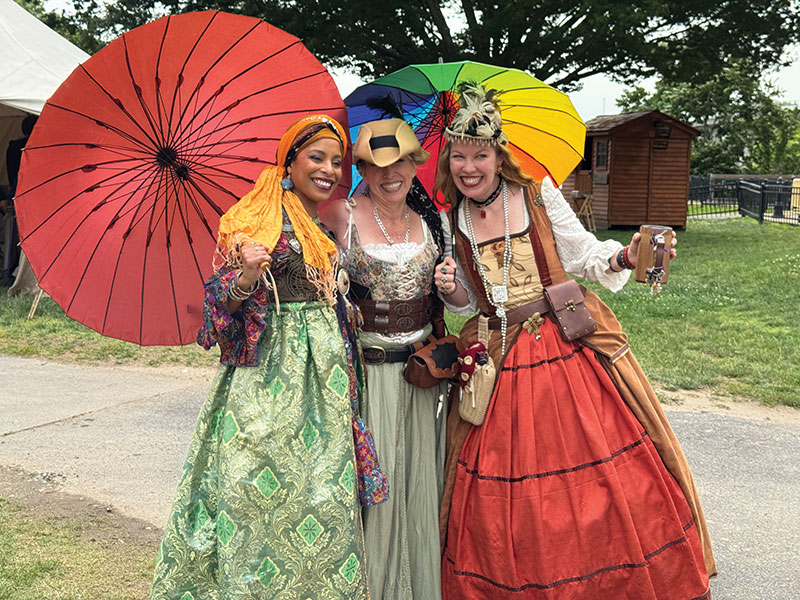
Pirate Fest, Hampden, VA
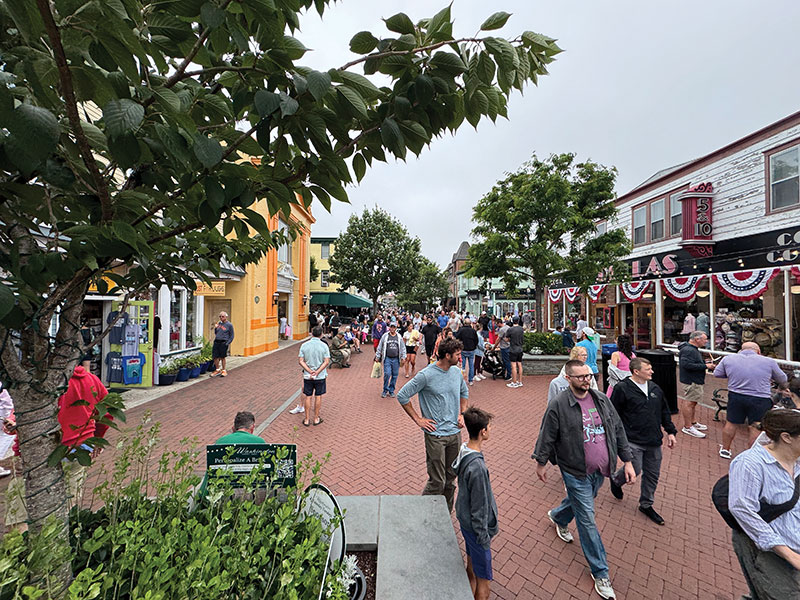
Downtown Cape May, Cape May, NJ
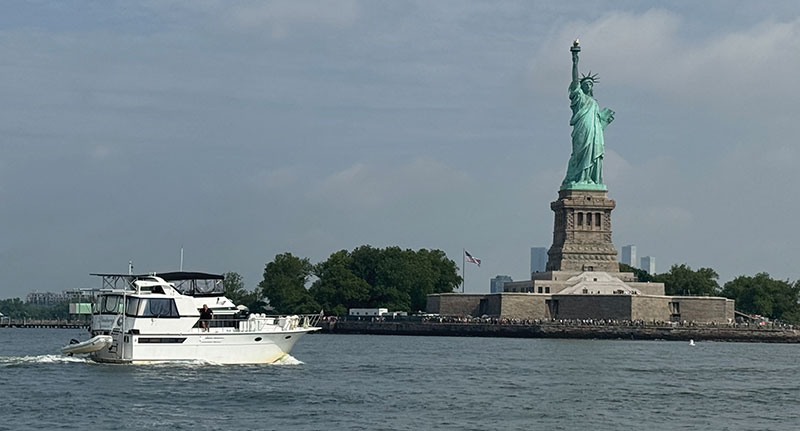
Statue of Liberty, New York Harbor, NY