A $1.5 million restoration safeguards a piece of American history.
They are known as the Greatest Generation for a reason. After surviving the hardships of growing up during the Great Depression, members of this generation were asked to fight in World War II. Instead of complaining or avoiding service, they proudly volunteered to help in any way possible. They recognized the danger the fascist Axis powers posed to democratic nations and answered the call with a shared sense of duty and purpose that would be hard to imagine today. They simply understood that individual sacrifice was paramount to ensuring the greater good.
As members of this generation fade into memories, preserving reminders of their all-for-one spirit becomes even more important. In the Great Lakes, one of the most dramatic reminders of how difficult life may have been for these fighting warriors can be seen at the Wisconsin Maritime Museum in Manitowoc. There you will find the USS Cobia submarine — a floating tribute to the brave men who served aboard the submarines of the era. One of the most unimaginable WWII mission assignments, it’s
a powerful reminder of the difficulties of the life they faced under the sea.
Unimaginable mission
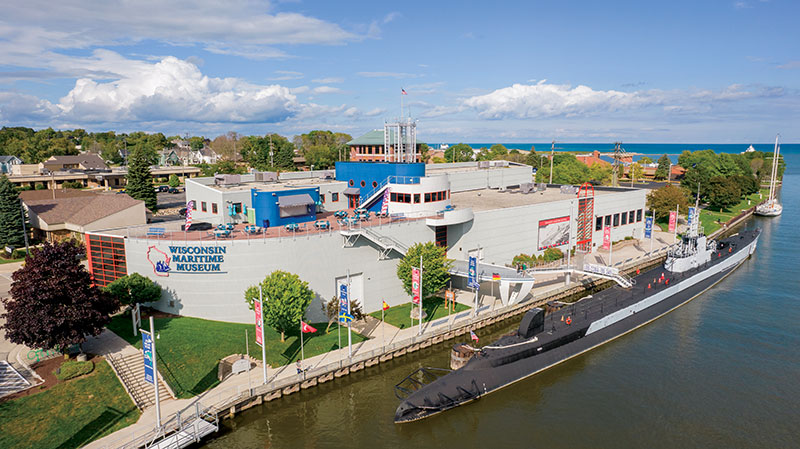
The Cobia sits in stark contrast to the modern architecture of the Wisconsin Maritime Museum building that it is tethered to. It’s hard to miss when you come into downtown Manitowoc. Her contrasting dull WWII color easily catches your eye against the white-colored museum the moment you cross the bridge into downtown. One of the museum’s very first attractions, it has been safely moored in the harbor next to the museum since 1970. A showcase attraction at one of the largest maritime museums in the Great Lakes, the Cobia has been available for walk-through tours ever since her arrival.
A Gato-class submarine, the Cobia was considered an upgrade in living standards compared to earlier designs. Despite this distinction, the first thing that strikes you when you step onboard her is just how claustrophobic it must have been during WWII. Virtually every space was utilized for system support, and it’s instantly obvious that people were a secondary design consideration. At 312 feet in length and 27 feet at maximum beam, the Gato-class submarines were not small vessels, but given all the equipment and armament onboard, there wasn’t a lot of space left for the roughly 80 people it took to man one. Sleeping quarters were scattered throughout the vessel wherever there was enough space to lay a body down. Some crewmen even slept on top of stored torpedoes.
Manitowoc itself has a unique connection to the Gato-class submarines, as 14 of them were built by the Manitowoc Shipbuilding Company between June 1941 and August 1945. The Cobia herself was built by the Electric Boat Company in Groton, Connecticut, but she still offers a strong sense of community pride knowing similar vessels were produced in town. In total, Manitowoc Shipbuilding produced 28 submarines during WWII, including 14 Balao-class vessels. At peak production, they were completing them at an impressive rate of about one per month. Once construction of each submarine was finished, they were all towed down the Mississippi River to New Orleans for final outfitting
(Main photo) USS Cobia heading back to Manitowoc after a necessary restoration | Credit Wisconsin Maritime Museum
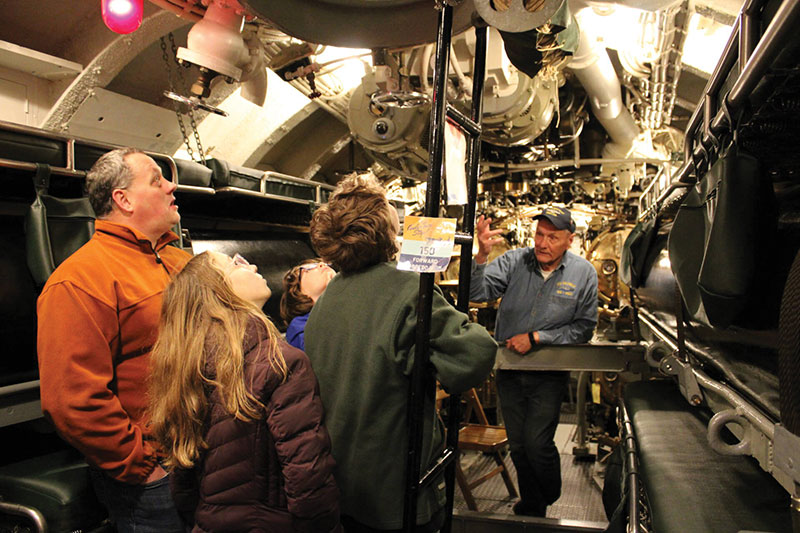
A guided tour of the USS Cobia | credit Wisconsin Maritime Museum
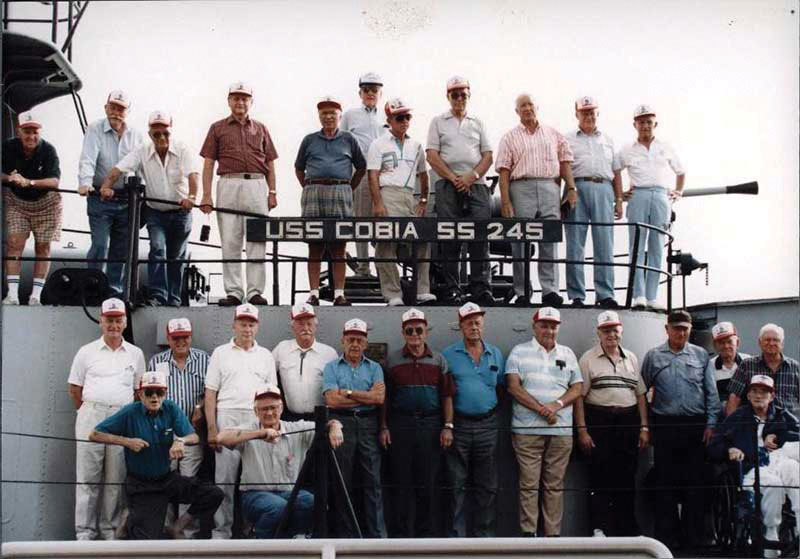
1986 reunion | credit Wisconsin Maritime Museum
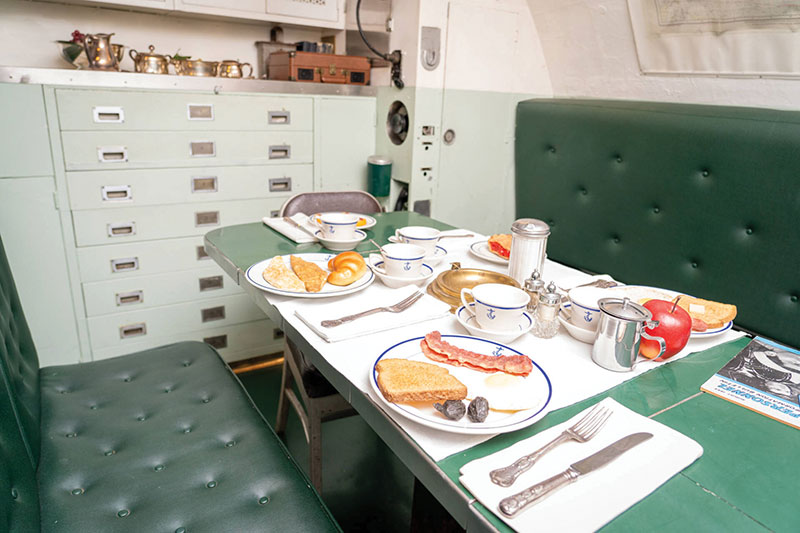
Subfest tour | credit Wisconsin Maritime Museum
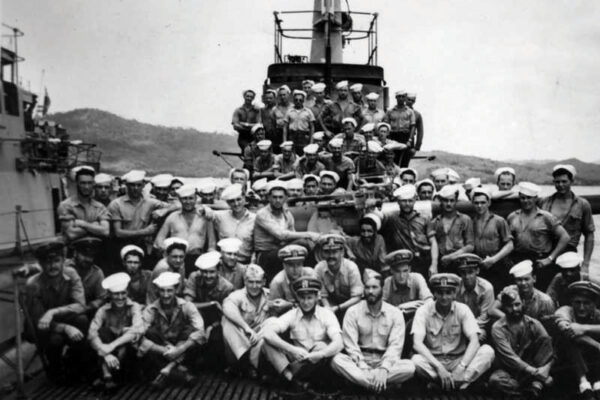
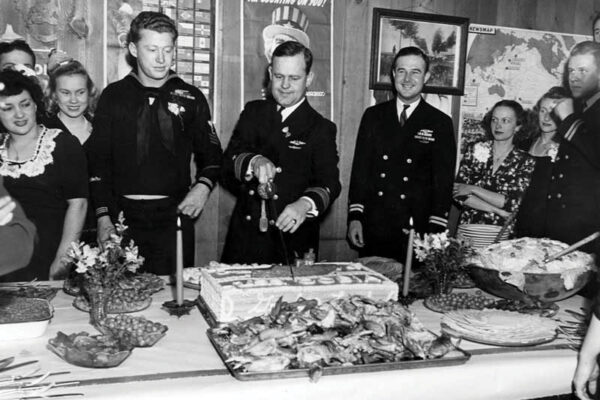
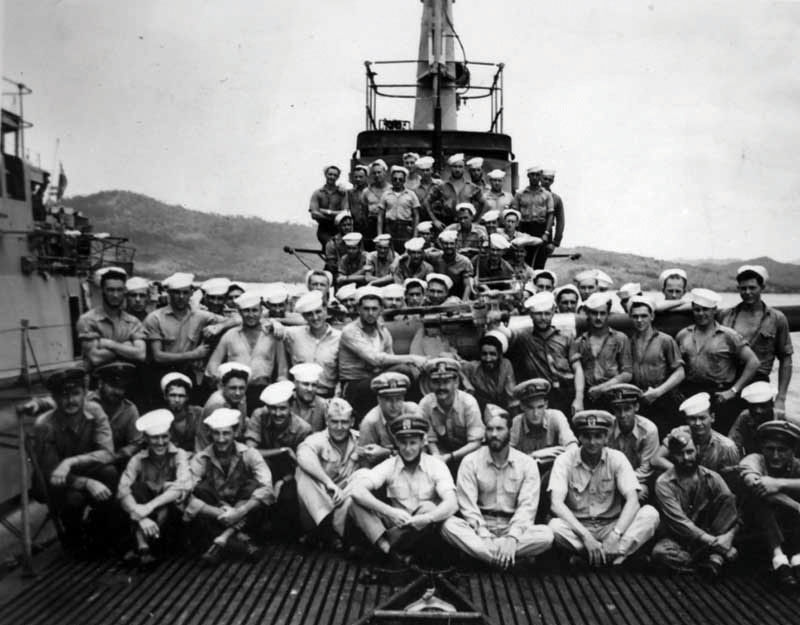
Top left: Crew of the USS Cobia
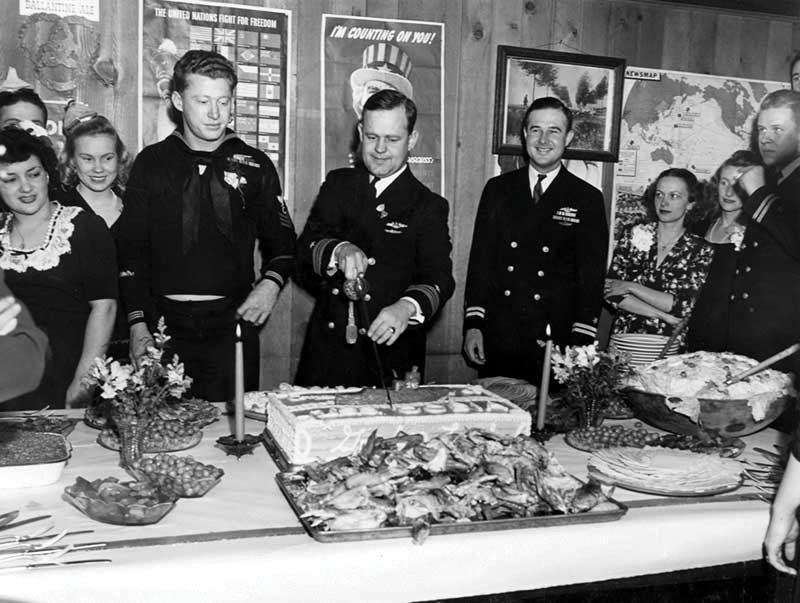
Top right: Commissioning cake, 1944
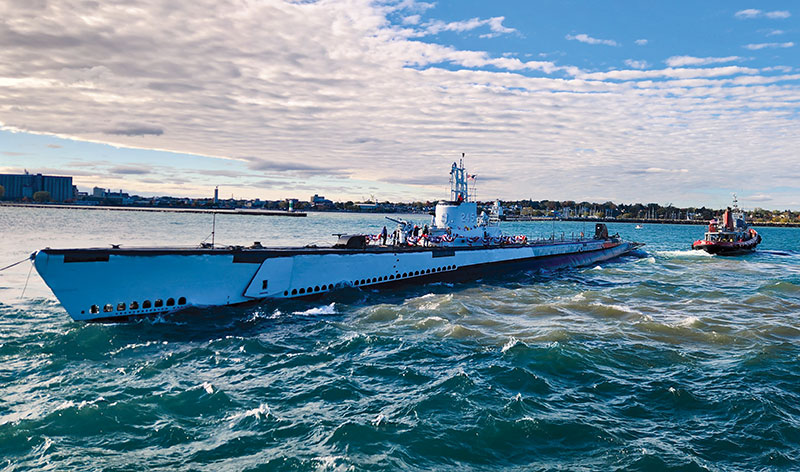
Bottom: Docked at the Wisconsin Maritime Museum
All credit Wisconsin Maritime Museum
For the next generation
As battle-ready as these boats were, they were no match for Father Time. Since her last refit in 1996, 30 years of sitting in place at the museum had taken a toll on the Cobia. Besides being over 10 years overdue for her mandatory dry dock inspection, she was known to be leaking and to have a severe invasive species buildup on her hull. So, in September 2025, to preserve her for the next generation of museum visitors, she was towed to Fincantieri Bay Shipbuilding in Sturgeon Bay, Wisconsin, for a necessary restoration.
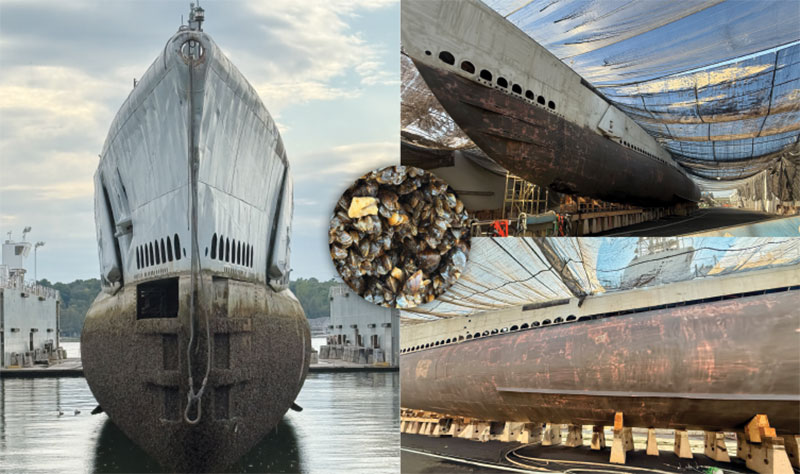
Upon arrival, she was drydocked, and the underwater buildup was removed so a full inspection could be done. The hull turned out to be so heavily encrusted with zebra and quagga mussels that it was threatening her structural integrity due to the dead weight and entrapped acidic waste contained in the mussels. As expected, it was also found to have rotted gaskets around the torpedo doors, which needed full replacement. It was so bad that one of the torpedo doors fell off during its transit to Sturgeon Bay and had to be recovered. Inspectors also discovered that her main underwater ballast tank had a 4-foot-long split in a crucial weld that caused the tanks to unknowingly fill. If that wasn’t enough, another 4-foot hole near the bottom of the hull was also discovered, which would require replating.
In addition to the necessary cleaning and structural repairs, the Cobia was sandblasted down to the bare steel. This included the under-deck surface that was ignored the last time she was drydocked. Once completely stripped of old paint and biofouling, the Cobia was given a fresh coat of historically accurate camouflage paint that also serves as a marine epoxy barrier sealant to protect her hull from rusting for the next 25 years.
The good news is that upon project completion, engineers reported that the hull was found to be in excellent condition despite being over 10 years past its scheduled maintenance. It was a testament to the benefits of freshwater and reinforced the value of the restoration. The full project cost a total of $1.5 million dollars and was financed through the Cobia Dry Dock Endowment Fund — a mix of community donations and two separate $500,000 grants from the Institute of Museum and Library Services and the State of Wisconsin.
Back home
The project stayed on its 4- to 6-week schedule, and the Cobia was returned to the museum on October 15, 2025. Now, safely back in place, both guided and self-guided tours have resumed. If you have a chance, I’d suggest timing your visit for a guided version. Last time my wife and I visited the Cobia, we were lucky enough to get a tour from a WWII veteran who served onboard one of the Gato-class submarines during the war. He pointed out numerous things we would have never understood if we had just walked through it on our own. In particular, I remember him mentioning that the worst part of serving onboard one of these boats was that everyone was smoking cigarettes. Since they were only able to surface to recharge the batteries and exchange the air once per night, the entire crew was basically inhaling cigarette smoke all day long.
Cobia tours are part of the standard Wisconsin Maritime Museum entrance fee. Guided tours are offered seven days a week between Memorial Day and Labor Day. During the offseason, the museum is open from Thursday through Monday, and guided tours are only scheduled on weekends. Self-guided tours are available when the museum is open.
For a special youth experience, the museum also offers sleepovers. It’s a very popular experience among Scout groups, offering a unique opportunity to learn about the submarine while getting a better understanding of what life must have been like below the waves during the war.
Despite this significant price tag of the Cobia restoration, it’s a small price to pay to preserve the past for the future. Hopefully, reminders like this will also help us create the next Greatest Generation.
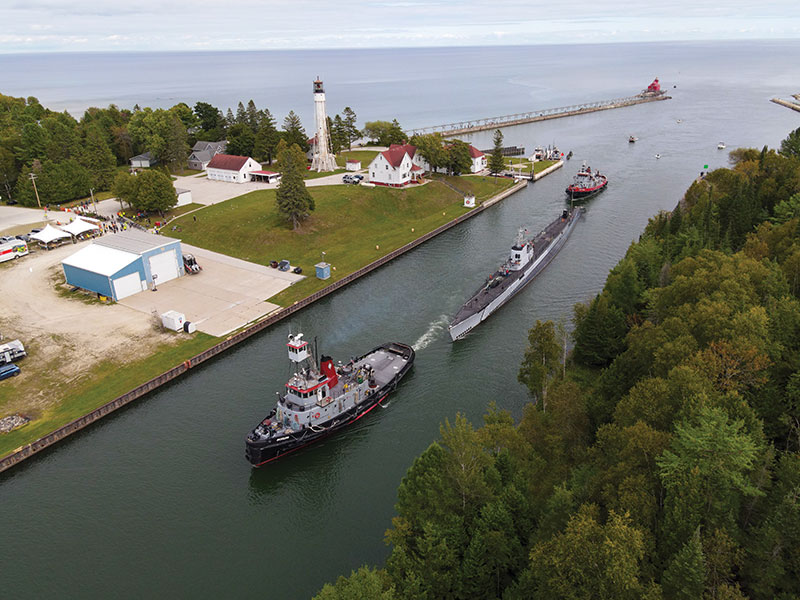
Top: In transit to Sturgeon Bay, Wisconsin | credit Mark Evenson/Door County Drone
Bottom: Dry dock work | credit Wisconsin Maritime Museum