Navigating the Hudson River and New York canals.
Story & photos by Tom & Brenda Lahey
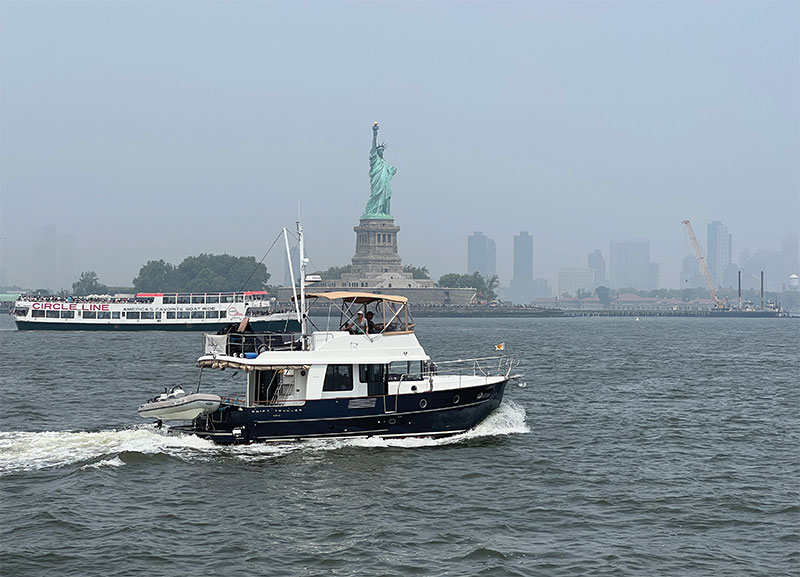
In our last installment, we arrived in New York City and at the start of the Hudson River. From New York Harbor and the Statue of Liberty, you will cruise north along Manhattan Island with its towering skyscrapers. There’s lots to see, but be sure to keep an eye out for the many water taxis and ferries that operate on the river. Some of them can kick up quite a wake!
Advice for the Hudson River
We’ve cruised the Hudson River several times in both directions, and it’s one of our favorite sections of the Great Loop. Before we go into where to stop and what to see, we’d like to offer a bit of advice on navigating the Hudson River. First, the river is tidal for 153 miles all the way to the Troy Federal Lock and Dam. The current on the river during peak tidal flows can be up to 4 mph! Riding the incoming tide can quicken your journey and save a bunch of fuel. It takes the tidal surge about 9 hours to travel from New York Harbor to Troy.
Secondly, the Hudson is a working river. Large ships and barges pass up and down the river 24 hours a day. We’ve seen 600-foot-long tankers on the river many times. There is plenty of space in most of the river. Just keep out of their way!
Finally, after periods of heavy rain, there can be lots of debris floating downstream. We’re talking about whole trees, roots and all. It’s important to keep a close watch.
Leaving the New York Harbor
There are only a few marinas and anchorages in New York Harbor. The two most popular are the anchorage behind the Statue of Liberty and Liberty Landing Marina. Both of these fill up quickly, and marinas in the New York City area are quite expensive (expect $8- $12 per foot!).
As you cruise up the Hudson, the towers of Manhattan are on your starboard side, and the cliffs on the Jersey Shore are on your port side. The crowded concrete jungle of the city quickly gets greener as you pass under the George Washington Bridge. Keep your eyes peeled for the Little Red Lighthouse under the bridge, and the large Yonkers sign just north of it.
There are a few marinas on the lower Hudson, but not many cater to Loopers. The first safe anchorage after the city is near the Tappan Zee Bridge around Sleepy Hollow. Once under the Tappan Zee Bridge (about 25 miles from the Statue of Liberty), you’ll find more options for both anchoring and marinas.
Just after the Tappan Zee is Ossining, New York, and Sing Sing Prison on your starboard side. There are a few marinas and anchorages here, and around the corner is Croton-on-Hudson and Half Moon Bay, with both a great marina and anchorage. If you want to visit New York City, but don’t want to pay the high marina prices, Half Moon Bay is a great economical stop. From here, Manhattan is just a short train ride away. If you stop in Half Moon Bay, a bike ride to Croton Gorge Park and Croton Dam makes for an amazing day trip! North of Half Moon Bay, you will pass by the United States Military Academy at West Point. A great tour of the facility is available. If you want to go to West Point, you will need to use ride-share to get there as there is no dockage. The area around Croton is one of the closest points to get there.
A couple of other stops we recommend on the Hudson River are Poughkeepsie, where the “Musical Bridge” and the Walkway Over the Hudson, an old railroad bridge turned bike path, offer great views and a fantastic biking opportunity on the Empire State Bicycle Trail. It’s also home to the Vanderbilt Mansion, Roosevelt Library and Culinary Institute of America (CIA), one of the premier culinary schools, with three student-run restaurants. If you want to go, make reservations several weeks in advance! You can access all of these by ride-share from Poughkeepsie, Hyde Park and Peekskill, all of which have anchorages and marinas.
Past West Point, you will cruise by the remains of Bannerman Castle, which was once a private arms storage facility that blew up and burned down. If you want to tour Bannerman, you can get a tour ferry from Newburgh or Beacon.
Our favorite stop on the Hudson River is Kingston, New York. Kingston is an old riverboat-and-canal city just a half-mile up Rondout Creek. The Hudson Maritime Museum (which offers dockage), the New York Trolley Museum and the Catskill Mountain Railroad are all great attractions. There are several marinas and anchorages on Rondout Creek.
Continuing north under the Rip Van Winkle Bridge, you will come to Hudson, New York, a nice small town with a marina, and a little farther on, Shady Harbor Marina, a popular stop on the Loop. They offer a Looper pig roast in June and on the Fourth of July. Again, book early if you want to attend!
Next is Albany, the capital of New York State. This is where most of the large commercial traffic docks. The lower part of the city is very industrial. The east side has a few marinas, and there are anchorages just north of the city. The last stop before the Erie Canal is Troy, which has a nice town dock and one of the best and largest Saturday farmers markets we’ve seen on the Loop!
Just north of Troy is the Troy Federal Lock & Dam. For many Loopers, this may be the first larger lock they encounter. The lockkeepers are great and very helpful. This is also where the Hudson River ceases to be tidal. Two miles beyond the lock is Waterford, New York, the entrance to the Erie and Champlain Canals.
Be sure to keep informed about the status of the canals and locks. You can sign up for email alerts at canals.ny.gov/Boating-Information/Canal-Alerts. There are frequent closures on the canals due to mechanical breakdowns and water levels. Some of these can last for several days. Dock and anchoring space around Waterford is limited, and at peak Loop times fills quickly. You are better off holding south in Troy, Albany or Shady Harbor and waiting for a closure to end.
Erie Canal Route
From Waterford, you will enter the historic Erie Canal. This route follows rivers, lakes and interconnecting man-made canals. These canals are primarily for recreational use; however, we have seen one or two small barges along the route. The route from Waterford to the junction of the Oswego Canal is about 180 miles. Most Loopers take six travel days on this section. Docking is a mix of marinas and town walls, and there are frequent anchoring opportunities; however, the canal is narrow in places, so plan accordingly. Some of the popular stops along this section are Schenectady, Amsterdam, Canajoharie, St. Johnsville, Little Falls, Ilion and Utica. All of these have some sort of dockage available.
The only larger water crossing on the Eastern Erie is 20 miles across Oneida Lake. Sylvan Beach on the east side has some docking available. On the west side of the lake, you will come to Brewerton, the most popular stop on the Erie Canal. In Brewerton, there are several marinas and boat yards where you can get repairs. Some Loopers who are late in the season leave their boats in Brewerton for the winter, as there are heated storage options there.
Beyond Brewerton, you will come to the junction of the Oswego Canal. Most Loopers take the Oswego Canal north to Lake Ontario. The Oswego Canal is 24 miles long and has seven locks. There are limited docks and anchorages along its path until you reach Oswego at the northern end. Here, free walls and marina options are available.
Western Erie Canal
There are a few Loopers that continue on the Western Erie Canal to Tonawanda, New York (near Buffalo). The maximum air draft for the Western Erie Canal is 15 feet, as there are many fixed bridges, and you miss the Canadian Canals experience! Loopers wishing to stay in the U.S. and avoid Canada will take this route.
Champlain & Chambly Canals
The other option from Waterford is the Champlain Canal, which connects New York and Vermont. This canal leads to Lake Champlain and Burlington, Vermont. At the northern end of Lake Champlain, you cross into Canada and connect with the Chambly Canal that will bring you to the St. Lawrence Seaway. The Champlain Canal is not for everyone. There is a fixed railroad bridge at 16 feet. We’ve seen it as low as 15 feet at high water. Also, there are areas where the water depth can be less than 5 feet, especially during low water. The Champlain has many time restrictions on the locks depending on water level, so be sure to check ahead for schedules.
That aside, we’ve enjoyed our trips on this canal very much, having traveled in both directions. There are several free docks along the way and limited space on the lock walls where you can tie up for a night. Once in Lake Champlain, there are many marinas and anchorages available. Be careful anchoring in the canal, as there is regular commercial barge traffic. The Champlain Canal route is a great option if you want to visit Montreal or travel the Rideau Canal.
The area around Burlington, Vermont, has many marinas and anchorages, as well as a fascinating history. If you stop in Burlington, be sure to stop at the Shelburne Museum, one of the most fascinating we’ve come across!
Be prepared to stop and check into Canada at the customs dock just past Rouses Point, New York, as you enter the Chambly Canal. The Chambly is much narrower, at only 22 feet wide, for long sections, and traffic is timed one-way between some of the locks. The three major stops on the Chambly are Saint-Jean-sur-Richelieu, 20 miles from the border and where the Chambly Canal leaves the Richelieu River; Chambly, where the canal rejoins the river; and Sorel-Tracy, where the canal reaches the St. Lawrence River. Each of these stops offers marinas and some anchoring opportunities. Watch for next month’s article on the Canadian Canals for route options once you reach Sorel-Tracy!
Lake Ontario & The Saint Lawrence Seaway
Depending on whether you take the Erie/Oswego route or the Champlain/Chambly route, you will end up in Lake Ontario and the St. Lawrence Seaway. There are several options on Lake Ontario. Our recommendation to Loopers coming from Oswego is to venture up the St. Lawrence River into the Thousand Islands area, visiting New York’s Sackets Harbor, Clayton (with its fantastic Antique Boat Museum) and Alexandria Bay, with access to the Boldt and Singer Castles. Tour boats to Boldt Castle and Singer Castle leave from both Clayton and Alexandria Bay. Going from Oswego to Clayton and Alexandrea Bay also keeps you in the U.S., so you don’t have to check into Canada more than once.
Loopers who travel up the St. Lawrence from Lake Ontario will usually make a U-turn at Clayton or Alexandria Bay and return to Kingston, Ontario. Kingston is also the first stop if you cross Lake Ontario from Oswego, New York, and where you will clear Canadian customs. Kingston is a great city with many museums. It’s also the gateway to the Rideau Canal and to a one-day cruise to the entrance of the Trent-Severn.
Tips for navigating the canals
- Check the latest Notices to Mariners before departure. There are frequent closures!
- Watch for the green light or call on Channel 13 before entering a lock.
- Have fenders rigged on both sides. You may have to switch sides at the last minute or be rafted to another boat.
- Most locks have lines, but be ready with your own for locks with cables or rafting.
- Wear gloves when handling lock cables or lines. They are slimy and can have toxic algae!
- Approach locks slowly and be patient.
- Watch for strong currents near lock gates or where dams reenter the channel.
- Expect no-wake zones through most canal towns.
- Watch carefully for floating logs and debris, especially after rain.
- Reduce speed around fishing boats, paddlers, and locks or walls.
- Verify bridge clearances before getting underway.
- Fuel up whenever convenient; fuel docks can be widely spaced.
- Check weather forecasts for strong winds on wider sections.
- Arrive early at popular wall tie-ups and marinas. Have a backup plan if they are full.
- Explore canal towns; they’re part of the experience.
- Familiarize yourself with how to clear Canadian Customs and the rules before you cross, especially with pets onboard!
- Be courteous to lock staff! Follow directions. Breakdowns and delays are not their fault.
- The locks are over 150 years old. Expect mechanical breakdowns and delays.
- Lock staff can’t accept tips but appreciate wrapped candy in goodie bags.
- Relax and enjoy the slow pace of canal cruising.
Top image: Statue of Liberty, New York, NY
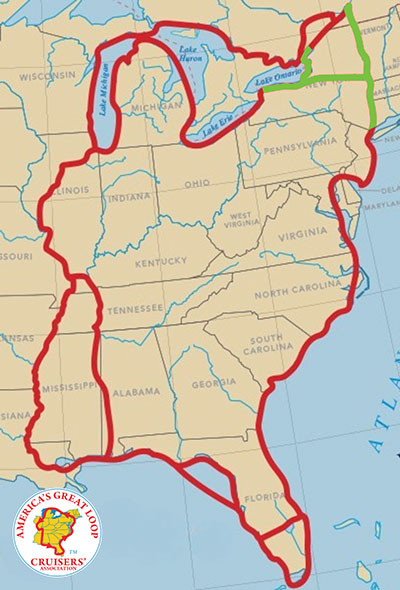
The Hudson River and New York canals portion of the Great Loop
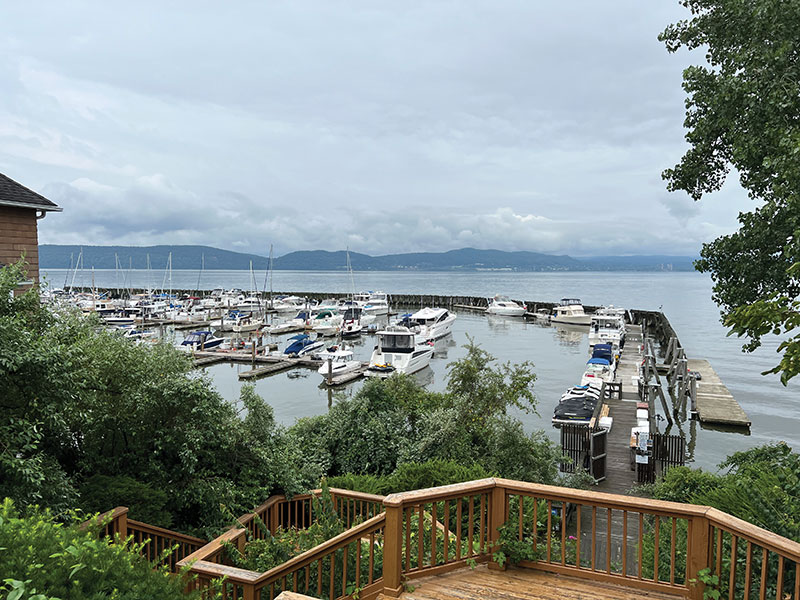
Half Moon Bay Marina, Croton-on-Hudson, NY
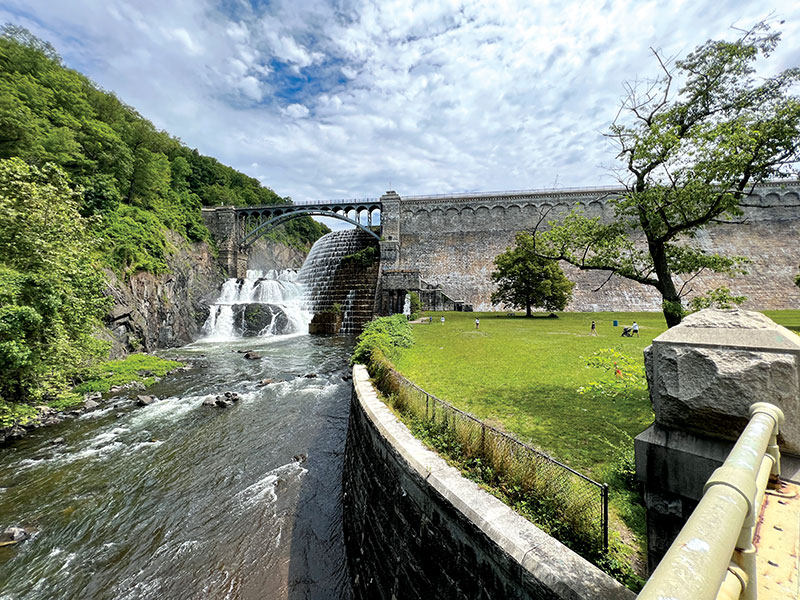
Croton Dam, Croton-on-Hudson, NY
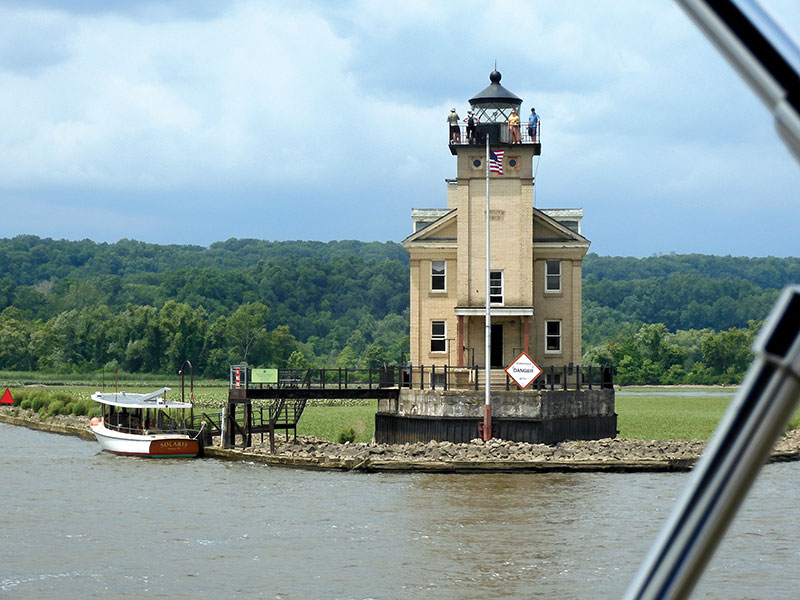
Rondout Lighthouse, Kingston, NY
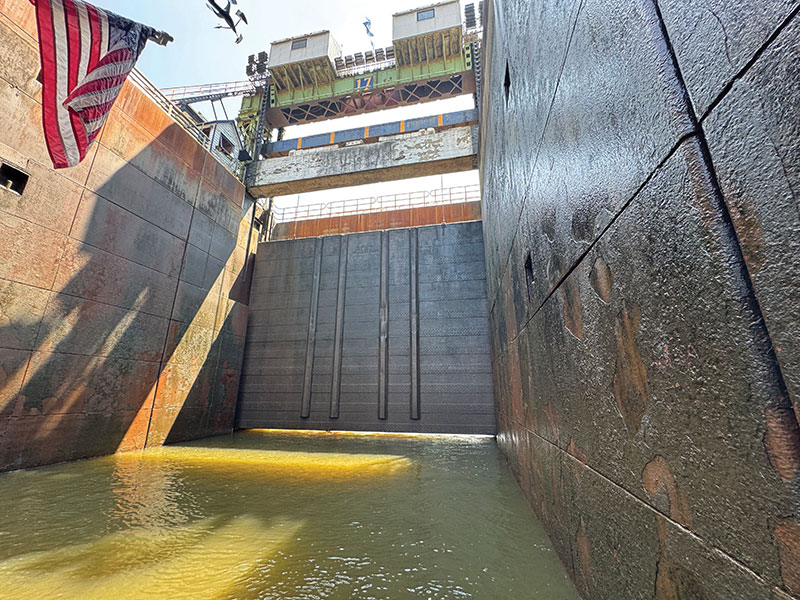
Erie Canal Lock #17 (deepest), Little Falls, NY
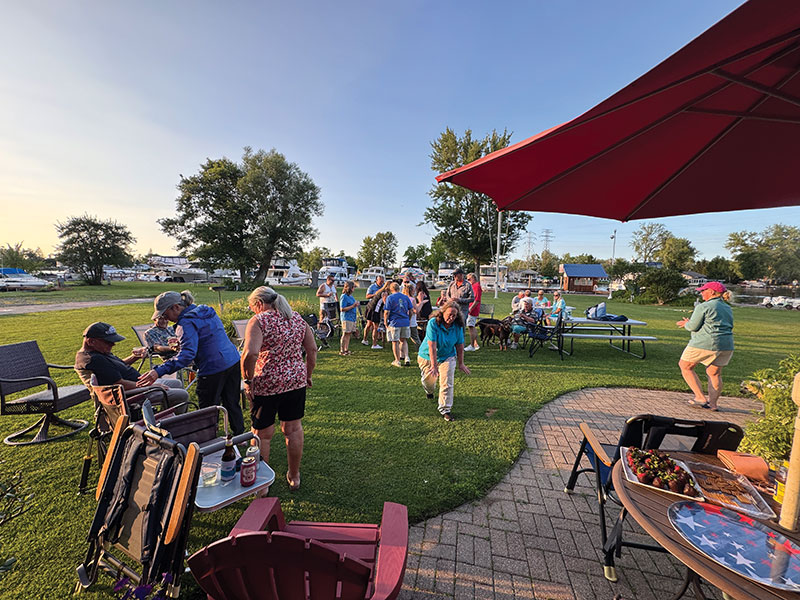
Docktails at Ess-Kay Yards Marina, Brewerton, NY
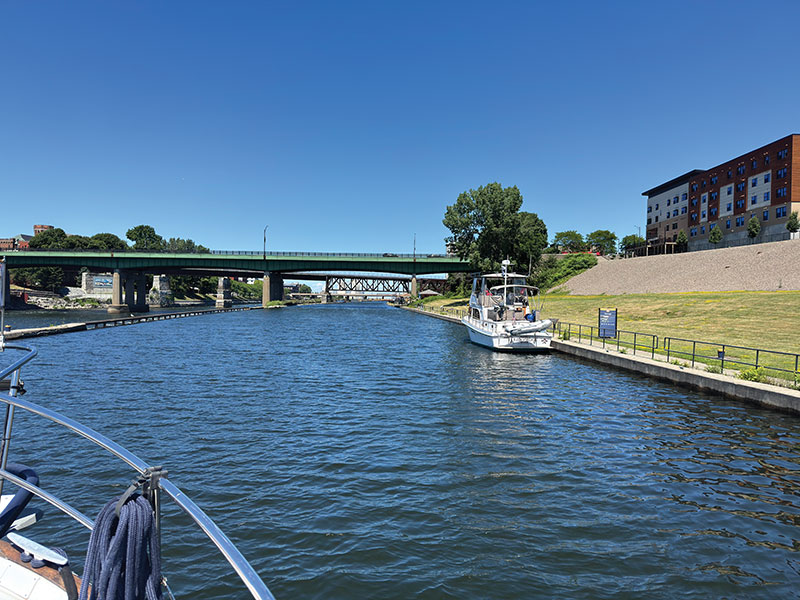
Mooring wall on Oswego Canal, Oswego, NY
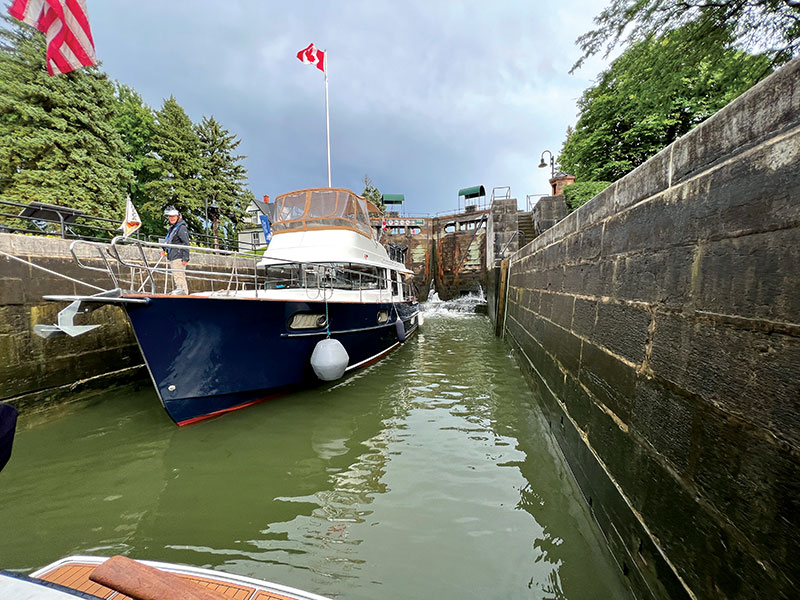
Chambly Canal, Talon, Quebec
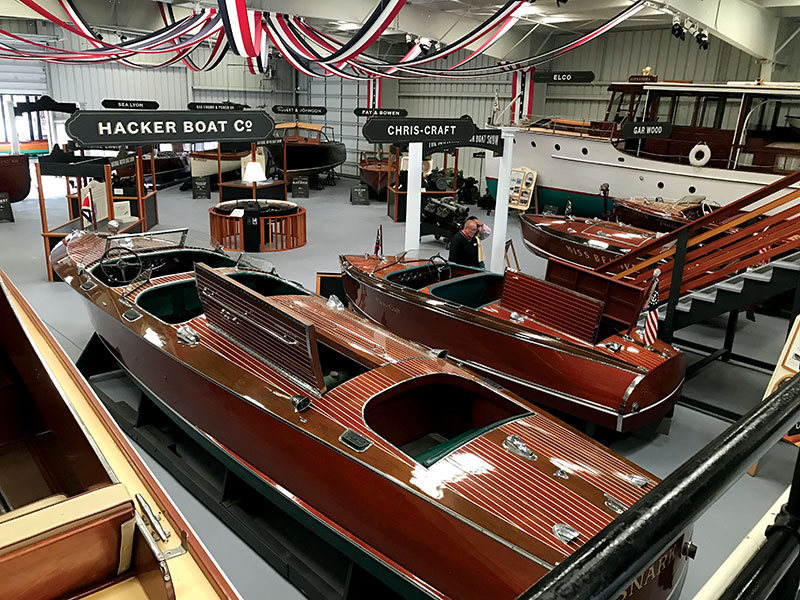
Antique Boat Museum, Clayton, NY