Keeping the water outside the boat.
by Capt. Frank Lanier
Stuffing boxes are a victim of their own reliability. They require so little attention that it’s easy to forget about the regular maintenance many boaters don’t even realize they need to perform.
When a propeller shaft enters the hull, the stuffing box seals it by compressing packing material against it. This is typically accomplished by utilizing a hollow nut that screws onto the inboard side of the shaft tube, or by a tightening arrangement using a plate secured by nuts and studs on either side of the shaft. In either case the more you tighten it, the more the packing material
is compressed against the shaft, forming a seal.
Over time this packing material dries out, hardens and is worn away by shaft rotation, allowing water to enter the vessel. The natural reaction of many boaters is to tighten the packing nut(s) further. This may work in the short-term, but over-compressing the hardened packing will lead
to it scoring the shaft. Instead, repack the stuffing box for a proper fix.
Steps to repacking
- Open the stuffing box to access the packing. For the hollow nut style, back off the lock nut and then the packing nut. For boxes with side bolts, loosen both primary and lock nuts, then pry off the stuffing box end cover with two sturdy screwdrivers.
- Remove the old packing with a flax removal tool, or a sharp screwdriver and a bent piece of sharpened wire. Be sure to remove all old packing, as any left behind may prevent a proper seal.
- Clean the shaft and stuffing box interior (a rag slightly moistened with paraffin or engine degreaser works well) and inspect the shaft where it contacts the packing. If scratched or heavily oxidized, wet sand it then wash thoroughly and apply a light coat of grease to ease reassembly.
- Packing is installed as rings, meaning you’ll either have to purchase it in pre-cut rings or buy a single strip and cut the packing into individual rings that will fit around the shaft without overlapping. Count the number of packing rings you removed and install the same number of new ones.
- Install the first ring by pushing it into the stuffing box with the flat edge of a large screwdriver. Ensure the split in each successive ring is offset from the previous to avoid leaks.
- Once all packing rings are installed, re-install the packing nut and turn it hand tight, then give it ½ turn with a wrench. Do this with plate style boxes by fitting the cover and tightening the nuts on either side slightly to ensure all rings are properly seated.
- Now turn the propeller shaft 5 or 6 revolutions by hand. It should turn freely. If not, the nuts are probably too tight and need to be loosened a bit. Then loosely install the backing nut/nuts, which will be tightened after final adjustments have been made. After launching, check the stuffing box for leaks. If leaking excessively, tighten it just enough to stop the leaking and then run the engine for a few minutes in gear to fully seat the rings. Tighten the nut(s) slightly to finish.
Monitor the stuffing box for leaks and excessive heat over the next few trips. The desired drip rate is around two to three drops every couple of minutes when the shaft is rotating — it should be virtually dripless with the shaft stationary.
The stuffing box may get warm during these initial runs, but should never get hot — a sure sign the packing is being compressed too tightly and that the compression nuts should be loosened a bit.
Powerboat owners should make repacking part of their annual haulout maintenance routine. Sailboat owners can typically get by with every second year due to lower engine operating hours.
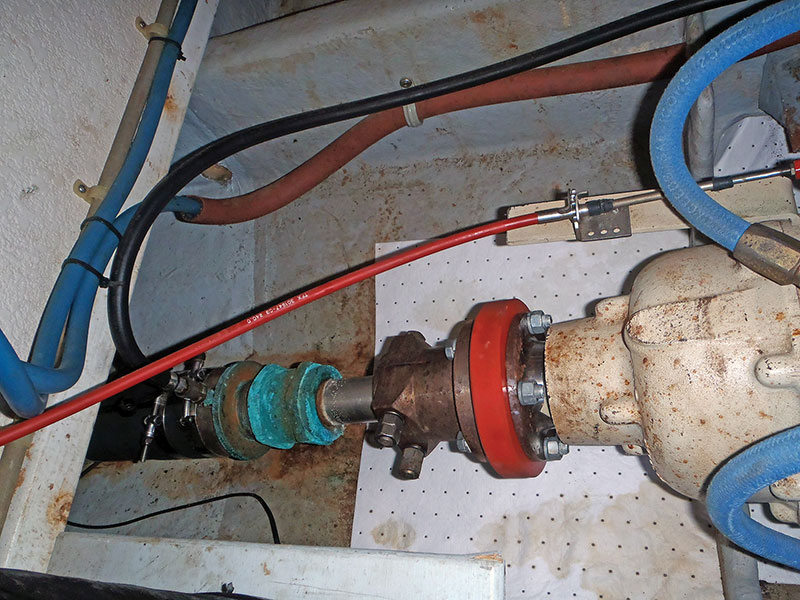
Top photo: Stuffing box
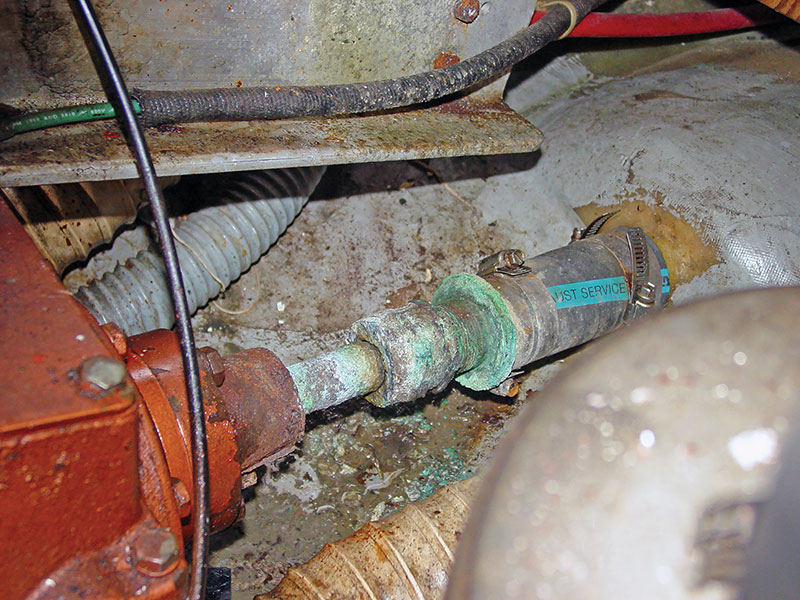
Leaking stuffing box
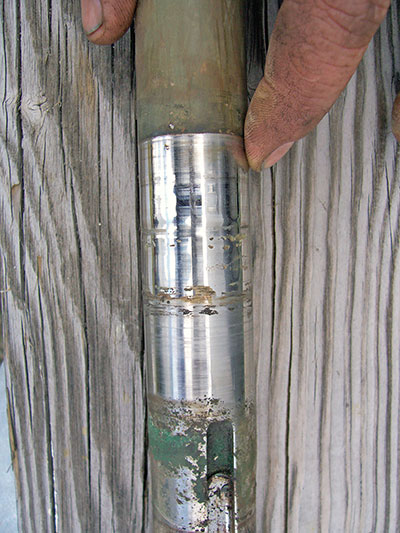
Shaft scoring due to over-compression
Capt. Frank Lanier photos

CAPT. FRANK LANIER is an award-winner journalist, boat maintenance guru and owner of Capt. F.K. Lanier & Associates, Marine Surveyors and Consultants. Check out his YouTube channel “Everything Boats with Capt. Frank Lanier.” CAPTFKLANIER.COM