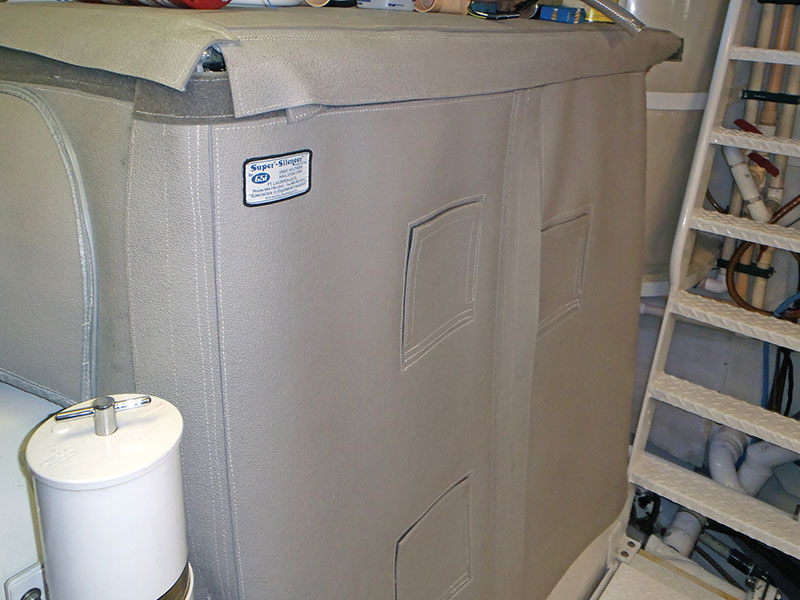
The best strategy to address noise is by containing it at the source. Soft sound shields provide both installation flexibility and significant noise reduction. Capt. Frank Lanier photos
How to install soundproofing.
by Capt. Frank Lanier
Time spent on the water should be relaxing, but that can be difficult when conversations require screaming over engine noise and nights spent listening to the incessant drone of a generator or air conditioning unit instead of enjoying a restful sleep. Soundproofing can make a huge difference in onboard comfort, and installing it is easier than you think.
The best way to combat noise is by containing it at the source — within an engine compartment for example. Installing a good quality foam sound- proofing barrier can reduce engine noise by 10 to 35 decibels, or by about 65%. Soundproofing material comes in a wide variety of forms, from sprays and paints to foil-backed foam panels, which are a popular and effective choice.
Self-adhesive panels are easy to install (just peel and stick) but you have to position them exactly where you want them on the first try, as you typically can’t reposition them without damaging the foam. Non-adhesive backed panels aren’t as convenient as they require spray or brush-on adhesives, but they may permit a bit of last-minute repositioning, making them easier to work with in particularly tight spaces.
Regardless of the adhesive used, panels also require the use of mechanical fasteners such as screws and fender washers, particularly for panels mounted in overhead horizontal installations. To prevent gripping and tearing the foam, wax the screws by running them into a candle prior to use.
Check the fit
Soundproofing panels can be cut to shape with a box cutter or razor knife, but a serrated knife blade will yield a cleaner cut. Thin sheets of soundproofing material can also be cut with good quality scissors. To ensure the best fit and avoid snafus, make cardboard templates to check fit and for use as a cutting guide. Then be sure to dry-fit everything prior to applying adhesives or peeling self-adhesive panels.
When planning your installation remember that sound flows like water, meaning you’ll want to use Mylar seal or joining tape (typically provided by the manufacturer) to prevent leaks at panel joints.
Cables and hoses penetrating the soundproofing material should be sealed using tight-fitting rubber grommets, while access hatches should close snugly with a good, tight seal.
That said, any soundproofing installation in engine compartments must also provide adequate ventilation. Required vents and air holes can be hushed by using air baffles.
It’s not realistic to expect all noise to be eliminated once soundproofing is installed, but when done correctly you should at least be able to carry on a conversation at normal volume levels. After all, who wants to yell when they are trying to relax?
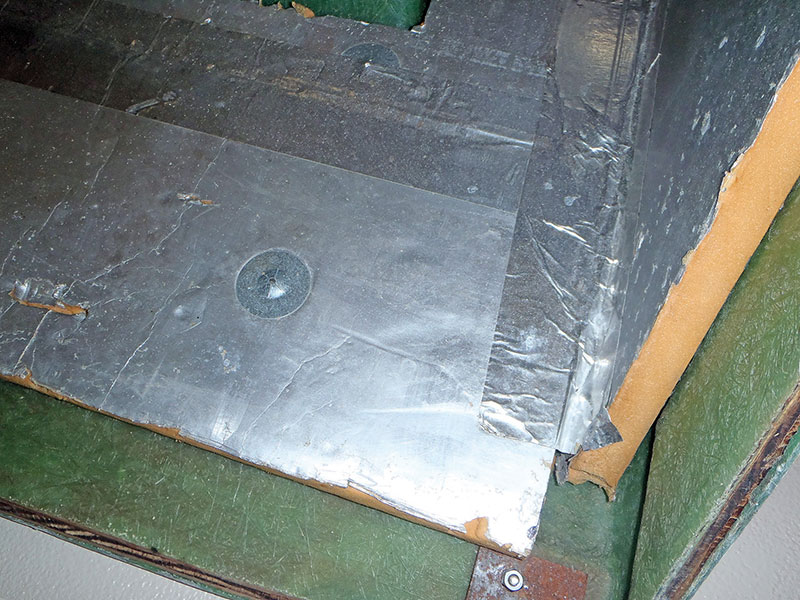
Use joining tape to seal and prevent sound leaks at the panel joints.
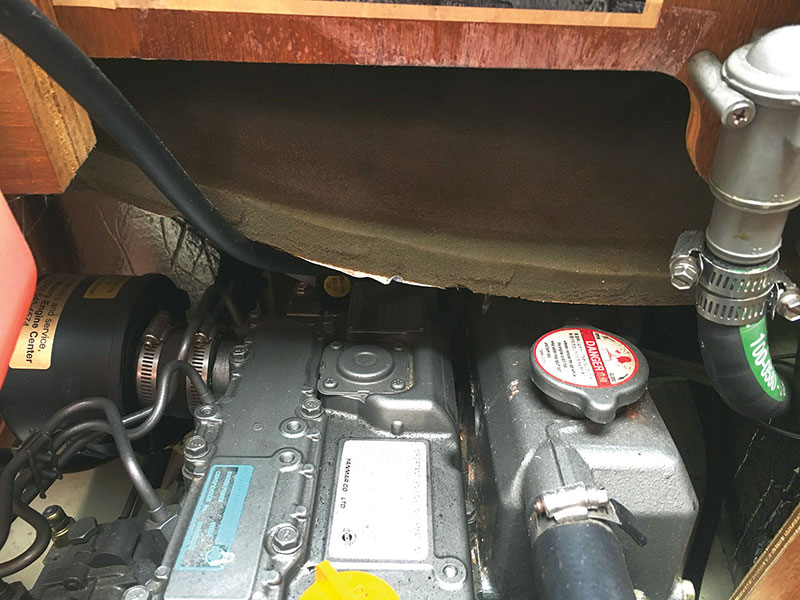
Overhead panels require the support of mechanical fasteners.

CAPT. FRANK LANIER is an award-winner journalist, boat maintenance guru and owner of Capt. F.K. Lanier & Associates, Marine Surveyors and Consultants. Check out his YouTube channel “Everything Boats with Capt. Frank Lanier.” CAPTFKLANIER.COM