How we’re cruising in our 20s without breaking the bank.
When it comes to owning a boat or deciding to cruise full-time, most people picture a lifestyle reserved for retirees or the ultra-wealthy. But, as a couple in our 20s, we are proving that it’s possible to live aboard full-time and even take on a 6,000-nautical-mile adventure without breaking the bank.
Whether you’re dreaming of life on the water or actively planning your own journey, we’re here to show you that with a few smart financial choices and a bootstrap mentality, you can make that dream a reality — all while doing it on a budget.
Finding “the one”
When my husband, Evan, learned about America’s Great Loop in high school, he asked if it was something I’d potentially be interested in. I said yes, but assumed it would be in the far future, considering most people who take on the Great Loop are retired and spend years saving up for both the boat and the journey.
Our mindset shifted when we moved from Iowa to Florida for his job, and we continually encountered full-time cruisers. After two years in the boating capital of the world, we knew the dream of completing the Great Loop wasn’t going to chase itself, so we had to make a decision.
The first step in achieving this dream was, of course, to purchase a boat. Luckily for us, we already lived in an area with no shortage of boats for sale. This in itself did save us a great deal of time and money, as we did not have to buy a plane ticket to view boats in person. Going into the boat shopping process, it was important for both of us to understand the limitations of our budget and what we could realistically purchase.
We knew it would more than likely be a boat built before the year 2000 and under 40 feet. It was also important to understand that finding the right boat for us could take time, and we gave ourselves over a year from our planned departure window to find one.
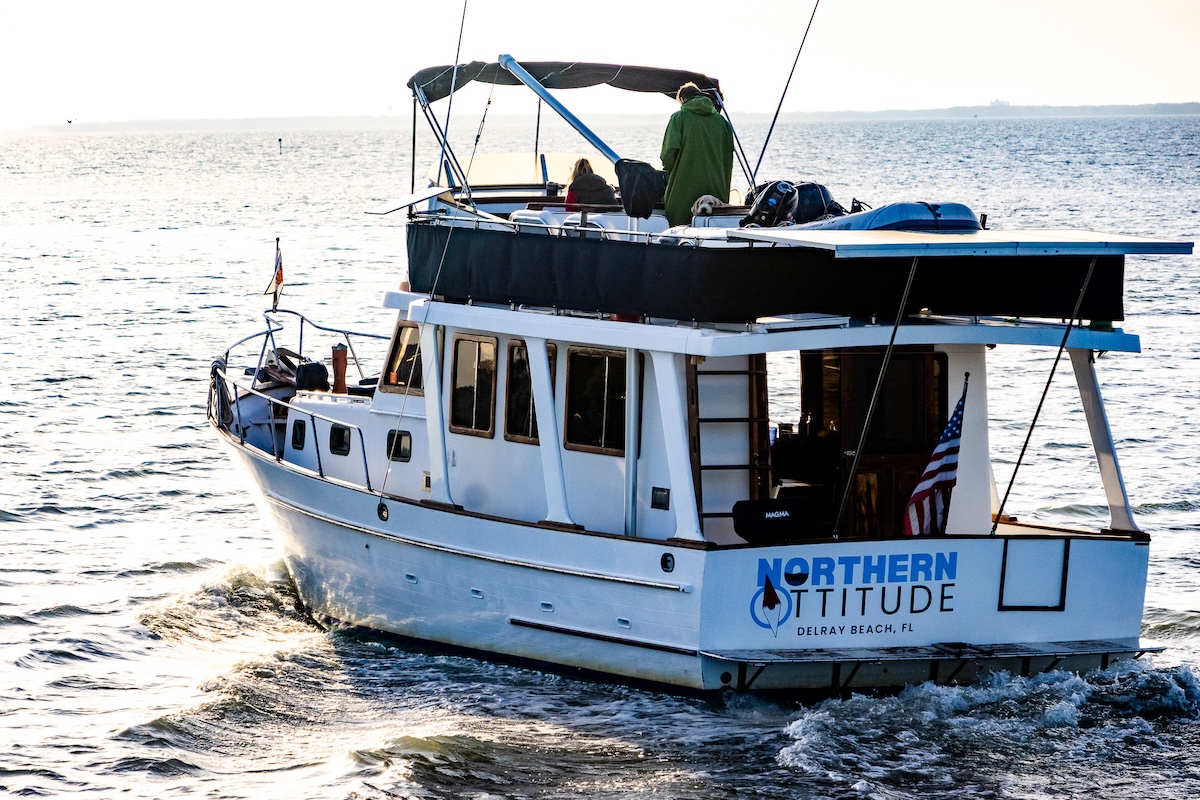
After six months of constant scrolling online, multiple boat shows and dozens of showings, we found her — our Great Loop boat. Northern Attitude, our 1985 Marine Trader Europa 36, is a single-engine, two-stateroom beauty with a flybridge and is perfect for us!
Aside from relying on a marine survey to find any future pain points, one thing we looked at when touring boats was whether the boat was actively being used or if it had been sitting for months on end. This can tell you a lot about the functionality of the boat and how well it was taken care of. Some people have asked us if we would rather have twin engines, but we feel that double the engines can sometimes mean double the expenses.
Factor in fuel
In addition to buying a used boat, it’s important to consider fuel consumption when budgeting for your boating adventures, as fuel will be one of the largest expenses. Your fuel burn rate will vary depending on the shape of your hull, the size of your boat and your top speed; however, typically, the bigger the boat and the faster you go, the more fuel you will burn.
For us, cruising at trawler speed (6 knots on a good day) saves us a great amount of money on fuel as we “sip” diesel at about a gallon an hour. This does come at a cost of time because we are unable to reach the next destination as quickly as others, but that’s all a part of the journey.
You may be asking yourself, “How do you pay for your fuel?” Well, the post-pandemic era has opened up the acceptability of remote work, which makes this lifestyle possible at our age. Evan works as a project engineer, and I am a marketing freelancer. On top of that, we started a YouTube Channel called “Navigating Nietzels,” where we documented the entire boat shopping process and we now document our Great Loop journey, which brings in additional revenue.
Starlink has really changed the game when it comes to internet accessibility, but we also utilize marina Wi-Fi and will occasionally work from a coffee shop.
All this is not to say that it’s easy, but we do what we have to in order to make this lifestyle work. Some mornings, we’re pulling anchor before the sun rises in order to cover some distance before logging on for work, and some days we miss a good weather window while others can cruise at their leisure. We’ve certainly learned the importance of adaptability on a day-to-day basis.
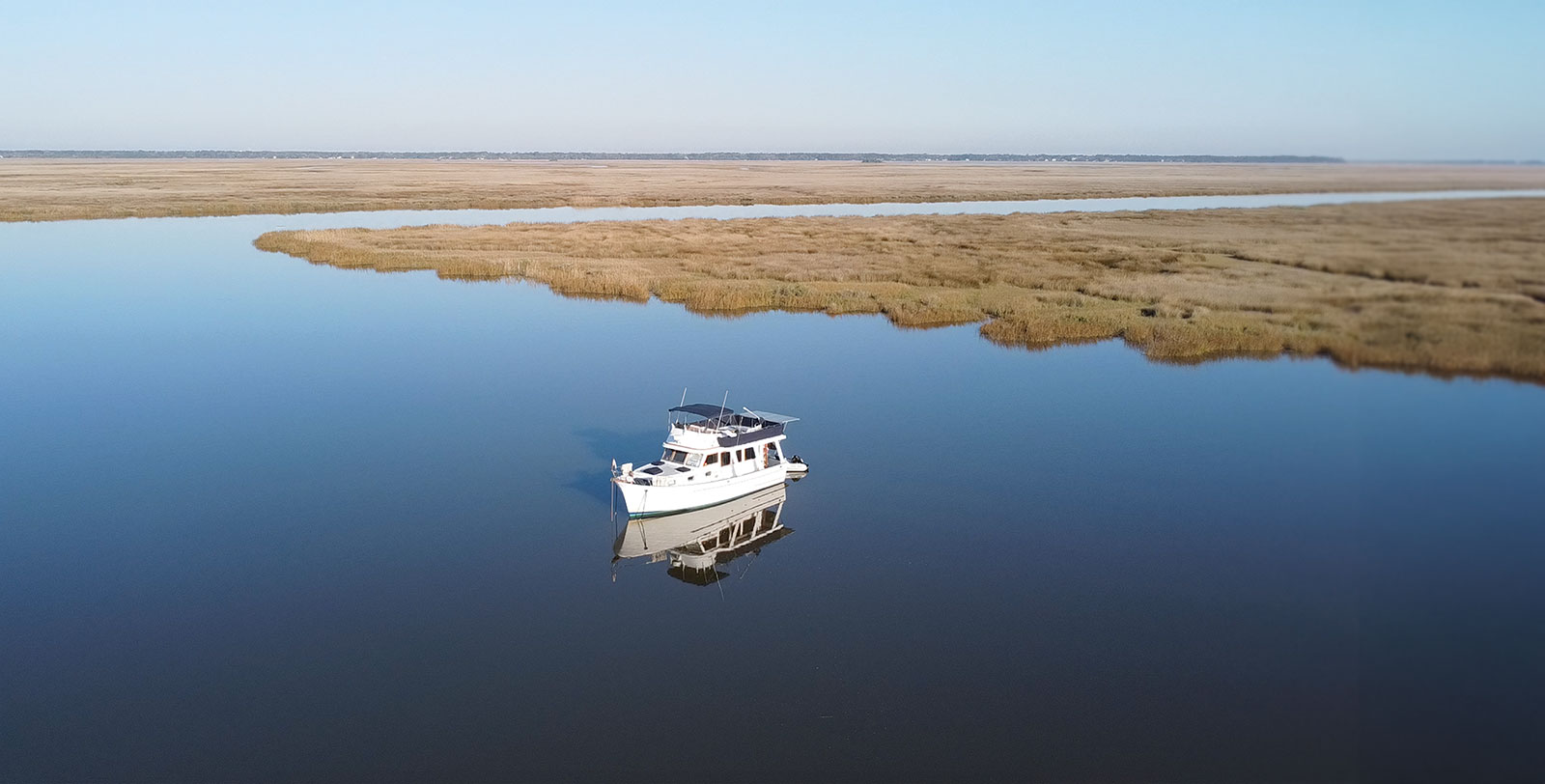
(Main photo) The Nietzel’s boat, Northern Attitude, anchored near Fort Frederica National Monument on St. Simons Island, Georgia, during their Great Loop journey
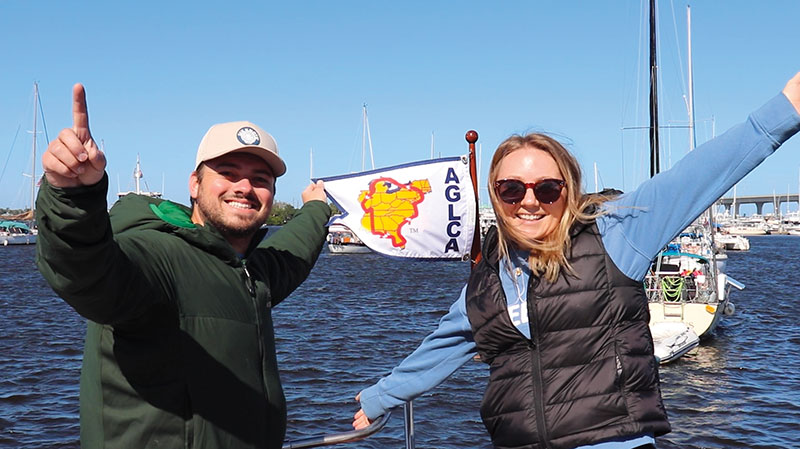
Karly and Evan Nietzel hanging up their America’s Great Lakes Cruisers’ Association (AGLCA) flag
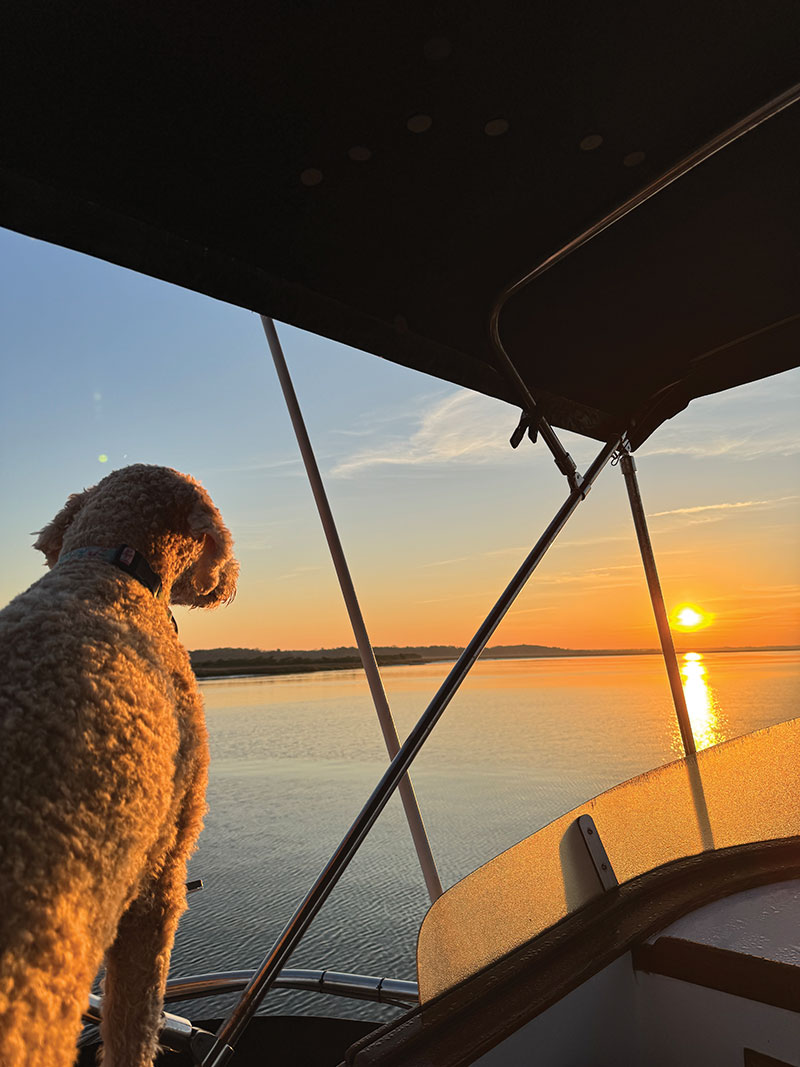
The Nietzel’s dog, Ripley, cruising at sunset
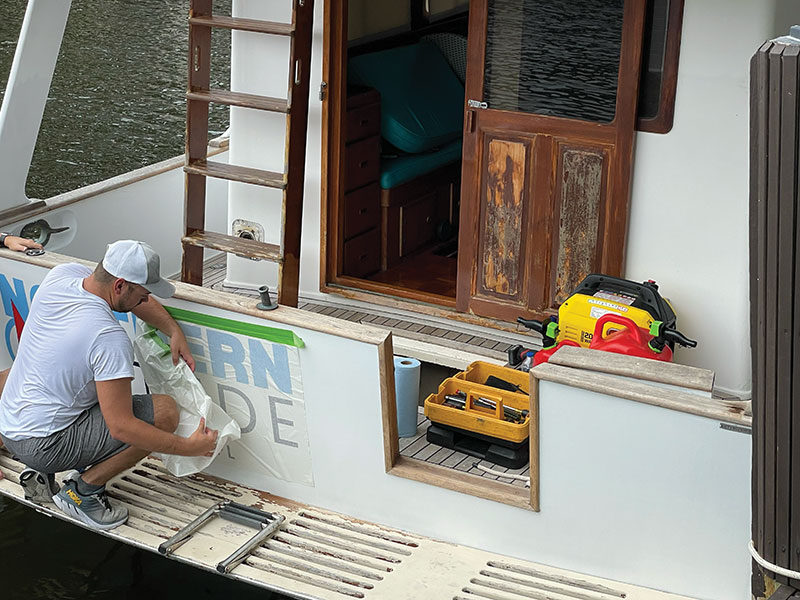
Evan places Northern Attitude’s name on the transom
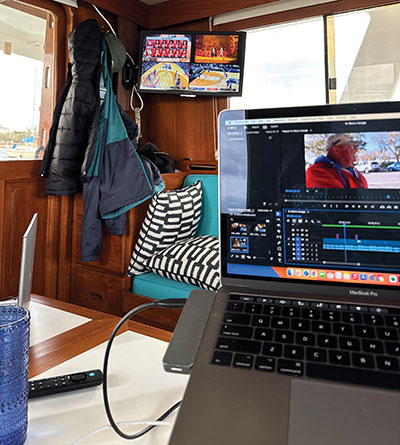
Having Starlink onboard means that Karly and Evan can plan their trips and work remotely
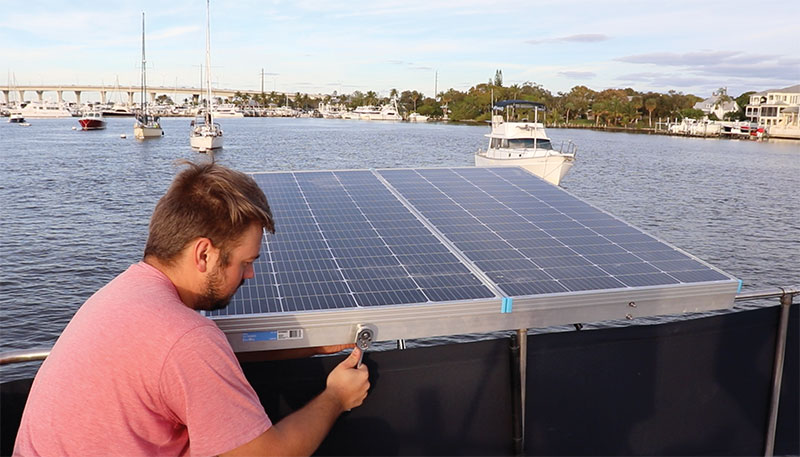
Evan mounts solar panels to their boat
Anchoring advantages
Speaking of pulling anchor, anchoring is arguably one of the best ways to save money while cruising. Other than boat maintenance and upkeep, boat storage is one of those expensive line items in boat ownership.
Instead of hopping from marina to marina on our Loop (which typically charges by the foot of your vessel), we intentionally find spots to anchor, which comes at zero cost. Although it can add a layer of stress when thinking about setting your anchor, it can also take you to more remote locations that others will never have a chance to see. If you do plan to anchor more often than not, you’ll want to consider that when buying a boat. Our boat has a full keel, which helps keep the boat from swaying back and forth.
To make anchoring more accessible for us, we decided to invest in a solar and lithium power upgrade. Although it is a large investment upfront, we felt strongly that the result would pay dividends in the end. Our boat has 800 watts of solar, which recharge our two 300-amp-hour lithium batteries, giving us a completely off-grid electrical system. This is especially essential for us since we have to power our laptops and camera gear every day.
Other considerations
Learning basic boat maintenance, repairs and upkeep is crucial when it comes to saving money. Never underestimate the value of YouTube and online forums to help you troubleshoot and gain a better understanding of your systems. For example, keeping a simple multimeter tool onboard can assist you in troubleshooting a problem, instead of hiring a professional by the hour to tell you what the problem is. We have learned to never be afraid to ask for help. More than likely, you are or will be near other cruisers who have experienced a similar problem, and their experience is often invaluable.
Depending on your boating goals and involvements, joining different associations can sometimes provide perks like fuel and marina discounts. We are members of America’s Great Loop Cruisers’ Association (AGLCA), which has marina and service sponsors along the entire Loop route. Additionally, we’ve found that its online forum and community support is worth every penny we spend on the membership fee.
Lastly, some of the biggest adventures come in the form of self-exploration, which is completely free. Whether it be taking your dinghy through the mangroves, hiking in a local park or snorkeling near your anchorage, you never know what you’ll find. I think that’s the beauty in all of this — you truly never know what you’ll stumble upon in your cruising journey. Embracing the adventure will take you further than you ever thought possible, and with a few intentional and strategic decisions, you too can live a budget-friendly boating lifestyle. The best part of the journey isn’t what we spend, but the freedom and memories we gain.