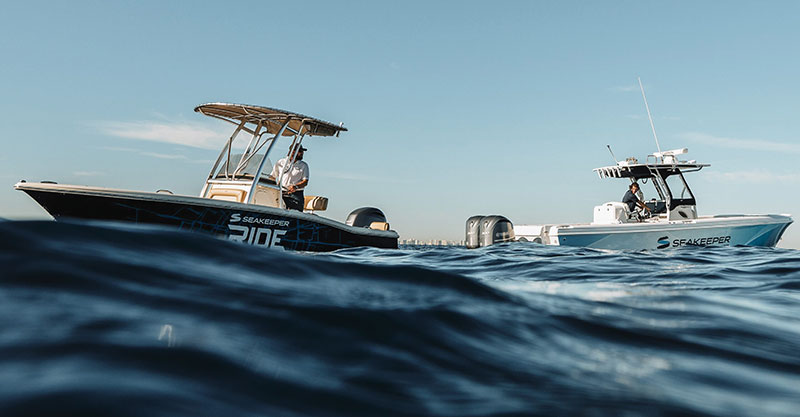
We put Seakeeper’s gyro stabilization and Ride technology to the test on Lake Michigan.
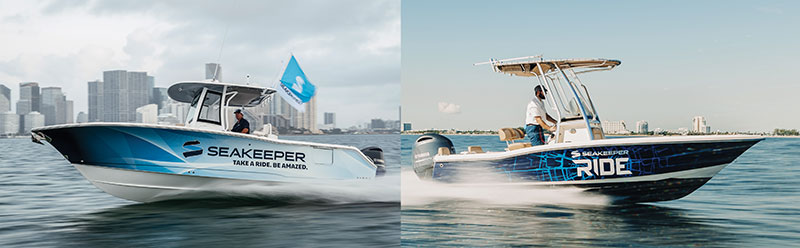
Some boating technologies look impressive on paper. Others only prove their worth when you experience them firsthand. After spending a day on the water with both Seakeeper’s gyroscopic stabilization system and the newer Seakeeper Ride technology at Chicago’s Windy City Boat & Yacht Show in June, I quickly understood why these systems have become some of the most talked-about innovations in recreational boating.
Before Seakeeper, gyroscopic stabilization was generally reserved for large commercial ships and military vessels due to size and complexity. After years of research and development, Seakeeper introduced its first commercial marine gyro stabilizer in 2008. Unlike traditional fin stabilizers that require forward motion to be effective, Seakeeper’s gyros work both underway and at rest. The technology quickly gained acceptance among yacht owners, sportfishing enthusiasts and commercial operators because it could reduce boat roll by up to 95% in many conditions.
As demand grew, Seakeeper expanded its product line to serve a wider range of vessels. What began as a solution primarily for larger yachts evolved into systems sized for boats as small as 23 feet. The company also broadened its manufacturing and engineering capabilities from its headquarters in Leesport, Pennsylvania, becoming one of the most influential marine technology companies in the world.
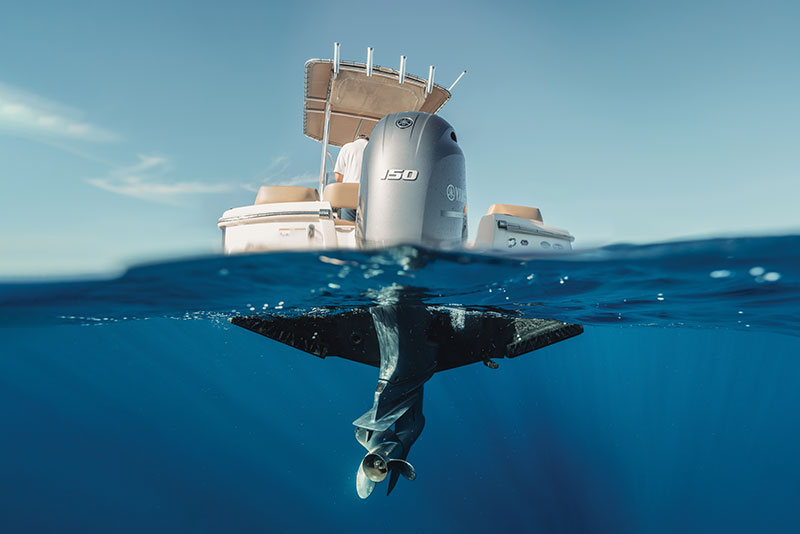
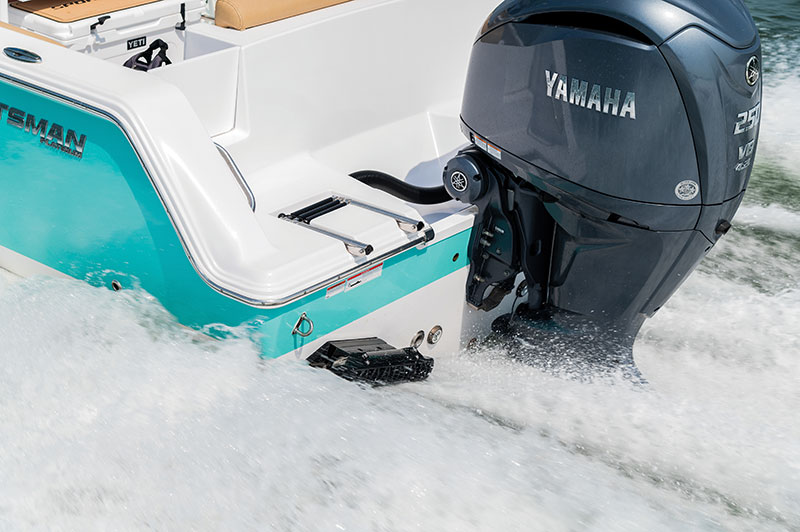
In 2022, Seakeeper introduced Seakeeper Ride, the company’s innovative trademarked Vessel Attitude Control System (VACS), a completely different stabilization technology designed for boats under 42 feet. Instead of using a spinning flywheel gyro, Ride employs computer-controlled transom-mounted rotary blades that make hundreds of adjustments per second to control pitch and roll while underway as the water passes under the boat. The system improves comfort, visibility and efficiency, and has been rapidly adopted by many boat builders both with the Seakeeper gyroscope and as a stand-alone system.
Today, Seakeeper systems are installed on thousands of vessels worldwide, and the company is widely credited with changing the boating experience by making boats more stable, comfortable and accessible for owners and passengers alike. What started as an innovative engineering concept has become one of the most significant advancements in recreational marine technology in recent decades.
Recently, I had the opportunity to participate in an on-water demonstration of both Seakeeper’s gyro stabilizer and Seakeeper Ride. Like many boaters, I had heard the claims about reduced roll, improved comfort and better handling. After spending time aboard a boat equipped with both systems, I came away with a new appreciation for how this technology can dramatically enhance the boating experience.
The gryo difference
For years, boaters have accepted rolling at rest and in rough conditions as part of life on the water. Whether fishing offshore, entertaining guests or simply enjoying a day at anchor, vessel motion has always been a challenge. Seakeeper’s gyro stabilization technology was developed to address exactly that issue.
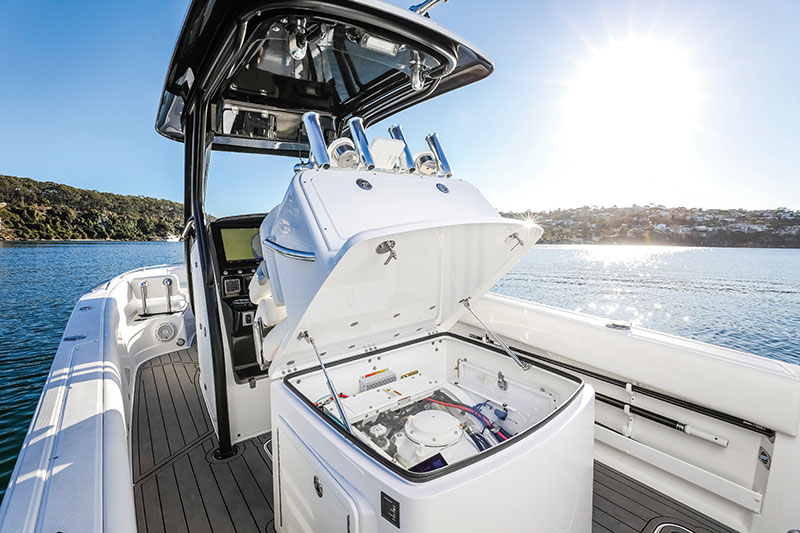
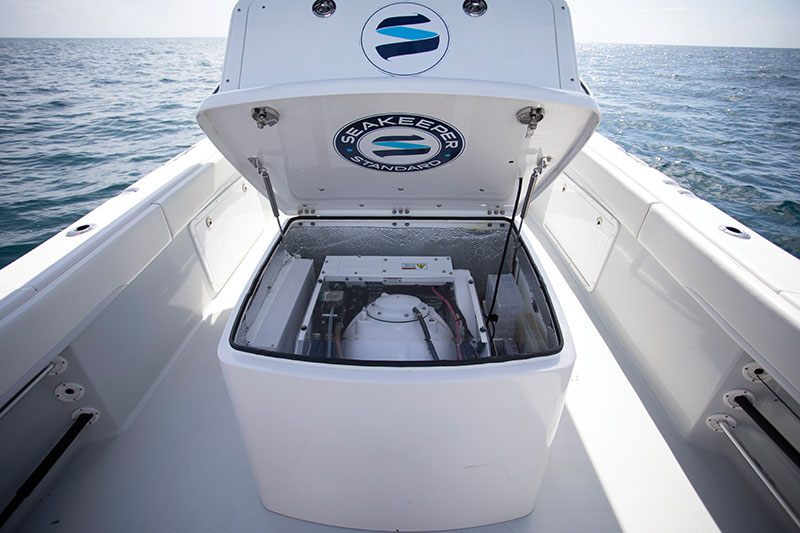
At the heart of every Seakeeper gyro system is a vacuum-enclosed flywheel spinning at speeds approaching 10,000 rpm — faster than many race car engines. As the flywheel rotates, it stores enormous amounts of kinetic energy. When the boat begins to roll, the gyro generates powerful stabilizing forces that counteract that motion, enough to noticeably calm a vessel weighing many tons even while sitting at idle in a beam sea.
That stored rotational energy creates the stabilizing force that can reduce boat roll by up to 95%, transforming comfort both underway and at anchor. While the engineering behind the technology is fascinating, what matters most is the result.
Comfort at rest
Perhaps the most impressive portion of the demonstration occurred when the vessel was stationary. One of the most telling moments came when another boat’s wake crossed our beam. Normally, everyone aboard instinctively braces for the roll that follows. This time, however, the movement was muted enough that conversations continued uninterrupted and people remained comfortably standing in place. As the boat encountered boat wakes and beam seas, the typical side-to-side rolling was dramatically reduced. The sensation wasn’t that the waves disappeared; rather, the boat seemed reluctant to react to them. Instead of the familiar side-to-side rocking motion, the vessel remained remarkably level and composed. For anyone who has spent a long day offshore or watched family members struggle with motion discomfort, the benefits become apparent within minutes.
Traditionally, boats at anchor or drifting tend to roll continuously as waves and wakes pass beneath them. It’s often during these moments that guests begin feeling uncomfortable, even with small 1-to-2-degree rolls. With the Seakeeper gyro engaged, the boat maintained a remarkably stable platform.
The reduction in roll was dramatic enough that even the experienced boaters aboard the demonstration vessel commented on the difference. It is easy to understand why Seakeeper technology has become increasingly common on everything from center consoles and sportfishing boats to luxury cruisers and yachts.
All photos credit Seakeeper
Enter Seakeeper Ride
While gyro stabilization addresses roll, Seakeeper Ride tackles a different challenge: Controlling the boat’s running attitude underway.
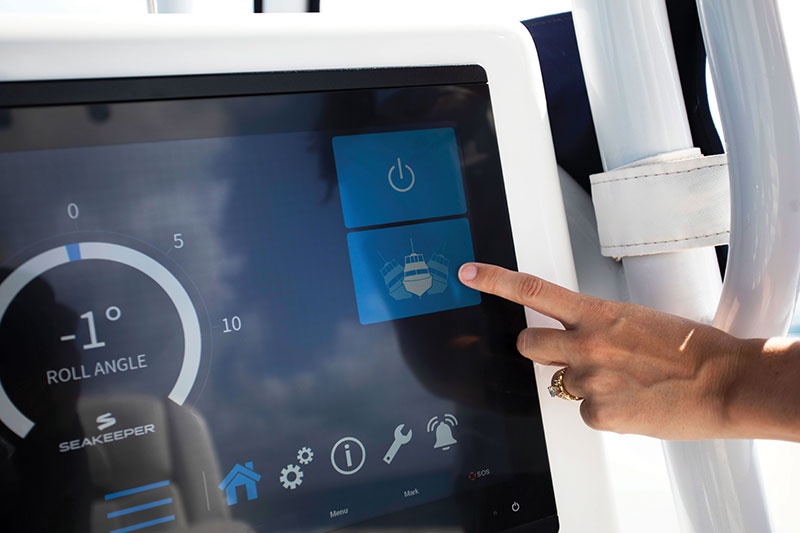
Unlike traditional trim tabs, Seakeeper Ride utilizes rotary blades mounted on the transom, paired with sophisticated sensors and software. The system continuously monitors vessel movement and makes hundreds of adjustments per second to optimize pitch, roll and running attitude while underway. The result is a boat that continuously adjusts itself to changing sea conditions, often before the operator notices a correction is needed.
During acceleration, the bow rise that many boaters have come to expect was noticeably minimized. Visibility from the helm remained excellent as the vessel transitioned onto plane. In turn, the boat maintained a balanced, confident feel. Running through wakes and varying sea conditions, the system worked seamlessly in the background without requiring any operator input.
What stood out most was how natural everything felt. There was no sense of abrupt corrections or mechanical intervention. The boat simply seemed to find and maintain its ideal running attitude. The boat just seemed to be solid, and more “in control.”
Now, even pontoon owners can experience the power of Seakeeper Ride’s pitch, roll and yaw reduction. Earlier this year, Seakeeper announced its Ride application for pontoons, which is currently available on Barletta Pontoon’s 23 Lusso and 25 Lusso models.
Enhanced efficiency and performance
Beyond comfort, Seakeeper Ride offers practical performance benefits.
By continuously optimizing trim and attitude, the system can help improve fuel efficiency, reduce time to plane, and enhance overall vessel handling. For boaters who regularly encounter changing conditions — whether on the Great Lakes, inland waterways or offshore passages — the technology helps reduce the workload on the captain while improving passenger comfort.
For many owners, the combination of improved efficiency and reduced operator fatigue can be just as valuable as the comfort benefits themselves.
Lakeland Boating readers understand that conditions on the Great Lakes can change quickly. What begins as a calm morning can evolve into a challenging ride home as winds build and boat traffic increases.
Technologies like Seakeeper gyro stablizers and Seakeeper Ride don’t eliminate rough water, but they can significantly reduce its impact on passengers and crew while enhancing comfort and confidence underway. For families introducing new boaters to the lifestyle, anglers spending long days on the water, or cruisers seeking greater comfort, the systems provide meaningful advantages.
The Great Lakes have always demanded respect from boaters. With optional Seakeeper and Seakeeper Ride, wind, chop or swell become much more manageable, opening the door to more time on the water and more chances to enjoy boating on days where conditions might have previously kept you at the dock.
Final thoughts
As someone who experienced both systems firsthand, I left the demonstration impressed — not by marketing claims, but by tangible results. Seakeeper’s gyro stabilization dramatically reduced roll and improved comfort both underway and at rest. Seakeeper Ride delivered a smoother, more controlled running attitude while simplifying vessel operation. Together, they created an experience that felt safer, more comfortable and more enjoyable.
What surprised me most was how noticeable the difference was between the system being on and off. And at the helm was a boat that felt completely in control and natural. The motion remained natural and organic — nothing artificial.
In an industry where transformative innovations are relatively rare, Seakeeper has developed technologies that meaningfully change how people experience time on the water. For boaters considering their next vessel — or upgrades to a current one — these are technologies worth experiencing firsthand. Boaters often evaluate new technology by asking a simple question: Does it make time on the water better? After experiencing both systems firsthand, my answer is yes. The difference isn’t subtle. It’s something you feel almost immediately — and once you’ve experienced it, it’s difficult to imagine boating without it.