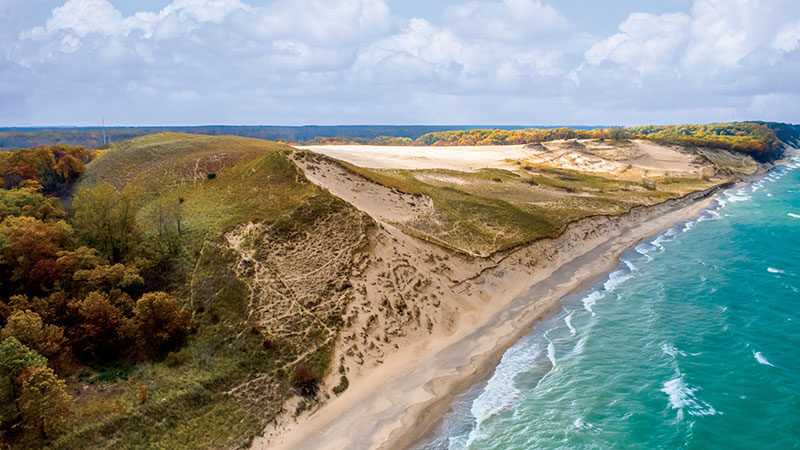
Just outside of Chicago, one of the newest national parks offers visitors miles of sandy dunes and rich biodiversity.
Story by Jane Ammeson / Photos by Indiana Dunes National Park
Sunlight glints off white-capped waves as they crash along 15 miles of pristine Lake Michigan shoreline. Wind rustles through ancient prairie grasses. White trilliums, yellow trout lilies, purple cress and other spring flowers carpet thickets of dense woodlands. Above, birds swoop and soar, calling out to each other as they float on air currents, while Monarch butterflies, with their orange and black patterned wings, flit from native plants like milkweed pods, feeding on the nectar inside.
And towering dunes offer panoramic vistas of the Indiana Dunes National Park (formerly Indiana Dunes National Lakeshore), one of the country’s newest and most biologically diverse national parks.
It’s a marvelous patchwork quilt of nature, the colors of springtime showcasing the beauty of sand and water, dotted with bogs and marsh, and connected by more than 50 miles of trails, some of which follow old trading routes once used by Native Americans. They’re all part of the 16,000-acre national park, home to over 1,100 species.
Because it’s a birding hotspot with sightings of more than 350 bird varieties, the park is also home to the Indiana Audubon Society’s annual Indiana Dunes Birding Festival (this year held on May 14 – 17), one of the largest in the country. In all, over 35 million birds are estimated to migrate through both the state and national park each spring.
Save the dunes
All this beauty and important habitat was almost lost to the encroaching steel mills that line the lakefront, starting from the South Side of Chicago, curving along to the southeast towards Marquette Park in Gary, Indiana. For decades, environmental groups battled to “Save the Dunes,” often meeting with frustration over and over again.
“Their initial momentum of support for a national park was stymied by World War I, but the state stepped in and protected the portion that would become the Indiana Dunes State Park,” says Michelle Senderhauf, digital marketing director for Indiana Dunes Tourism. “There were a few twists and turns along the way, but the Indiana Dunes National Park finally happened in 2019. We now have a unique situation where the Indiana Dunes National Park surrounds the State Park.”
That wasn’t the only battle environmentalists faced.
“At one time, the Grand Calumet was the dirtiest river in the country,” says Kenneth Schoon, professor emeritus at Indiana University Northwest and the author of numerous books on area history including “Swedish Settlements on the South Shore” and “Shifting Sands: The Restoration of the Calumet Area.”
Schoon calls it nothing short of miraculous how, in the 1970s and ’80s, corporations, community activists and governmental organizations worked together to restore once-polluted lands and waters.
Credit is once again due to the many volunteers and organizations working together, including the Northwest Indiana Paddling Association (NWIPA), a nonprofit dedicated to developing paddling opportunities and serving as stewards of the region’s waterways. In partnership with others, the group has helped clear and maintain approximately 200 miles of designated blueways (water trails).
Now you can paddle down the Little Calumet River as it flows towards Lake Michigan, following the ways of Native Americans and early settlers, moving under a canopy of trees and through open river land. The trip will take you past the home of Joseph Bailly, a French-Canadian fur trader who established a trading post in 1822 on the northern bank of the Little Calumet, where the Pottawatomie and Sauk trails merged. Business was excellent, and Bailly, who was married to a Native American, soon had warehouses, a sloop he kept for shipping goods on Lake Michigan, and a racetrack where he could race his pedigreed horses.
Duneland abodes
Much of Bailly’s empire is gone now, but his two-story home, which is paneled in oak and wild cherry and decorated with wallpaper said to have been imported from Europe, is open for tours.
Also near the banks of the Little Calumet and open to visitors is the 1867 Chellberg farmstead.
“The Chellbergs were one of hundreds of Swedish families that immigrated to the ‘south shore’ area of Northwest Indiana,” Schoon says, noting that the Swedes were the first non-English speaking immigrants to arrive in numbers large enough and who lived close enough together to call the areas settlements.
Further afield, the Century of Progress Architectural District is a collection of buildings brought by barge after being on display at the 1933 World’s Fair in Chicago and is now part of the national park. Included among these is the House of Tomorrow, a futuristic home at that time, which is now undergoing rehabilitation.
Take a hike
Hiking trails, ranked by length and difficulty level, take visitors into the hidden wonders of the duneland. The routes are well-marked, but there are maps as well as an app to download for navigating the Discovery Trail.
It’s worth taking the 4.7-mile trail to Cowles Bog, one of the few remaining sphagnum bogs left in the state. Bogs are almost primeval-looking with their still waters topped with scatterings of moss. The trail here climbs a steep sand dune before descending to a secluded beach below, one of the least used in the park.
If you want to go big, take The 3 Dune Challenge, a 552 vertical-foot climb up the park’s three tallest sand dunes — Mt. Jackson, Mt. Holden, and Mt. Tom — along a 1.5-mile trail. If accompanied by an authorized ranger, you can also discover the largest “living” dune in the national park, Mount Baldy, which moves about 4 feet every year.
Just beyond the park are a series of charming towns with shops, restaurants, distilleries, craft breweries, farmers markets and orchards. In Valparaiso, the county seat, discover a historic opera house and courthouse. In the summer, there are festivals, including the annual Valparaiso Popcorn Festival (Orville Redenbacher was from here).
At Indiana Dunes National Park, miles of shoreline, rolling dunes and wooded trails offer a place to slow down and experience Lake Michigan at its most natural.
Top image: Indiana Dunes Mt. Baldy
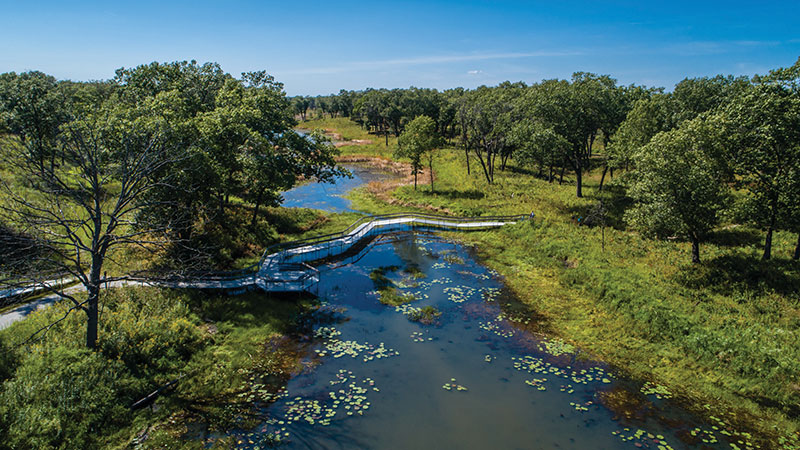
Cowles Bog
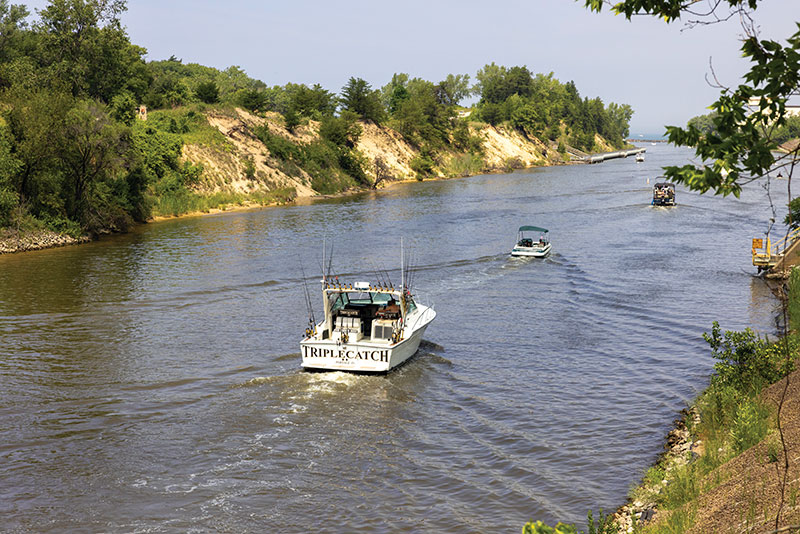
Little Calumet River
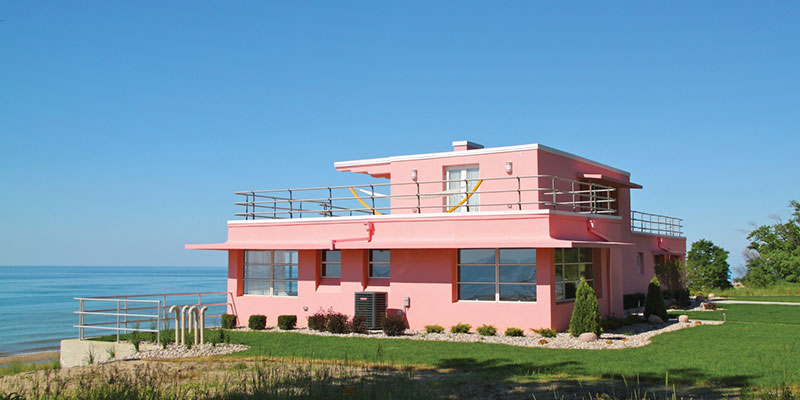
The Florida Tropical House, part of the Century of Progress Architectural District