Safety onboard isn’t just about supplies — it’s about preparedness.
by Jordan Bohonek
In previous segments, I have lamented how taking off on the adventure of a lifetime, such as America’s Great Loop, involves countless hours of plotting, planning and provisioning. It’s essential to have enough food, water and daily supplies to maintain the health and wellness of your crew. It also becomes a priority to stock up on standard maintenance supplies to ensure the health of your vessel: Oil, filters, belts, piping, fittings and other critical components.
The idea is to have what you need when you least expect it. But while the storehouses may be ready for the unexpected, the real question is: Is your crew?
In an instant
For our family, with kids aboard, safety is more than a checklist, it’s about preparing for the “what-ifs” — the real-life “OMG!” moments when fire drills aren’t just a routine exercise, and role-playing through crisis situations transforms from a game into reality.
When you’re out on the water, you don’t have the luxury of waiting for emergency services to arrive; you are the first responder. No matter how much you think you’re prepared, nothing quite prepares you for the real thing.
One experience we had on the Great Loop stands out as a stark reminder of this truth.
It was a sunny Friday afternoon, and we were running up the Intracoastal Waterway (ICW) along the Georgia coast. The conditions were calm, the crew was in good spirits, and our progress was steady. But as we approached a tricky section with significant tidal swings, we faced a decision: Stay on the ICW, navigating its winding channels and shifting shoals, or take a shortcut and run 8 miles offshore in the Atlantic Ocean to reach our next port quicker.
We opted for the latter.
Looking back, it was a rookie mistake. No one reviewed the charts, no one checked the latest weather updates, and no one discussed contingencies. Overconfidence had crept in, and the day had gone so smoothly that we let our guard down, assuming the offshore route would be just as uneventful as the ICW.
We turned north into the open waters of the Atlantic, throttling up and settling in for what we assumed would be an easy, relaxing ride. The sun sparkled on the water, the engines hummed along, and the kids remained below deck, working on their school assignments. My wife was on her laptop, catching up on emails and I leaned back at the helm, watching our wake roll gently behind us, enjoying the peacefulness of the moment.
And then, in an instant, everything changed.
The rhythmic hum of the diesel engines was violently interrupted by a loud grinding noise, followed by the shrill beeping of depth alarms. Then silence.
The engines stopped cold.
My heart pounded as my hands gripped the helm, the sudden realization hitting me like a wave. Something was terribly wrong. My wife’s head snapped up from her laptop, eyes wide with concern.
“What just happened?” she asked.
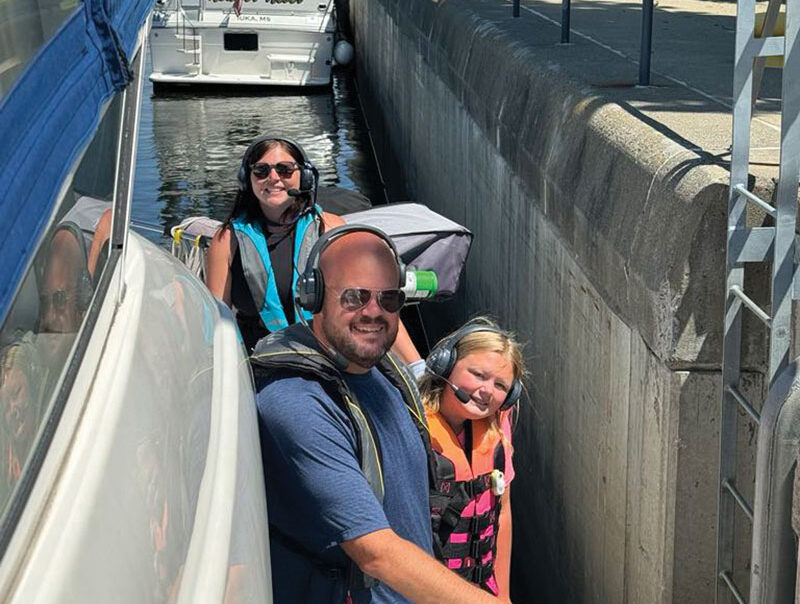
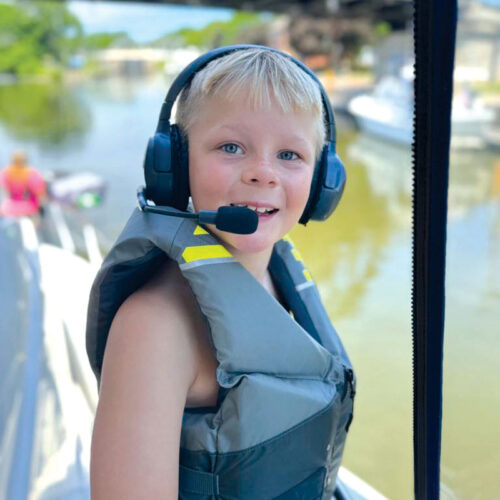
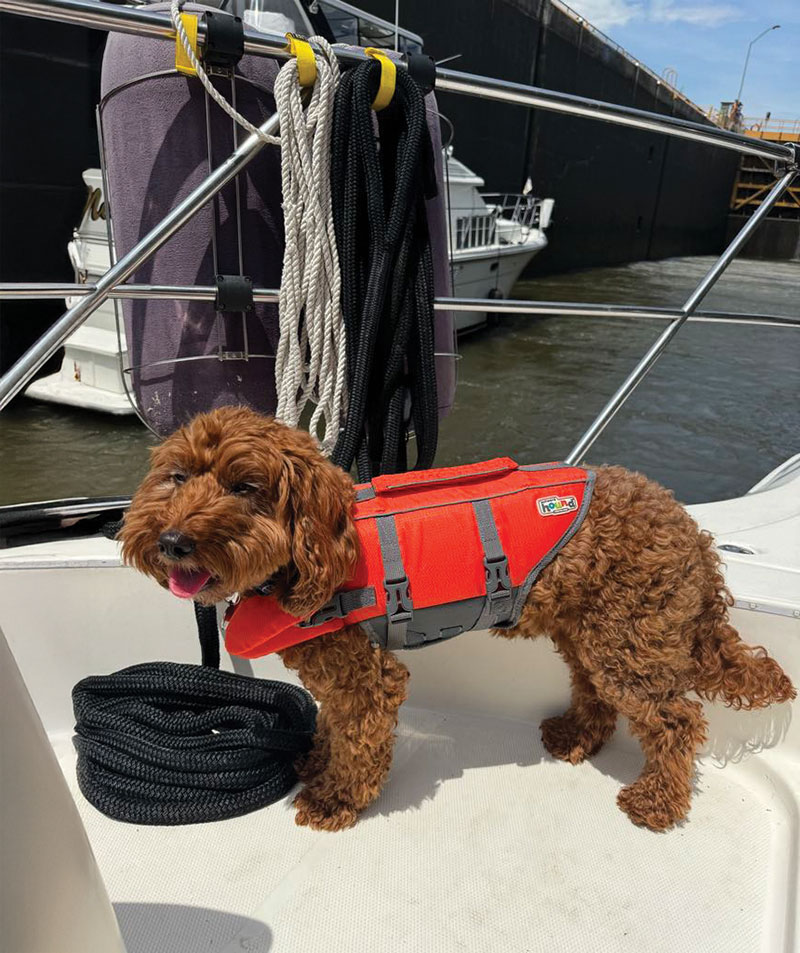
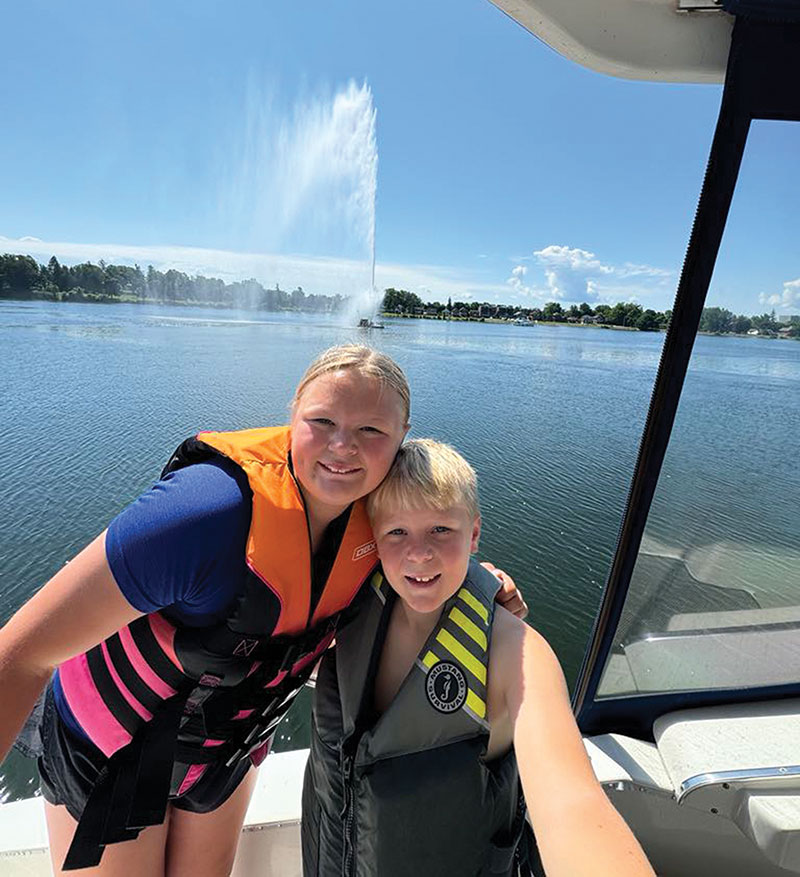
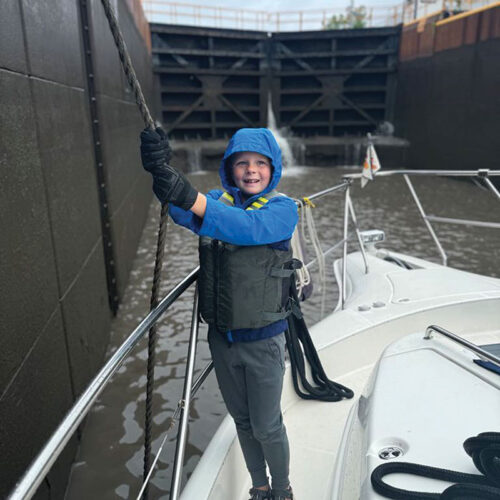
The kids appeared from below deck, sensing the shift in atmosphere. Their expressions were a mix of confusion and fear. This wasn’t a drill. This was real. At that moment, the reality of safety training came into play. The casual conversations were gone, and the instinct and preparation took over. Without hesitation, my wife immediately checked the bilges for flooding, our daughter grabbed the radio to prepare for a distress call if needed, and our son, without being told, strapped on a life jacket for himself and our dog, Sherman. Everyone had a role, and everyone knew what to do.
I quickly assessed the situation. Had we hit something? We were in open water — there shouldn’t have been anything to hit. Yet, here we were, dead in the water. As I checked the depthsounder, my stomach dropped. The reading was inconsistent, sometimes showing depth, sometimes flashing red warnings of obstructions.
We weren’t aground.
Then, through the clear water just off the stern, I saw it. A submerged fishing boat, sitting just beneath the surface, nearly invisible to the naked eye. My mind raced, had it been abandoned? Had it sunk recently? And — more urgently — what kind of damage had it done to us?
The reality of the situation was horrifying. We had just collided with a ghost ship, a vessel long forgotten by its owner but still lurking beneath the surface, waiting for an unsuspecting boater like us.
At that moment, I realized something crucial: We had assumed we were safe simply because we were in open water. We hadn’t checked notices to mariners for known wrecks. We hadn’t used sonar to scan the area before taking a shortcut. We had trusted what we couldn’t see instead of verifying what was really there.
It was a lesson learned the hard way.
After inspection of the engine room and trying each powerplant independently, we made the decision to slowly make our way to a boatyard 15 miles out where we could be hauled out for inspection. The damage, while significant, was not catastrophic — but it could have been. That wreck could have punctured our hull, it could have left us stranded in open water, and had the conditions been rough, the outcome might have been very different.
Be prepared
From that moment on, our approach to navigation changed. We no longer assumed open water was safe just because it looked that way. We triple-checked charts, reviewed reports of known hazards, and treated every stretch of water with the respect it deserved. Because when you’re out there, miles away from help, the difference between an inconvenience and a catastrophe comes down to how prepared you are.
This experience was a sobering reminder that preparation isn’t just about stocking supplies or practicing drills, it’s about staying vigilant, questioning assumptions and respecting the unpredictable nature of the sea.
We had assumed that open water meant safety, but the hidden dangers beneath the surface proved otherwise. Hitting the submerged fishing boat could have ended in disaster, but because our crew was trained, calm and quick to act, we were able to turn a crisis into a valuable lesson. It reinforced that safety begins at any age — from the youngest crew members who instinctively put on life jackets to the adults who took charge of assessing damage and calling for help.
From that day forward, we made a promise to never take shortcuts when it came to planning, to always verify before trusting the unknown, and to treat every passage — no matter how routine — with the care and attention it deserves. Because out on the water, the unexpected isn’t a possibility; it’s a certainty.
JORDAN BOHONEK Originally from southern Minnesota, Jordan now lives on a boat with his family. He combines his love for the water with his passion for helping others find vessels as a yacht broker, enabling them to live their dream on America’s Great Loop. Follow along the Bohonek’s Great Loop journey at their Facebook page “Live the Dash | Traveling America’s Great Loop.”