Skip the traffic, save the miles, and experience the Great Lakes the way travelers have for decades.
Ever since the invention of the wheel, humans have been engineering ways to ease travel. We have continually sought shortcuts to our long, sometimes onerous journeys. Many of these journeys were out of necessity to find food and shelter, but many were done out of a sense of adventure and finding new worlds.
Technology played a role in shortening these trips. Walking gave way to the horse, and the horse gave way to the automobile. The industrial revolution powered ships with steam and propellers, rendering the majestic sailing ships obsolete.
Geographical shortcuts also became important, and no man-made project was more historically important than the creation of the Panama Canal.
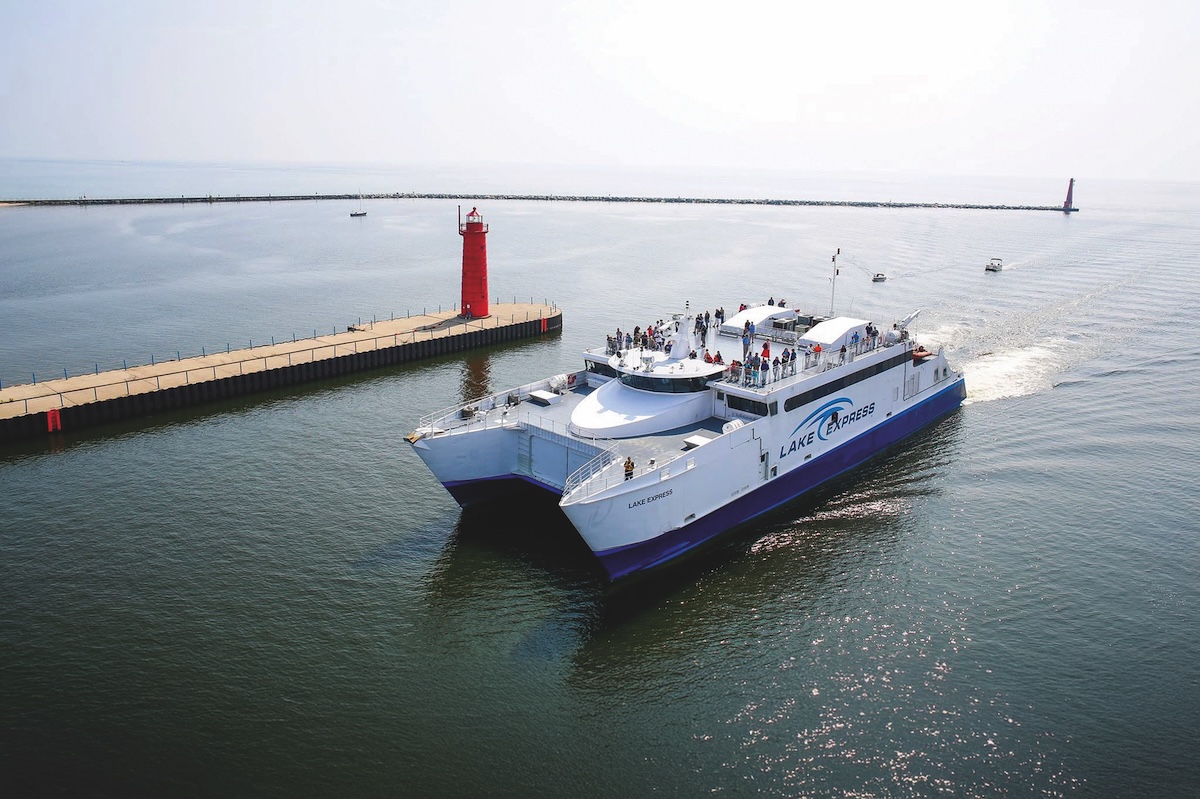
Another shortcut, much closer to my home, became a reality in 2004. Rather than a canal through an isthmus, it was a ferry service that reduced travel time by carrying passengers directly across Lake Michigan. This new shortcut was the HSC (high-speed catamaran) Lake Express.
Out of necessity
The earliest Great Lakes ferries emerged out of necessity. Long before modern highways existed, lakes and rivers often provided the easiest and most efficient routes for moving people and goods. Freight vessels carried passengers, passenger liners connected communities, and rail ferries transported entire trains, freight cars, and eventually automobiles across the water.
As road networks expanded and engineering projects connected previously isolated shorelines, many of the region’s busiest ferry routes became obsolete. Bridges and tunnels replaced ferry crossings between Detroit and Windsor, Belle Isle and Detroit; Sault Ste. Marie, St. Ignace and Mackinaw City; and Port Huron and Sarnia. Likewise, changes in transportation laws and industry practices eventually brought an end to the railroad ferries that once crossed Lake Michigan.
The Queen of the Great Lakes
The first ferry carrying largely passengers across Lake Michigan was called the SS Milwaukee Clipper. Before her service on Lake Michigan, the Milwaukee Clipper was launched on December 22, 1904, as the SS Juniata. Owned by the Anchor Line, a division of the Pennsylvania Railroad, she ferried passengers and freight from Buffalo, New York, to Duluth, Minnesota, until 1915. That year, the Panama Canal Act forbade railroad companies from owning steamships. The Juniata continued service for many years, including carrying passengers to and from the 1933 Chicago World’s Fair.
In 1936, she was taken out of service due to economic conditions, and more importantly, she was deemed unsafe due to her wooden superstructure. In 1940, she was purchased by the Wisconsin and Michigan Steamship Company and was completely rebuilt with a steel superstructure in accordance with modern maritime safety regulations. At the same time, the ship was converted from burning coal to fuel oil.
On June 2, 1941, she was rechristened the Milwaukee Clipper. For 29 seasons, she crossed Lake Michigan as the “Queen of the Great Lakes,” boasting amenities such as air-conditioned cabins, a dance floor, a live band and a movie theater. At 361 feet long, she was able to carry 120 cars and 900 passengers at full capacity. The Milwaukee Clipper retains the original 1904 American-built quadruple expansion steam engine, which is the very last one remaining in existence. This engine was built by the Detroit Ship Building Company, even though the ship was built at the American Shipbuilding Company in Cleveland, Ohio. The engine weighs in at 900,000 pounds and only turned at 100 rpm to drive the ship to 18 knots. The Milwaukee Clipper also holds the title of the oldest U.S. passenger steamship on the Great Lakes.
The 1970 sailing season was the most successful year in the history of the Milwaukee Clipper. Ironically, it was also the last year she ran regular cross-lake service. In 1977, she was sold to interests in Chicago and moved to Navy Pier, where she was renamed the SS Clipper. The hope was to have a regular passenger service between Chicago and Milwaukee, Wisconsin, but financing failed, hampering this endeavor. She did enjoy several years of use at Navy Pier as a museum and an active club lounge. At the time, Mayor Harold Washington loved the Clipper so much that he had an apartment fabricated in the ship for overnight stays. In 1983, the Milwaukee Clipper was listed on the National Register of Historic Places, and in May 1989, it was designated as a National Historic Landmark. In 1990, she was sold to the city of Hammond, Indiana, and was used as an attraction for its new marina. Sadly, she was soon replaced by a new casino ship and subsequently moved to South Chicago and left to decay near the coal docks on the Calumet River.
Today, the Milwaukee Clipper is berthed in Muskegon, Michigan, as a museum. It was purchased by the SS Milwaukee Clipper Preservation organization in 1997. This organization is active in restoring and maintaining the history of this famous ferry. They have tours, parties and private events throughout the summer. Tours are scheduled every weekend in the summer, and there have even been talks about turning the ship into a “Boatel,” where visitors can spend the night aboard this historic vessel. It is certainly a ship to visit if you are in Muskegon.
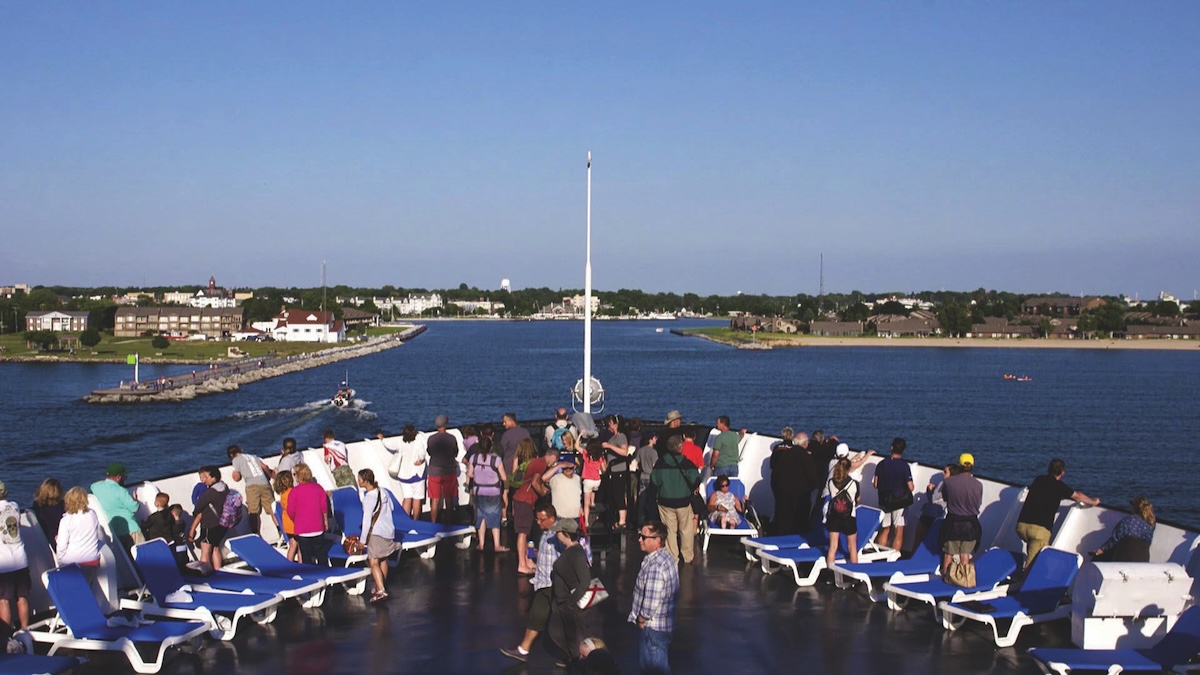
(Main photo) Lake Express | credit Lake Express Facebook
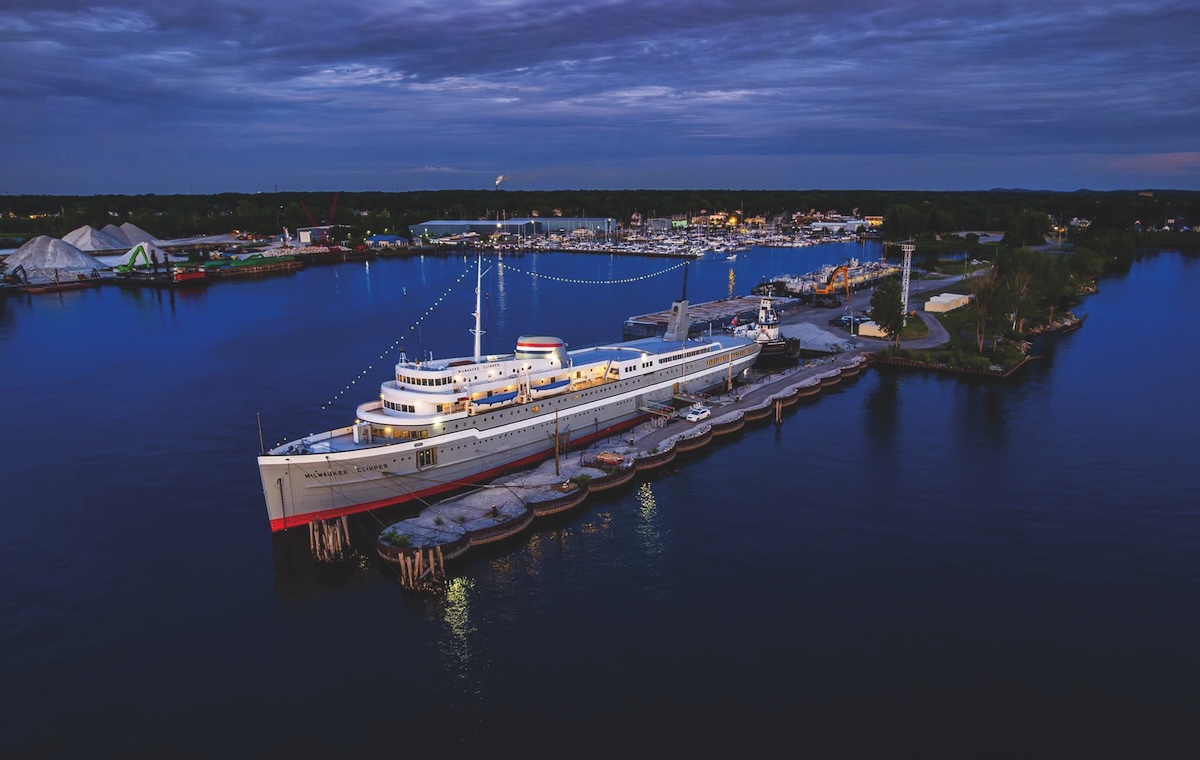
SS Milwaukee Clipper docked in Muskegon Lake | credit Jeremy Church
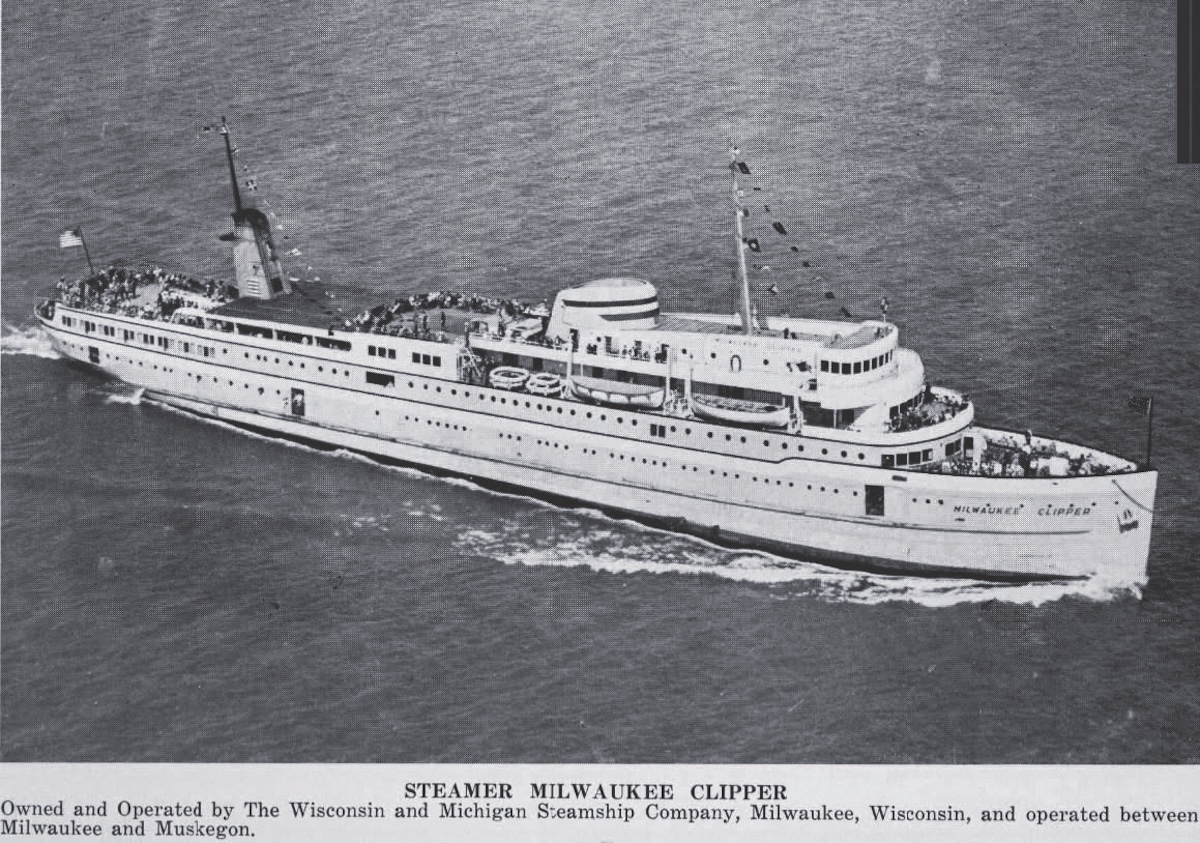
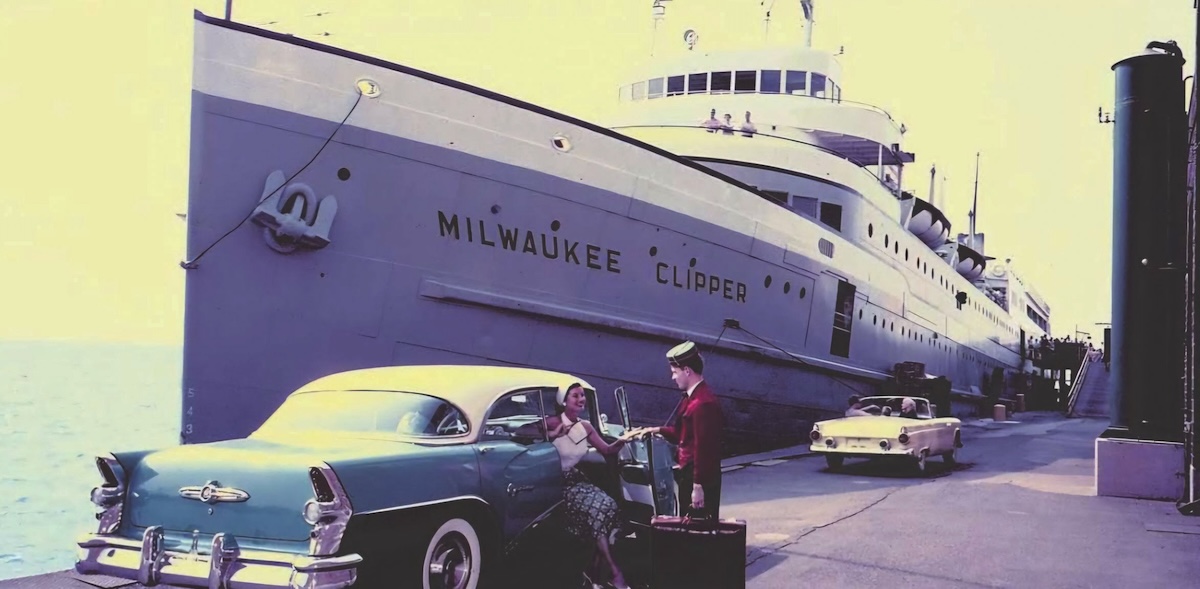
(Two photos above) SS Milwaukee Clipper ferry | credit SS Milwaukee Clipper Preservation Organization
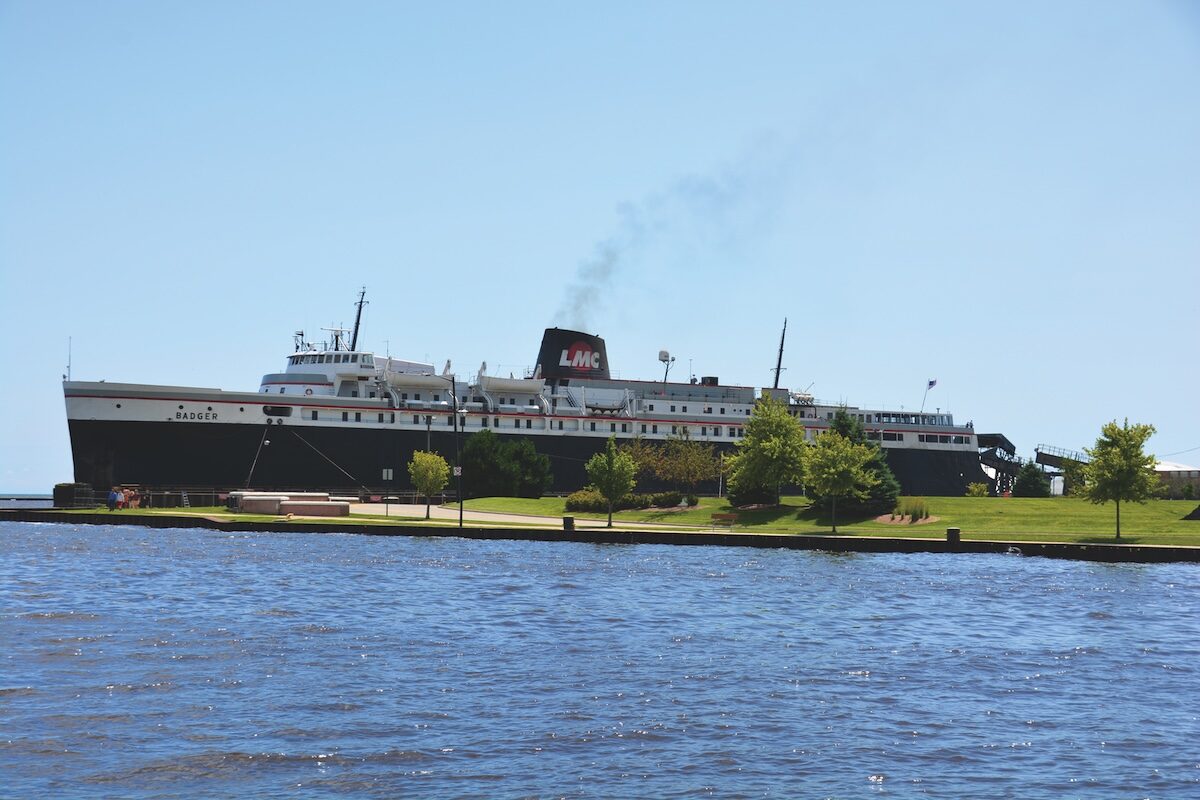
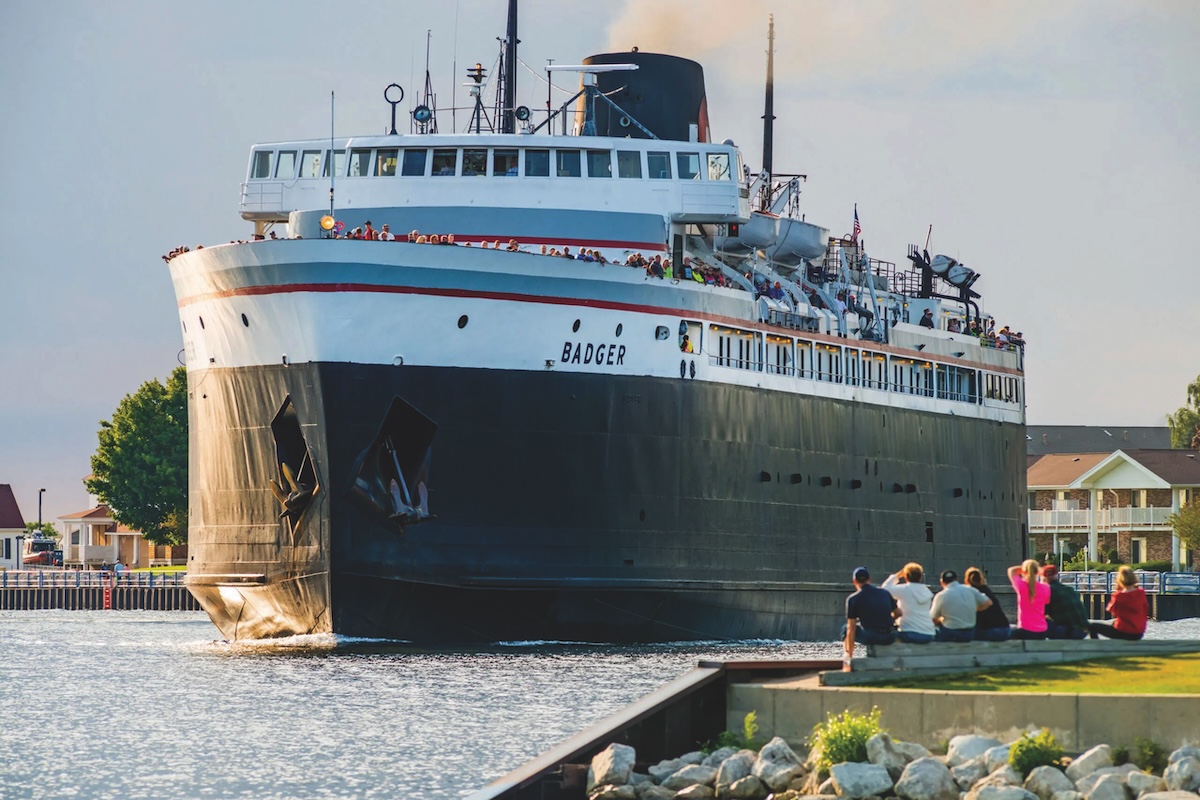
Top photo: SS Badger car ferry docked in Manitowoc | credit Dave Furman
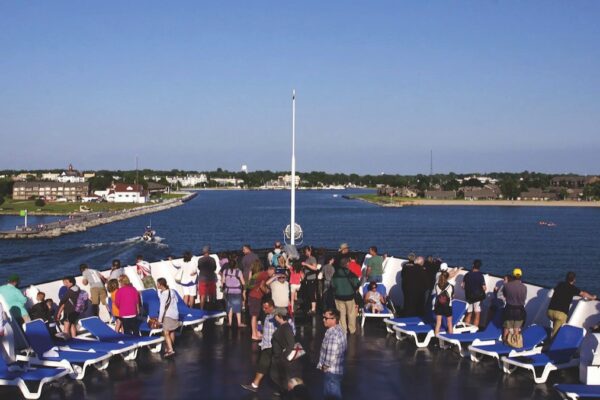
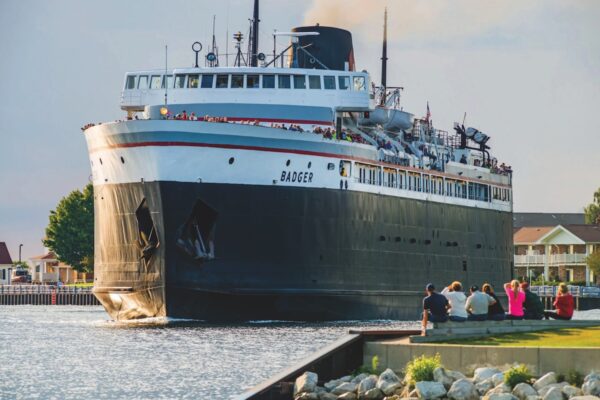
Bottom left and right: credit SS Badger
A new vision
The Christy Corporation, now known as the Fincantieri Marine Group in Sturgeon Bay, Wisconsin, was called on in 1952 to build two multipurpose ships for railcar transportation and ice breaking across Lake Michigan between Ludington, Michigan, and Manitowoc, Wisconsin. These were named the SS Spartan and the SS Badger, both named after their respective state universities. These two modern ships were built to continue the railcar service, which began in Ludington in 1897. During the 1950s, there were as many as 14 of these car ferries in service. This route was a connection of Highway 10, which ran across the state of Michigan from Midland to Ludington, and then from Manitowoc, Wisconsin, to as far as Fargo, North Dakota, before merging back into Highway 94. This was the main route for the automobiles being delivered from Detroit out west and avoided the heavily congested rail yards in Chicago.
In November of 1990, the Badger, the last remaining ship in service, was sadly laid up. However, in 1991, both the Badger and the Spartan were purchased by a local philanthropist and rebuilt for passenger service, which continues to this day. The Spartan remains berthed in Slip No. 2 ½ next to the Badger in Ludington, and is used for spare parts.
The Badger is 410 feet long and can carry up to 620 passengers and 180 automobiles, including tractor-trailers, tour buses and RVs. The Badger is the largest coal-fired commercial vessel in the United States, powered by two Skinner “Unaflow” engines rated at 4,000-hp each. The trip between Ludington and Manitowoc takes about four hours. Another unique fact is that she is registered in both Michigan and Wisconsin as a historical site, and in 2009, was added to the National Register of Historic Places.
Passengers aboard the Badger can enjoy indoor and outdoor lounges, open promenade decks, a maritime museum, a gift shop (called the Boatique), free movies, board games and the ship’s famous Badger Bingo. Families will also find a children’s play area, scavenger hunts and other kid-friendly activities. The Badger will also be running overnight cruises until September 7, so you can sleep or stargaze while you cross Lake Michigan. For dining, the ferry features a snack bar, a café serving hot meals, and a bar/coffee lounge with lake views. Travelers looking for extra comfort can reserve private staterooms equipped with beds, a sink and a toilet for the four-hour crossing. Wi-Fi is also available for purchase.
A shortcut
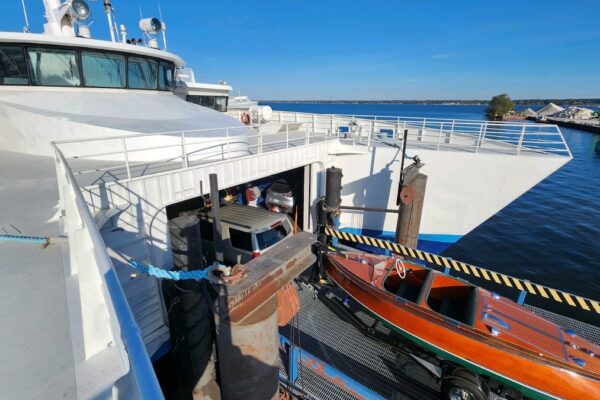
A new era in ferry service began on June 1, 2004. Enter the aforementioned HSC Lake Express. One of the first high-speed catamarans built in the United States, this new ferry is a 192-foot vessel that can accommodate up to 246 passengers, 46 cars, 12 motorcycles, and an occasional antique boat on the 70-nautical-mile shortcut between Milwaukee and Muskegon. Before the Lake Express, this trip would take roughly six to seven hours in the best of conditions with no traffic. As we all know, in the Midwest, contrary to popular belief, there are not four seasons, but rather two: Winter and road construction season. Knowing these challenges, this journey can often take hours longer. This travel uncertainty makes this quick 2.5-hour boat ride such
a great option.
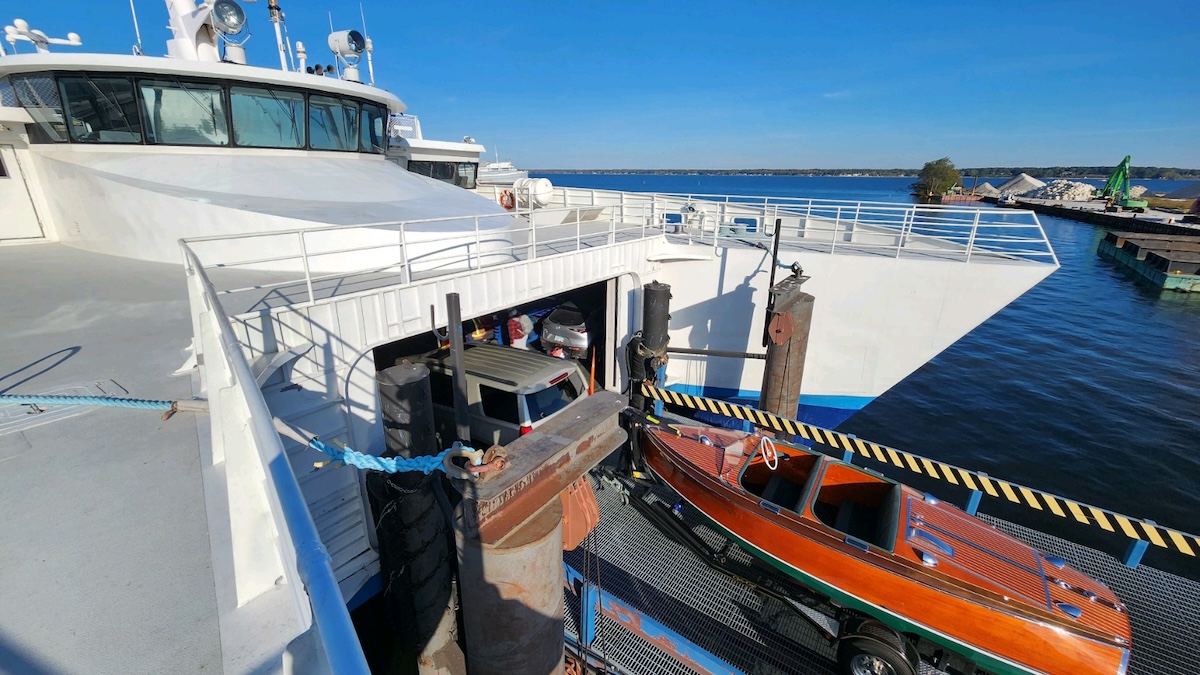
As a resident of the Chicago suburbs with relatives in Muskegon, I am all too familiar with this mostly horrible trip around the bottom of the lake. For the past several years, I have made a repeated decision to not only take this shortcut as a passenger, but to bring my boat along with me. I make my reservations several weeks ahead of time, knowing the car deck fills up before the passenger deck does. And since my car and boat count as two plus cars, I want to ensure I will not be turned away at the last minute if I make the trip north to Milwaukee with the boat in tow.
I was pleasantly surprised by how accommodating the Lake Express is, and my boat, a 1941 Chris-Craft Deluxe Barrel Back, actually drew quite a crowd in the loading area as we waited to board the vessel. Much to my surprise, the captain took an interest in my boat as well and snapped a couple of shots of me driving onto the ferry. Once onboard and underway, I was also pleasantly surprised when I was invited to join the captain up on the bridge deck for part of the crossing.
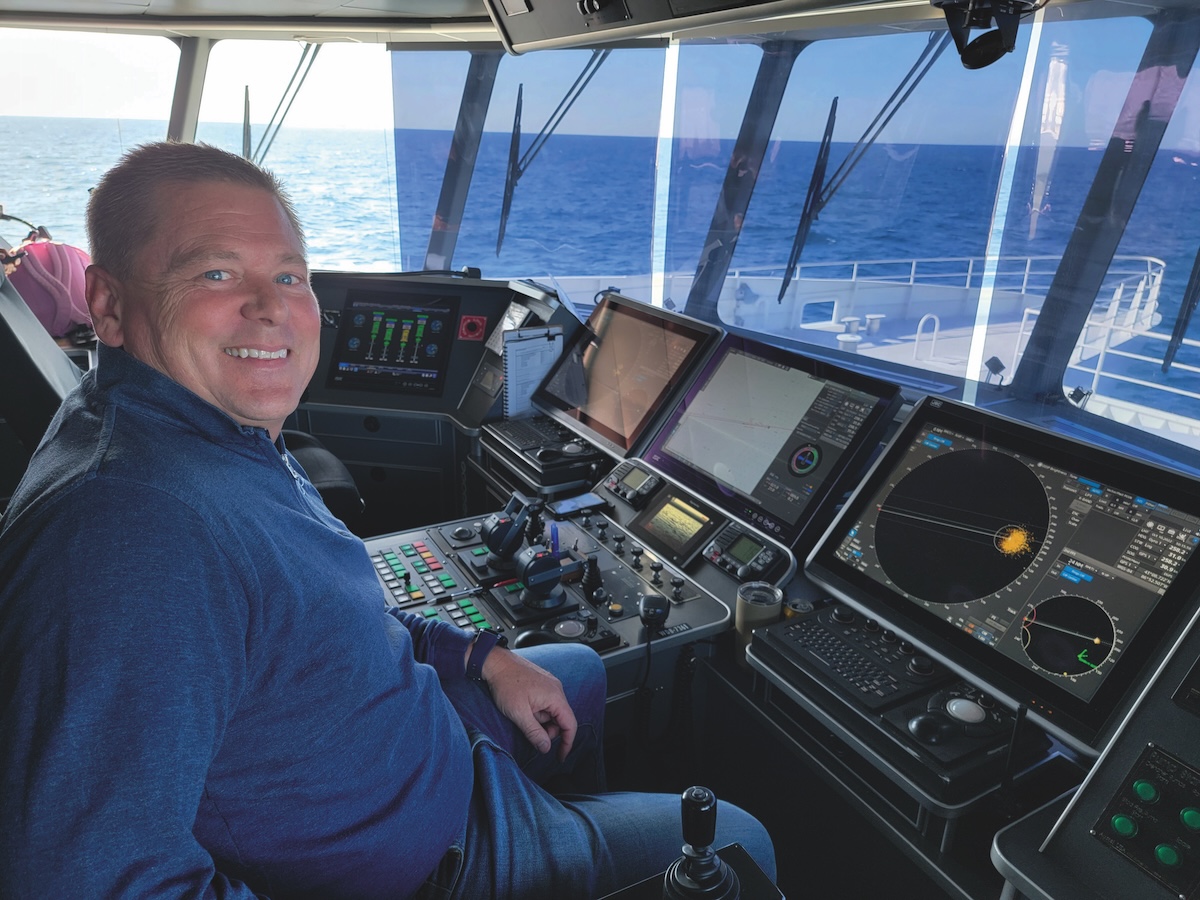
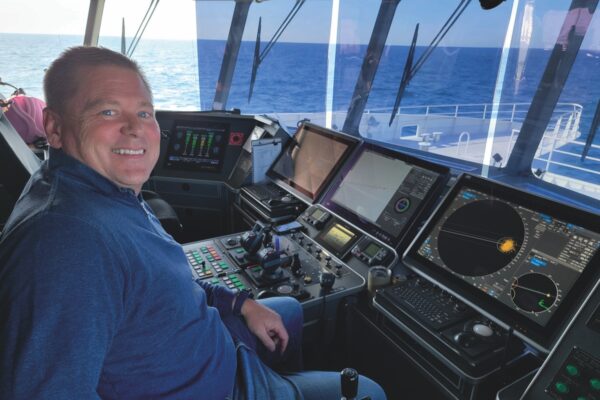
It was there that I met Captain Danny Hecko, who gave me a tour of the vessel controls and systems and shared with me some interesting facts about the ferry, including that the Lake Express was one of the first high-speed ferries in the U.S. He also shared with me that the engines are mated to Ka-me-Wa Waterjets, which are manufactured in New Zealand. These jet drives eliminate the need for exposed running gear and propellers.
The ferry delivers over 100,000 travelers annually on this shortcut, and according to OnMilwaukee, it removes 25,000 cars from the road each season as well.
I have become a “frequent flier” on this journey over the last few years. I have come to realize that the ease of this method of travel and lack of stress far outweigh the expense of the ticket. My favorite trip on the schedule is the 6 a.m. trip leaving Milwaukee. I get to see the sunrise, have several cups of coffee, and use the onboard Wi-Fi to get some work done before I arrive in Muskegon.
If you are ever in the Great Lakes region and have an opportunity to cross the lake, I would highly recommend it. These options for shortcuts are often overlooked and, because of the rich history of these ferries, are thought of as such and not as modern-day travel.
Either of the two remaining ferry options is filled with its own unique experiences. With the Badger, you will enjoy a route used by the car ferries since 1897 on a truly historic vessel, and with the Lake Express, you will cross the lake in 2.5 hours. Either way, you will save time, stress and many miles on your car. If you do it once, I am sure you will come to the same conclusion that you would trade a traffic-filled car ride for a trip on either of these boats any day.
LEARN MORE
Lake Express
lake-express.com
SS Badger
ssbadger.com
Milwaukee Clipper
milwaukeeclipper.com