Photo by H. Michael Miley/Flickr
Insuring the boat is a no-brainer, and that’s particularly true for pre-owned or classic craft, which introduce unique considerations to insurance coverage. Here’s what you need to know.
When you buy a boat, it’s easy to focus on everything you’re going to do with it: Summer afternoons on the water with family and friends, peaceful after-dinner cruises, quiet mornings between you and the fish. Boating is about enjoying life, so details around insurance coverage probably aren’t the first thing on your mind as you accept the keys to your new pride and joy.
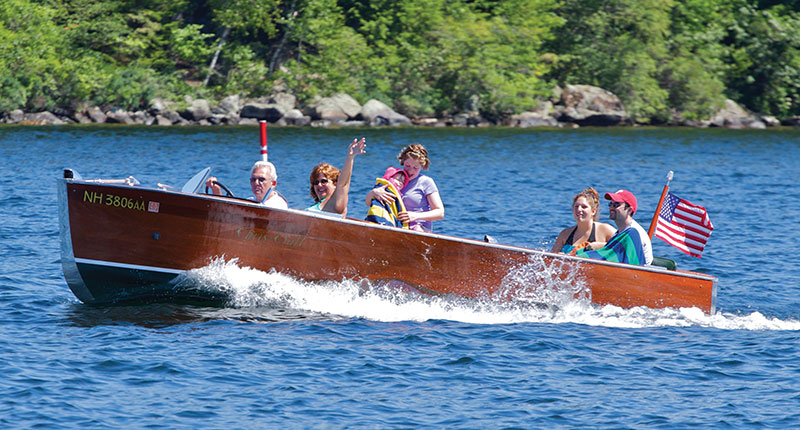
But if you’re buying a pre-owned boat — and particularly a classic or collectible craft — insurance deserves some extra attention before you ever leave the dock. Unlike a new production boat, an older vessel may be more difficult or even impossible to replace. Original parts can be scarce, restoration work can add significant value, and two boats of the same make, model and year may be worth vastly different amounts depending on their condition and history.
That makes choosing the right type of insurance coverage particularly important. Yet most of us hardly give it a second thought.
Agreed value, actual cash value or replacement cost?
As with auto insurance, boat insurance generally has two fundamental jobs: It protects your boat against loss or damage, and it protects you against liability for damage or injuries involving your boat. When it comes to protecting the boat itself, the three insurance terms you will most often hear are “agreed value,” “actual cash value” and “replacement cost.”
An agreed value policy insures the boat for a value agreed upon by the owner and insurer when the policy is written. If the boat is subsequently destroyed or stolen, the policy generally pays the agreed-upon value, subject to the policy’s terms and limits. The important point for owners of older boats is that the value is established in advance, rather than determined after a loss.
That’s important to understand because if you later perform any upgrades that increase the vessel’s worth, you will need to contact the agent and adjust the agreed value to reflect the boat’s upgraded condition. Forget to do this and the payout in the event of a loss could be less than you might expect.
An actual cash value policy works a bit differently. If the boat is stolen or destroyed, the insurance company pays its actual cash value at the time of the loss, typically taking depreciation into account. For an older boat, that can be a real point of contention, since the amount the insurer determines the boat is worth may be substantially different from what the owner believes it would cost to replace the vessel or restore it to its previous condition. Again, communication is the key, including providing documentation to the insurer to support a higher valuation where appropriate.
Replacement cost coverage is less commonly offered for pre-owned or classic boats, since a replacement vessel of equal value and condition may not be readily available. It is more commonly associated with newer vessels, where replacing a damaged or destroyed boat is relatively straightforward.
“In the case of classic or pre-owned boats, we always default to agreed value coverage,” explains Ryan Ruskowski, marine program manager at insurance specialist Hagerty Marine. “We’re going to agree the day that we start the policy that it’s worth X amount, and it’s going to stay at that agreed value unless the client changes it. We tend to stay away from actual cash value coverage because depreciation on an older boat will tend to leave it under-valued, and that’s just not right. Our company founders formed Hagerty after they experienced challenges insuring their own vessel, so we understand the market and the unique challenges that boat owners face.”
For a buyer of a classic or pre-owned boat, that last point is particularly important. The boat’s age alone doesn’t necessarily tell an insurer what it’s worth. Ruskowski notes that with pre-owned or classic boats, condition can matter far more than the vessel’s actual age.
“For smaller boats under 30 feet, we’re probably going to need to see some clear, detailed photos of the boat along with details of any restorative or other work that’s been done to it,” he says. “We just want to make sure that it’s in good condition and that it’s safe to operate, and it’s not going to sink to the bottom as soon as you back it into the water. For larger boats we may require a survey, because issues like moisture penetration or delamination may not be readily visible in photographs.”
That means documentation can be especially valuable when insuring an older boat. Keep records of service or restoration work, annual maintenance, upgrades and major equipment purchases, along with detailed photographs showing the vessel’s condition. If you have a recent survey or other documentation establishing the boat’s condition and value, discuss it with your insurer.
Protecting yourself against liability
The other major component of boat insurance is liability coverage. This protects you against the financial consequences of damage your boat causes to other property and, depending on the policy, injuries suffered by other people.
If your boat hits another vessel at the marina and damages it, liability coverage is intended to pay for the necessary repairs, subject to the policy’s limits and conditions.
Personal injury liability coverage can protect you if an accident involving your boat injures another person and you are held responsible. Depending on the policy, coverage can include expenses such as medical bills, lost income, pain and suffering, and legal costs.
Don’t overlook the extras
Some boat policies provide coverage for expenses that may not immediately come to mind, including emergency towing, personal effects (such as fishing equipment) and even loss of use, which may help cover the cost of renting another boat while yours is being repaired.
Salvage and wreck removal are also worth discussing. If you suffer a major accident and your boat needs to be removed from the water, those costs can be substantial. If this coverage isn’t already included in your policy, ask whether it can be added.
Owners of older boats should also ask specifically about how the policy handles restoration work, including replacement parts and equipment that may be difficult to source. A classic boat can be expensive to repair, not because it is necessarily more complicated than a modern boat, but because the parts may no longer be available and the expertise needed to properly repair it may be harder to find.
Don’t skimp on coverage
It may be tempting to save a few dollars by insuring your pre-owned boat with an endorsement or rider to an existing homeowners policy. But boats face risks that houses don’t, and homeowners policies generally do not provide the breadth of coverage available through a dedicated marine policy.
For example, a boat can be damaged while being transported or collide with another vessel after breaking free from its slip during a storm. Whether an endorsement on a homeowners policy would respond to situations like these depends on the specific policy, which is why it’s important to understand exactly what is and isn’t covered.
Pollution liability is another consideration. If your boat sinks and leaks fuel, you could potentially face significant cleanup costs. A dedicated boat policy may include pollution coverage right from the start, so it’s worth speaking with a broker who regularly deals with marine coverage. Someone familiar with boats — and particularly with used or classic boats — can help identify coverage gaps that might otherwise be overlooked.
Damage caused by animals is a prime example, and that’s not the kind of thing most of us consider when shopping for boat insurance. But for boats that spend the winter in storage, it can be a real concern.
“Some policies will cover against vermin, while others don’t. We do advise boaters to have this sort of coverage, and especially in areas like the Great Lakes where boats are put into storage for many months each winter,” says Global Marine Insurance President Matt Anderson. “Depending on where a person’s boat is stored, or even moored during quieter periods of the year, damage from animals can be significant. A family of raccoons overwintering in a yacht can do tens of thousands of dollars in damage and just tear the interior apart. We had one situation where otters chewed through the rubber bellows on an outdrive, causing significant damage, while damage from muskrats has even resulted in boat sinkings, so coverage against vermin is an important form of insurance most people never even think of.”
Ice and freezing damage can be another concern in regions where boats are stored through the winter, making it another item worth discussing with your insurer.
Know what you’re buying
Insurance may not be the most exciting part of buying a used or classic boat, but it deserves attention before the purchase is complete.
Start by finding out how the insurer will value the boat and what documentation it needs to support that valuation. Ask how restorations, upgrades and hard-to-find replacement parts are treated, and confirm the limits for liability, salvage, wreck removal and pollution. It’s also worth asking about less obvious risks, from towing and personal effects to winter storage and animal damage.
Most importantly, don’t assume that an insurance policy designed for a newer production boat will automatically provide the protection a pre-owned or collectible vessel requires. The right policy should reflect the boat you actually own — its condition, its value and the way you use it.
That may take a little more effort before the first launch, but it’s time well spent. When the unexpected happens, you want to be thinking about getting back on the water — not discovering that the coverage you thought you had wasn’t what you actually bought.
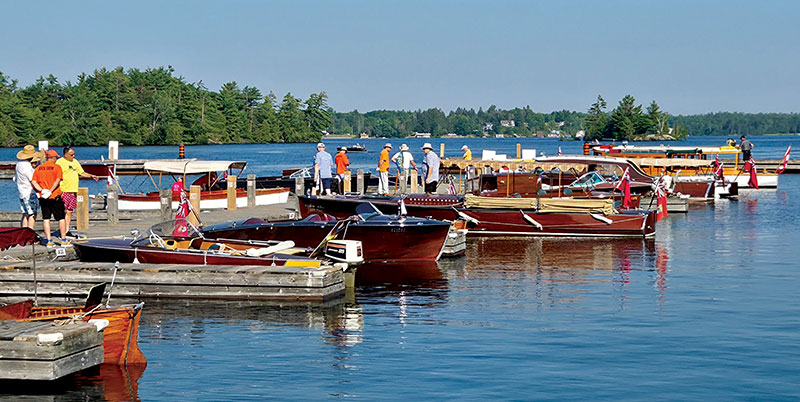
Photo by Explorers’ Edge/Flickr
Two Ways To Reduce Insurance Costs
1. Take a safe boating course: Many insurers offer discounts to boaters who have successfully completed operator competency training from recognized providers like America’s Boating Club or the Coast Guard Auxiliary. These courses will make you a safer and more confident boater, and ultimately reduce your chances of having an accident that could result in a claim.
2. Accept a higher deductible: Most marine policies come with a comparatively low deductible, which is the amount of money that you will have to pay out of pocket before an insurer will cover any expenses. If you agree to a higher deductible amount, you reduce the insurance company’s obligation and that, in turn, can lower your premiums.