Choosing the right solar panel for your boat.
by Glenn Hayes
There’s a reason you see solar panels showing up on more and more boats. They’re a simple way to put the sun to work, whether you’re looking to add small battery maintenance panels or full-blown alternative power systems. Solar panels can provide a reliable, steady source of power whenever there is daylight, and today’s panels are more efficient and affordable than ever.
Understanding solar panels
Not all solar panels are created equal. They can be made up of different solar cells, with widely varying energy-generating power. Solar panels can be either flexible or rigid panels. Some are built to work in partial shade, and some can also create energy from light reflected off the water. Size-to-power ratios can vary, with some higher-end panels creating more energy from a smaller footprint. When it comes to solar panels, the cheapest panels often do not equate to the best value.
There are four common types of solar cells that make up solar panels. The first, monocrystalline (Moly-si), is one of the more expensive but effective types of solar cells. These are made up of wafers cut from a single silicon crystal. Because of the efficiency of these cells, they make space-saving, long-lasting panels with high output — but at a higher cost.
The next type is the Polycrystalline solar panel (Poly-si). These cells are made up of multiple silicon crystal fragments that are melted down, and cells are formed into squares. Manufacturing waste is reduced, making polycrystalline panels less expensive to manufacture; however, they are generally not as efficient as monocrystalline panels.
The third type of panel is the Passivated Emitter and Rear Cell panel, known as a PERC panel. These panels effectively take monocrystalline cells and add a passivation layer behind the cell. The science behind it is complicated, but essentially, this layer reflects light back into the cell, allowing more of it to be absorbed and increasing the cell’s overall efficiency. PERC panels can cost more initially but make up for the cost with high output.
Another type of panel is thin film panels, which are made up of thin cells that allow the panels to be flexible. They are less efficient than other types but come at a lower initial cost. These thin film panels can be made of different photovoltaic materials placed on top of each other, creating the solar module or cell. The science behind the different materials and layers and how they react could fill a whole other article, but in general terms, these thin film panels are usually not as efficient as other panels in output and generally have a shorter lifespan than other types of panels.
Where to shop
There are undoubtedly a lot of options for solar panel installation on a boat and an ever-growing array of manufacturers producing them. Two heavy-hitters in the marine world of solar power are Victron Energy and Xantrex. These manufacturers also produce a wide range of solar chargers and charge controllers that are essential to adding solar to any craft. A quick visit to either company’s website (victronenergy.com or Xantrex.com) will help you select the right panels and solar charge controller for your application. Of course, you can mix and match between manufacturers, but either of these two companies can provide you with matched products that will integrate and interconnect easily.
If you need flexible panels, Xantrex produces a line of flexible panels called Solar Max Panels. They are made of monocrystalline PERC cells created through a special manufacturing process they call mesh grid technology. This process allows them to be mounted to a flexible panel with over 2,000 points of contact per cell. These panels are easy to mount with a peel-and-stick backing. They are available in 115W, 220W and 330W panels. Xantrex claims they produce 70% of normal power when severely shaded and are built to withstand the harsh marine environment.
If solid panels are needed, Victron’s BlueSolar Monocrystalline panels come with a 25-year warranty on output and work well in low light and shady conditions. These aluminum-framed panels are easily mounted and are available in a wide array of models and sizes ranging from 20W to 365W. They are well-constructed to withstand harsh environments and produce power efficiently. Of course, Victron also offers all the other electrical components needed to complete the system.
Before choosing a panel for your boat, it’s important to understand what it’s made of and how much power it can produce once installed. A panel with superior-quality cells may cost more upfront, but the added performance can be well worth the investment and offer peace of mind knowing you have the power you need.
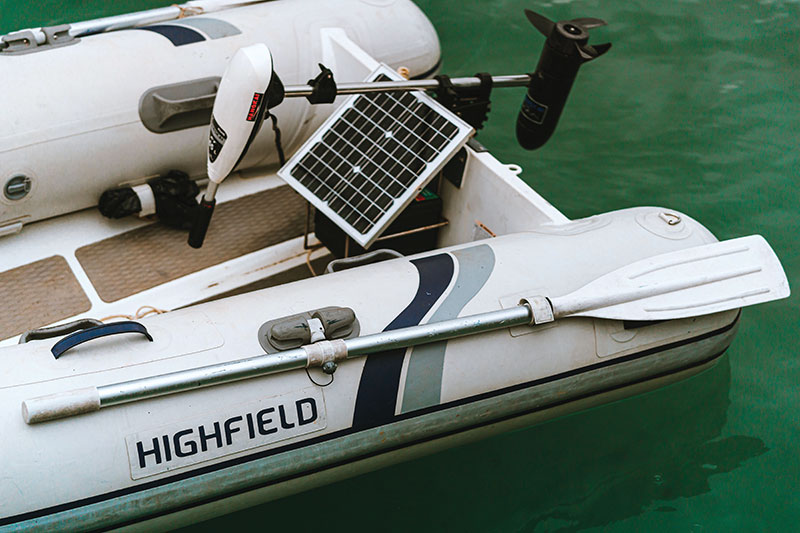
Top image: Solar panels are showing up on boats of all shapes and sizes | credit Pexels/Ian Panelo
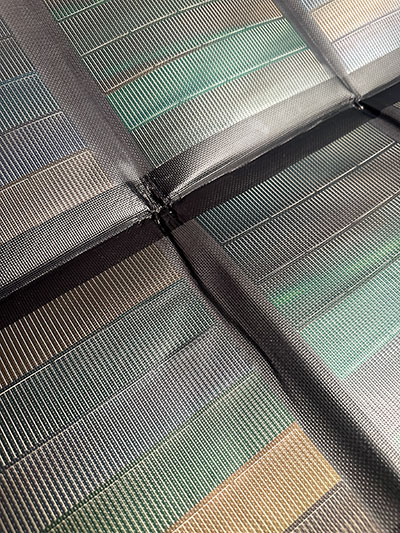
A thin-film portable solar panel made by SUNLINQ | credit Glenn Hayes
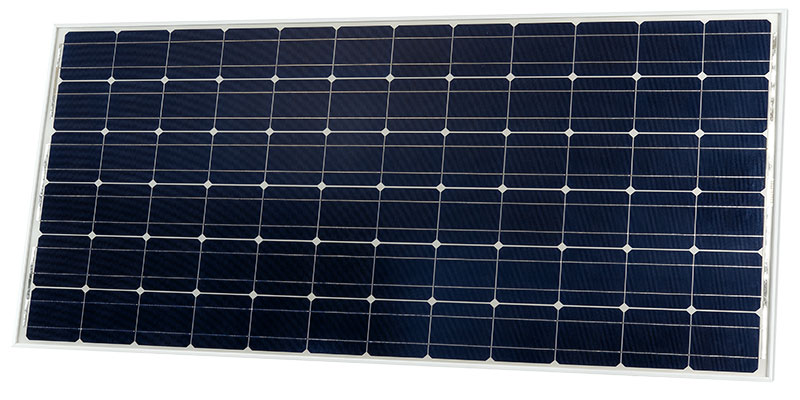
Victron Energy’s BlueSolar Panel | credit Victron Energy

GLENN HAYES is a marine writer and photographer whose background in the marine industry and in marine electronics spans almost three decades and many thousands of miles at sea traveling the world. He can be reached at HAYESSTUDIOS.COM