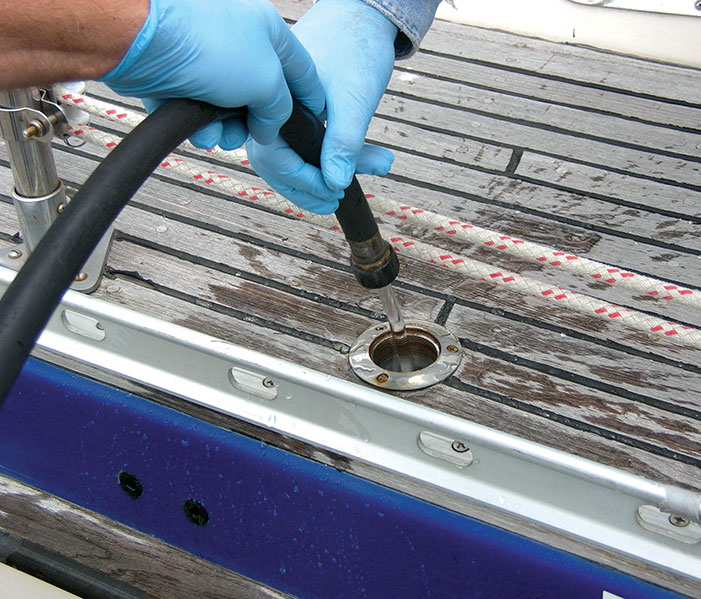
How to deep clean your holding tank before winterization.
Story & photos by Capt. Frank Lanier
Hang around boats long enough, and you’ll inevitably hear someone mention the need to “shock the holding tank.” You’ll likely find it an odd statement and wonder, “Does my holding tank require a shocking as well?” Here’s the lowdown on this electrifying talk and how to properly clean your holding tank.
The phrase “shock the holding tank” likely refers to shocking a swimming pool by adding chemicals to oxidize and sanitize the water. To boat owners, shocking a holding tank means adding copious amounts of some chemical with the hopes of neutralizing odor, while at the same time magically dissolving any poo-induced buildup.
Taken in this context, “shock” is not really the best choice of words when it comes to holding tanks. Cleaning the holding tank is more accurate, as the ultimate goal of shocking the tank is and should be to facilitate a more thorough cleaning of the tank at pump-out, rather than to deodorize its contents. This is particularly true about build-up and deposits.
It’s also important to differentiate between shocking a tank and managing it by regularly adding small amounts of chemicals to help with odor control and promote a “healthier” holding tank environment.
It’s in there
Solid waste is comprised primarily of water, meaning it will readily dissolve in the water of your holding tank. Most holding tank buildup will be from toilet paper or (if saltwater is used for flushing) calcium carbonate scale, which is generated when uric acid mixes with saltwater.
If this buildup is still soft or spongy, shocking the tank in preparation for cleaning will have a much better chance of success. If the buildup is solidified and hard, shocking the tank may be of some benefit; however, in many cases, the only real options at that point are to either live with the buildup, manually clean the holding tank or, in extreme cases, replace the tank.
Operation deep clean
I deep clean my holding tank twice a year, once coinciding with my fall lay-up in preparation for winter lay-up. My deep clean process is described below:
• Pump the holding tank.
• Mix 2 cups of Calgon Water Softener in 1 gallon of hot water, then pump it into the tank.
• Add 1 cup of biodegradable, bleach-free liquid laundry detergent to 1 gallon of hot water, then pump it into the tank.
• Let the mixture sit for several hours or overnight.
• Top off the tank with freshwater, let it sit for a couple of hours, then pump out the tank.
• It helps to add a lot of freshwater right after the pump-out (with the pump-out station’s hose), and then immediately pump that out.
The above works well for a mid-sized holding tank of around 20 gallons, but can be modified as needed for larger or smaller capacity tanks.
Shocking the tank
If you want to shock the tank using chemicals, that’s easy as well. Simply purchase one of the many holding tank shock treatments available on the market, add it to the holding tank per the manufacturer’s instructions, and let it slosh around for three to four days or up to a week (depending on the shock treatment directions), then pump out as normal.
If you are doing this as part of your winterization process, I like to put it in the holding tank about a week prior to the final pump-out of the season, which gives it plenty of time to slosh around.
If you are heading out for a final day on the water before winterization, add a couple of buckets of ice to the holding tank after shocking (via the access port) and let it scour the tank during the trip. Once back at the dock, pump out the tank and do a final rinse with freshwater (fill the holding tank about half full), then pump that out as well.
This not only helps with scale buildup, but also ensures a clean last pump-out of the season before storage.
Do not shock your tank using chemicals that are not specifically designed for it, such as residential- style toilet drain cleaners or de-cloggers. You also have to know the material your holding tank is constructed of and choose compatible shock treatment chemicals to avoid adverse reactions and damage to the tank.
Top image: Flushing out a holding tank
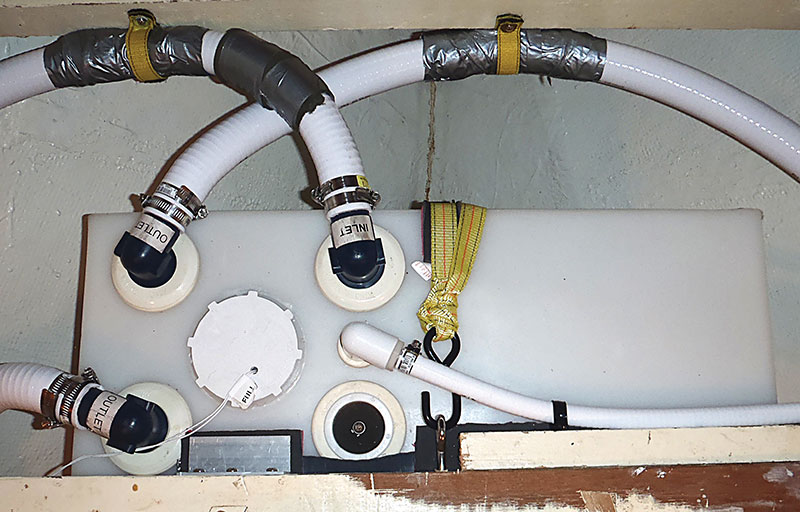
Holding tank
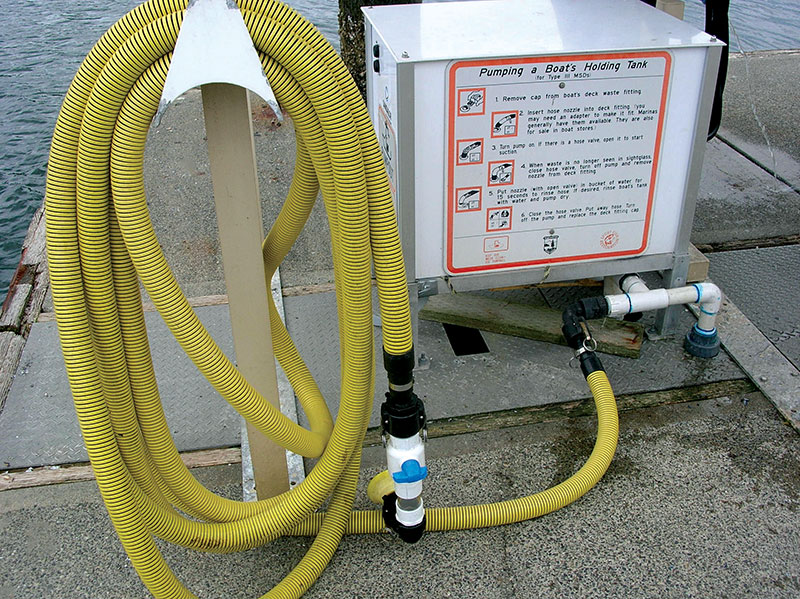
Holding tank pumpout

CAPT. FRANK LANIER is an award-winner journalist, boat maintenance guru and owner of Capt. F.K. Lanier & Associates, Marine Surveyors and Consultants. Check out his YouTube channel “Everything Boats with Capt. Frank Lanier.” CAPTFKLANIER.COM

Deck deck deck Heading 3
by Capt. Frank Lanier
Text text textText text textText text textText text textText text textText text textText text textText text textText text textText text textText text textText text textText text textText text textText text textText text textText text textText text textText text textText text textText text textText text textText text textText text textText text textText text textText text textText text text
Text text textText text textText text textText text textText text textText text textText text textText text textText text textText text textText text textText text textText text textText text textText text textText text textText text textText text textText text textText text textText text textText text textText text textText text textText text textText text textText text textText text text
Subhead Heading 5
Text text textText text textText text textText text textText text textText text textText text textText text textText text textText text textText text textText text textText text textText text textText text textText text textText text textText text textText text textText text textText text textText text textText text textText text textText text textText text textText text textText text text
Text text textText text textText text textText text textText text textText text textText text textText text textText text textText text textText text textText text textText text textText text textText text textText text textText text textText text textText text textText text textText text textText text textText text textText text textText text textText text textText text textText text text
Top image: Photo credit

Photo credit
Photo credit
Photo credit
CAPT. FRANK LANIER is an award-winner journalist, boat maintenance guru and owner of Capt. F.K. Lanier & Associates, Marine Surveyors and Consultants. Check out his YouTube channel “Everything Boats with Capt. Frank Lanier.” CAPTFKLANIER.COM