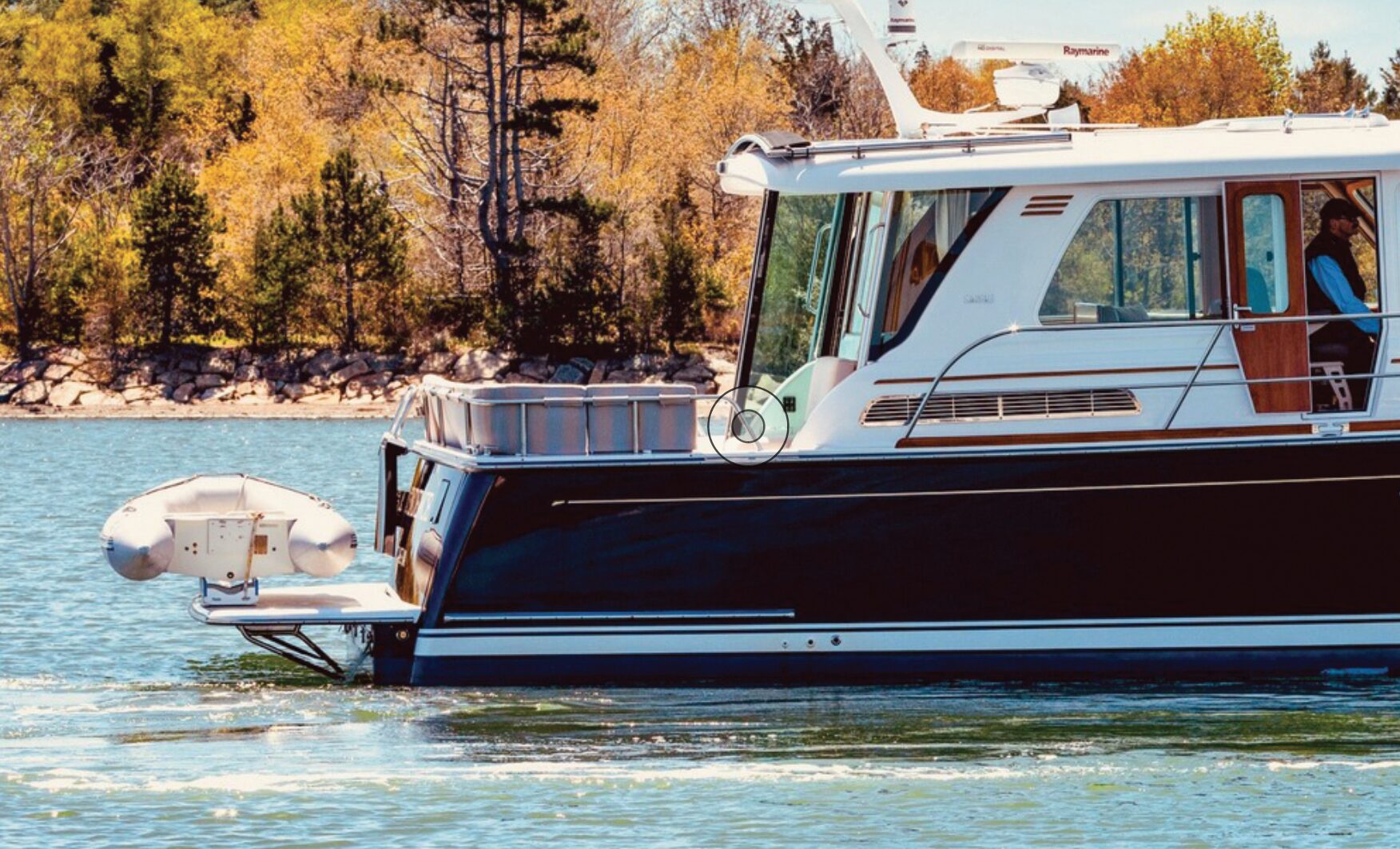
Tender stowage options for mid-sized boats.
by Capt. Frank Lanier
For many boat owners, a tender (whether a dinghy or a PWC) is the waterborne equivalent of the family car. From ferrying people and supplies between boat and shore to providing a means of exploring that neat creek or waterfront town, a tender both enhances and adds versatility to any boating trip. Growing up, my two kids loved taking trips in the dinghy after arriving at a new anchorage and exploring on their own when older.
The only thing handier than having a tender, however, is a means of stowing and launching it easily. For mid-sized boats not powered by outboards (the focus of this article), effective tender stowage has to balance easy deployment with safety. Proper stowage not only keeps the decks clear but also protects your primary vessel, while ensuring the dinghy or PWC is stowed in a manner that does not negatively affect vessel operation or performance. Stowing the tender in a manner that blocks navigation lights or prevents you from deploying the anchor would be an example of bad storage options.
Choosing the best stowage solution is ultimately a personal decision, one based on factors such as the type of tender, the size of the mothership, and how often the tender is used. Here’s a look at popular stowage options.
Davits
Stern or transom davits utilize two davits and a system of ropes and pulleys to hang the tender at the vessel’s transom. They’re a popular choice for several reasons. They offer quick, easy-to-use launch and retrieval with minimal fuss, and are ideal for a wide range of tenders, from RIBs to hard dinghies or inflatable tenders. They offer the quickest deployment and retrieval while keeping the tender intact (often with the outboard attached) and ready for instant use.
While stern davits are one of the most convenient storage options, they do have downsides. A major consideration is the added weight and windage a tender introduces to the vessel’s stern, which in some cases can affect vessel performance. Hanging your tender from the transom can also reduce visibility from the helm, obstruct boarding and swim platform access, and make maneuvering in tight marinas more challenging. A tender stored at the stern is also at increased risk of being damaged by waves in heavy, following seas.
Mounts, chocks and more
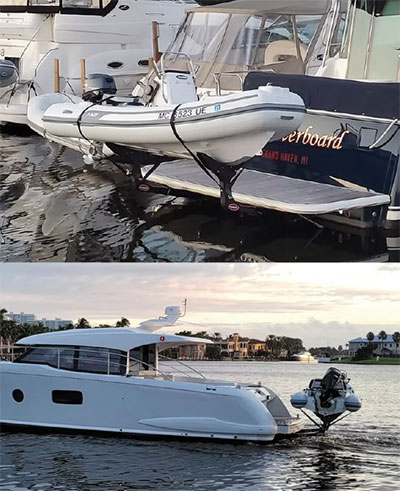
Dinghy or tender chocks allow the tender to be secured directly on the swim platform, providing a secure, easy-to-use storage option that allows for quick launch and retrieval. Another benefit is that the mounts can easily be removed when not needed, presenting a clean, trip-free swim platform.
Some systems allow the tender to hinge vertically, allowing you to tilt the tender upright on its beam, so that it rests against the transom. This is an attractive option for smaller boats, as it frees up at least some of the swim platform for use with the tender stowed.
Davits, such as the Hurley Dinghy Davits, allow you to quickly deploy, retrieve and store your hard or soft bottom inflatable on your swim platform.
Disadvantages to swim platform tender stowage options are similar to those for davits. A tender mounted to the swim platform can add significant weight to the stern, adversely affecting vessel balance and performance, while subjecting the tender to damage from following seas. They can also block visibility from the helm or block your vessel’s name and stern navigation light when stowed.
Another concern is that swim platform stowage reduces usable space on the swim platform for water activities. The FreedomLift hydraulic tender lift solution (which mounts to the transom below the swim platform) reduces this issue by storing your tender aft of the swim platform.
Foredeck or coach roof storage
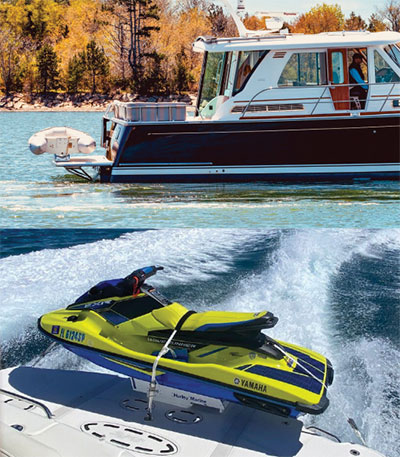
While not as convenient as davits or swim platform stowage, stowing a dinghy on the foredeck or coach roof is the preferred method for offshore cruising. For longer passages, storing a deflated or lightweight, rigid dinghy on the deck with a sturdy cover protects it from UV damage and keeps it secure, while protecting it from heavy weather.
As to cons, not surprisingly, a big one is the added hassle of having to muscle the tender on deck or deflate and stow it, which takes additional time and effort. Launching can be a similar hassle. Depending on placement, storage on deck can obscure navigation lights and reduce visibility from the helm.
When mulling over your list of tender stowage options, in my experience, ease of launching and retrieval should be a top priority — particularly if moving to new locations frequently. A tender that’s a pain in the captain’s quarters to launch and retrieve will see less use, which unfairly negates all of the positive benefits of having one.
Top image: Hurley Marine
The FreedomLift hydraulic tender lift solution mounts to the transom below the swim platform | credit FreedomLift
Hurley Dinghy Davits allow you to quickly deploy and retrieve your tender from your swim platform | credit Hurley Marine
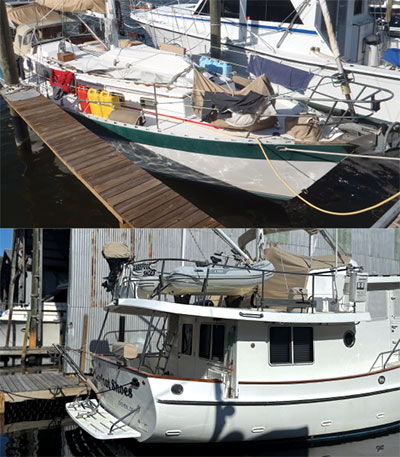
Tenders can be stored on the foredeck (top) or coach roof (bottom), or on a stern davit (installed on bottom image) | credit Capt. Frank Lanier

CAPT. FRANK LANIER is an award-winner journalist, boat maintenance guru and owner of Capt. F.K. Lanier & Associates, Marine Surveyors and Consultants. Check out his YouTube channel “Everything Boats with Capt. Frank Lanier.” CAPTFKLANIER.COM