Proper preparation and planning for your Great Loop adventure.
Story & photos by Tom & Brenda Lahey — EXTENDED WEB-EXCLUSIVE VERSION
On our first Great Loop trip, we overprepared, packed too much and made a detailed schedule that we quickly discarded. When planning your Great Loop adventure, look at the big picture. There just isn’t enough time to see the entire Loop in a year-long trip. Decide on the major stops that interest you, and consider your personal schedule. Can you dedicate an entire year away from home? Are you still working, or do you have family responsibilities that require time away from the boat? Do you have a new grandchild on the way? The answers to these questions may impact when and how you plan your Great Loop trip.
How much time can you dedicate?
Most Loopers tend to Loop in a fairly continuous one-year cycle. Spring on the East Coast, summer in Canada, fall in the Great Lakes and rivers, and winter in Florida. Some break the trip into two seasons, leaving their boat to go home, or staying aboard in one spot. The area around Brewerton, New York, on the Erie Canal is a very popular over-winter storage destination.
Loopers who still work or have family obligations may consider a two-weeks-on, two-weeks-off schedule. They travel for a few weeks, then find a marina with a good weekly rate, and leave the boat. Due to its geography, most Loopers are within a two-day drive or a couple of hours’ flight from home at any time.
There are also perennial Loopers, those who keep going around the Loop with the current record being 33 and counting! There are also boaters who have been “Looping” for several years and still have not completed a Loop!
The important thing is to make a realistic plan that won’t cause you to rush. On our first Loop, we tried to do too much. We started with a side Loop in the Albemarle Sound, attended the AGLCA Norfolk Rendezvous, then cruised the Erie and Oswego canals, followed by the St. Lawrence to Montreal, Rideau and Trent-Severn canals, Georgian Bay, the North Channel, the Michigan side of Lake Michigan, and the rivers with delays from lock closures. By cramming so much in, we missed many feature stops or rushed from place to place. It also put us behind most other Loopers, leaving us alone at many marinas and missing much of the Looper camaraderie that is a highlight of the trip.
Make a plan, not a schedule
Before we left on our first Loop, we made a schedule of where we would be each day for most of our trip. By our third day, it became clear we wouldn’t stick to our schedule. Weather, suggestions from other Loopers, deciding to stay a few extra days in a quaint town, or opting to travel with other boats all made our schedule go out the window.
On our first Loop, we learned to look ahead and choose the specific stops we wanted to visit. Then we researched those locations to find the best time to visit. Many of the towns and cities along the Loop host music and art festivals, local celebrations, and other special events, including farmers markets. Plan your trip to attend or avoid special events. For example, Fleet Week in Annapolis, Maryland, is a spectacular event with air shows, numerous visiting ships and tens of thousands of visitors. If you plan to attend, you’ll need to make your marina reservations months in advance. Or you may plan to stay away from the area that week to avoid the chaos.
Prepare yourself
Many Loopers are new to boating. We’ve met Loopers who buy a boat and leave almost immediately, only to be overwhelmed by the task of learning to operate, maintain, navigate, handle weather, dock and lock. Take time to learn how to operate your boat safely and to become comfortable doing so. There are many training options, from hiring a training captain to attending in-person classes and seminars at boat shows and events. There is no substitute for experience. Before you set out on your 6,000-mile Loop adventure, take a few short three- to four-day trips. Anchor out for a night or two, and spend a day practicing docking your boat both bow-in and stern-in at other marinas.
Prepare your boat
Take the time to ensure that your boat is ready for 7,000 miles and 1,000 hours of run time. There is no worse event than having a major engine or systems failure while you are on the Loop. First, it will delay your trip. Major engine work can take weeks or months and cost tens of thousands of dollars. Also, you will be away from home, so you may incur hotel or other expenses if you can’t stay on your boat.
A great idea is to find a good mechanic and have a complete boat and engine survey done. You probably won’t need to address every issue, but having your engine coolers and hoses checked (especially if they have not been done recently), water pump impellers, belts and engine fuel filters will ensure that your boat is ready for the trip. At a minimum, perform a full service of the engine, transmission, and generator fluids and filters. It is much easier and cheaper to have these items addressed at your home port by a mechanic you know than to find one in an emergency while on the Loop. Also, make sure all of your boat’s safety systems, such as fire extinguishers, CO detectors and life jackets, are up to date and in good working condition.
Equipment recommendations
The most important piece of equipment you’ll need to do the Loop is a boat! Check out our March article in Lakeland Boating for tips on choosing your Great Loop boat.
The next most important item is a dinghy. While a dinghy is not required for Looping, if you plan to anchor out, you will want to consider having a dinghy, especially if you have dogs onboard. Getting your pet to shore for “Shore Patrol” is key, and you may need to do this several times a day. If you plan to anchor or have a pet, consider upgrading your davit system to make it easier to launch and recover your dinghy.
You will need a reliable electronics suite. First is a chartplotter for navigation, which can be one of the many brands built in, or an iPad or PC running Navionics or AquaMaps. Next is a VHF radio. This is required for safety and to communicate with marinas, other boats, bridges and locks. There are several open-water crossings on the Loop, and having an emergency communication device, such as an EPIRB or PLB, is recommended. Be sure to read next month’s article, all about safety on the Loop, for more recommendations. Other popular gear for the Loop includes gas grills and bicycles for getting around on shore. Be sure to pack portable chairs for hanging out on the dock at docktails!
Extra fenders and lines are another key piece of gear to have onboard. You will experience a wide variety of docking situations as well as windy weather. Having extra fenders and lines to protect your boat will come in handy. We carry several heavy-duty inflatable fenders that don’t take up much space and deploy quickly. This is one of those items that can be hard and expensive to obtain when you need them.
Check your boat insurance coverage
Part of getting ready is making sure that you have the proper insurance coverage for both your boat and yourself. Some insurance policies have restrictions on where and when you can cruise your boat.
Review your boat insurance policy. Many policies restrict travel south of 32 degrees N latitude from July 1 to November 30. For most Loopers, this period is when they travel through the northern sections of the Loop, so it is not a factor. Other insurance policies do not cover vessels on the Great Lakes, river systems, or outside of U.S. territorial waters, which can be a factor for Loopers. Contact your insurance company to confirm it covers your entire Loop travel plan.
Personal health and accident insurance
While we all hope to stay healthy and accident-free on our Loop adventure, it’s important to check your personal health and accident insurance coverage. This is especially important if you plan to cruise in Canada or the Bahamas. While many insurance plans will pay for services you receive outside the U.S., health care providers in other countries will usually require full payment at the time of service. If you have a health emergency or accident, this can mean paying tens of thousands of dollars out of pocket.
When we travel outside of the U.S., we typically purchase a travel insurance plan. These plans cover medical services and will pay for your return to the U.S. if you need significant medical care. Travel insurance plans that cover medical, dental, trip interruption and medical evacuation are relatively inexpensive. Coverage for our last three-month trip to Canada cost $1,000 for two people. Search “Travel Health Insurance” and check price comparison sites for options.
Emergency fund
When budgeting for your Great Loop trip, we suggest you plan for unexpected expenses. On our first Loop trip, we hit a rock in Canada and ended up with a large repair bill. Our insurance reimbursed us for the towing and repairs. However, we had to pay the boatyard a deposit out of pocket and settle the bill once the repairs were complete. They would not bill our insurance, and our insurance would not make international payments. Repairs, unexpected delays, health emergencies and accidents all can require access to significant funds. Plan how you will access your emergency fund, especially when traveling internationally.
Planning resources
The America’s Great Loop Cruisers Association (GreatLoop.org) provides lots of resources for planning your trip. The classes at rendezvous and seminars cover destinations and navigation tips on the entire Loop route. The AGLCA discussion forum provides a wealth of information and access to current and past Loopers who can provide specifics on marinas, anchorages, popular stops and attractions on the Loop.
Waterway Guides is another excellent resource. Waterway guides publishes both print and electronic guidebooks that cover each section of the Loop. They are updated annually, provide maps and lists of marinas and anchorages, and offer an overview of towns and cities along the route. The electronic version lets you quickly see information on bridge heights and opening times, lock schedules, contact phone numbers and radio channels.
For the river systems, including the Illinois, Mississippi, Ohio, Tennessee and Tenn-Tom Waterway, Quimby’s Cruising Guide is the go-to resource. They also provide mile-by-mile information on locks, bridges, marinas and anchorages, updated annually.
Clothing
Our first recommendation is to not overpack! You will find yourself wearing the same outfit over and over. When planning your wardrobe, keep in mind that the temperature range on a typical one-year Loop trip can range from under 30 degrees to over 100 degrees Fahrenheit. On both of our Loop trips, we experienced snow and ice, as well as days as hot as 110 degrees Fahrenheit. Most Loopers follow “spring and fall” temperatures as they travel. In Canada, even in summer, evenings can still get chilly, so pack long pants and sweaters. We keep a supply of vacuum clothing storage bags onboard to store clothes we don’t need right away. This saves on storage space and keeps them dry even in humid conditions. Another important item is to have good rain gear. There will be days when you will be locking and docking in the rain.
And on the subject of clothing, if your boat doesn’t have a washer and dryer, don’t worry! Most marinas have laundry facilities, or there are laundromats nearby. There are even several marinas where the laundry facilities are free. Doing your laundry at the marina is a great way to meet other boaters. That said, another great item to pack is several rolls of quarters!
Don’t over-plan!
Some of our favorite Loop experiences were spur-of-the-moment adventures. Don’t over-plan or overpack for the Loop. Allow yourself the flexibility to change your plans and seize special moments.
America’s Great Loop is an amazing adventure, and for many, the trip of a lifetime. Proper preparation and planning will help to make your Loop a truly memorable experience!
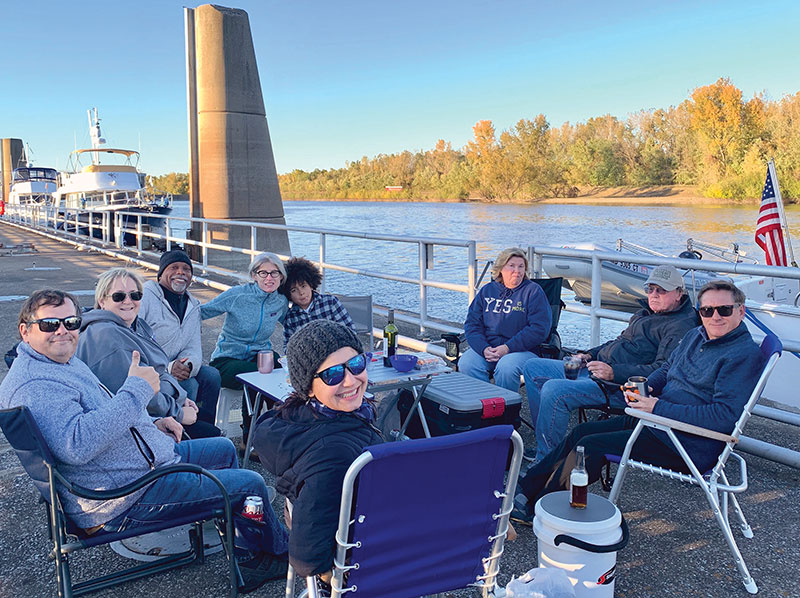
Top image: Bundled up for docktails in September at Kaskaskia Lock, Mississippi River, Illinois
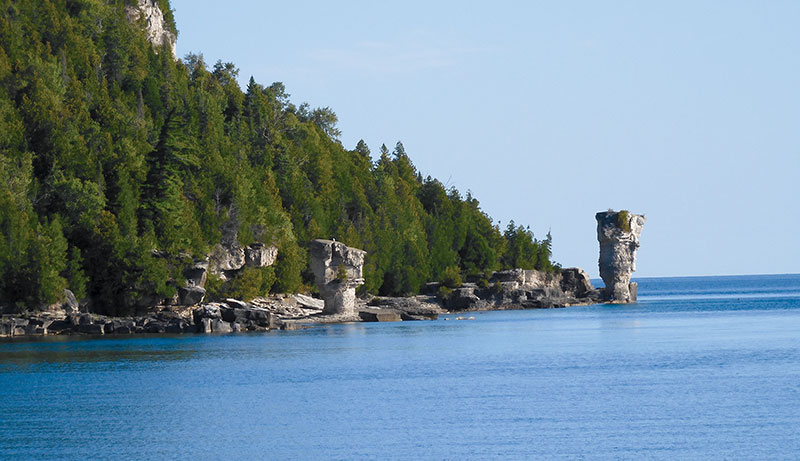
An unplanned side trip to Flower Pot Island in Tobermory, Ontario
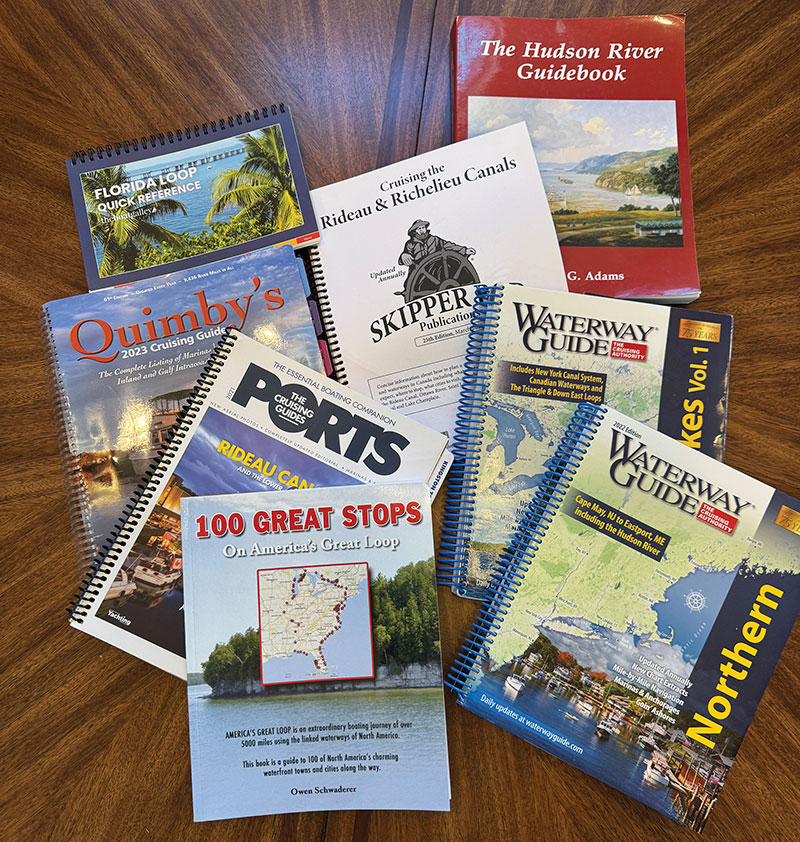
Guidebooks for the Great Loop
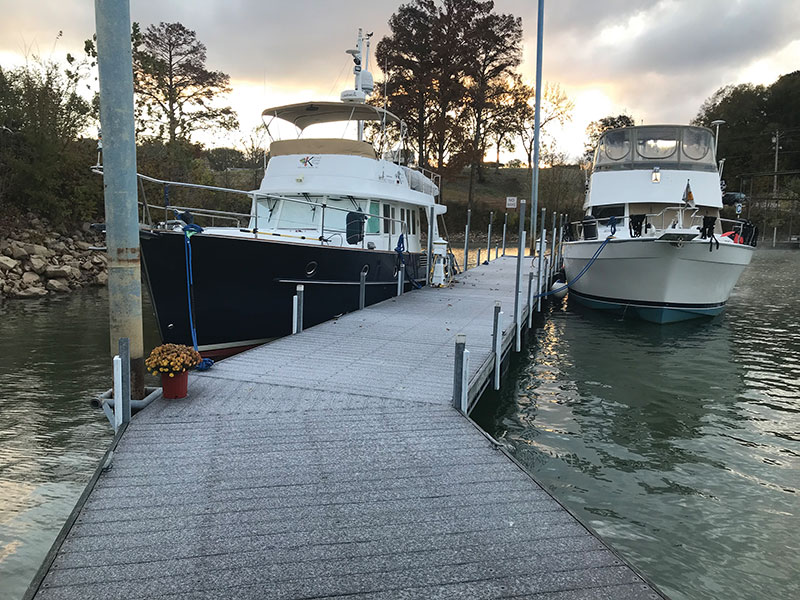
Ice on the docks in November at Tenn-Tom Waterway in Clifton, Tennessee
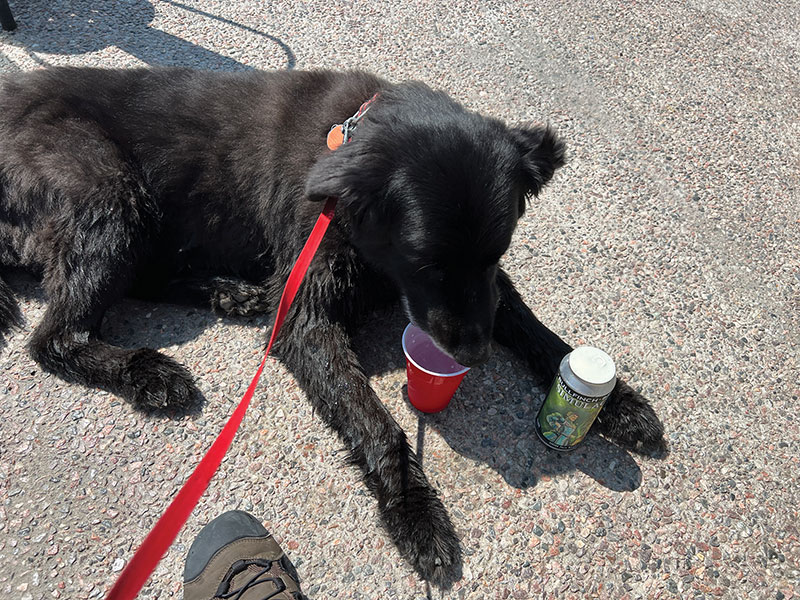
The dog days of summer; everyone needs a cold beverage! At the Wooden Boat Museum in Clayton, New York