Choosing the right transducer for your trailer boat.
Story & photos by Capt. Frank Lanier
A major benefit of owning a trailer boat is the ease of exploring new locations. Want to check out that pristine lake you just saw online? Load up the family and head out this weekend! That freedom, however, is tempered by the need for reliable depth readings during your adventure. Installing a depth sounder can be problematic on smaller boats, particularly regarding the transducer location. Here are some transducer installation options to make it easier.
Three viable choices
The goal of any small boat transducer installation is balancing clear sonar imagery, high-speed performance (in the case of faster boats) and hassle-free trailering. The latter means an installation that’s durable and protected against damage from both road debris and the launch and retrieval process.
When planning the installation of your depth sounder transducer, there are three popular options: Transom mount, portable clamp-on mount and in-hull (aka shoot-thru-the hull). Each option has pros and cons, and the best choice will depend on your boat’s hull material (wood, fiberglass or aluminum), how you trailer it, and the type of boating or fishing you do.
A thru-hull-mounted transducer is a fourth option, but due to the complexity of drilling a significantly sized hole through the hull, it’s one worthy of a dedicated, future article.
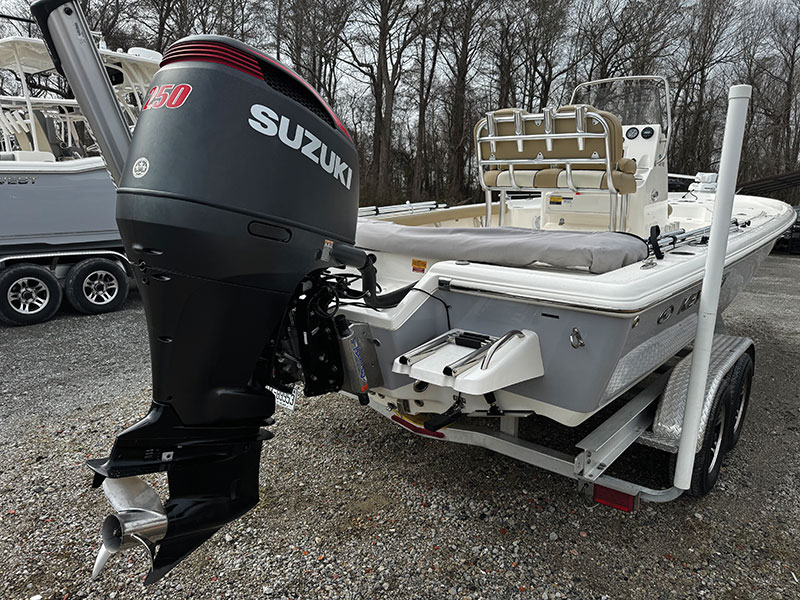
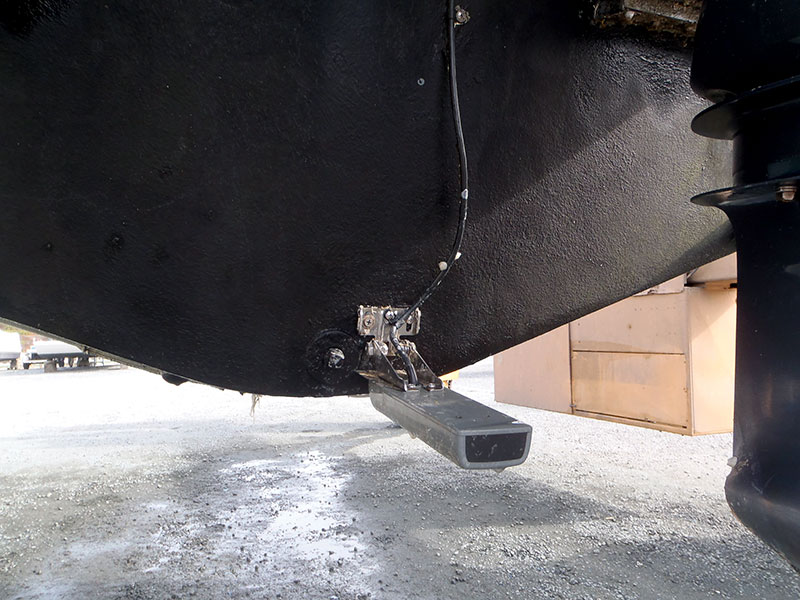
1: Transom-mounted transducers: Transom-mounted transducers are attached to the flat surface of the boat’s transom via an adjustable bracket, which is in turn mounted to the hull using screws or bolts (depending on location and hull material).
Transom-mounted transducers are relatively inexpensive, easily installed by any competent DIYer, and, due to the mounting bracket, can be easily adjusted for optimal depth and angle. Another benefit is that the adjustable bracket typically features a “kick-up” design, which offers a measure of protection for the transducer should it accidentally strike a submerged object.
As to disadvantages, with the transducer mounted outside the hull, it’s more vulnerable to damage, both from floating debris and road-borne trash kicked up while trailering. Transom-mounted transducers can also create drag or spray, which can affect readings.
Another disadvantage is the requirement to drill bracket mounting holes into the transom, something many owners are loath to do. One possible option to avoid this is to use a glue-on mounting system, such as the Stern Saver Transducer Mount.
2: Shoot-thru-the-hull transducers: Shoot-thru or in-hull transducers are a popular alternative to transom-mount units. In-hull transducers are bonded directly to the inside of the boat’s bilge, allowing the sonar signals from the transducer to “shoot” through the hull. This yields a clean installation that results in no drag or turbulence, no mounting holes and excellent bottom-tracking at high speeds. Installation inside the hull also means zero exposure to hazards, eliminating worries about the transducer being knocked out of alignment by floating debris or trailer bunks when launching or retrieving the boat. It may also be the only mounting option for boats with transom designs that offer no good place to mount an external transducer’s bracket.
That being said, there are limitations. A significant one is that they only work on a single-layer, solid fiberglass hull (no wood, aluminum or cored fiberglass hulls). They also lose a portion of their signal power when transmitting through fiberglass, making them less capable for deep-water tracking or “ACCU-FISH” target separation. Incompatibility with Side or Down Imaging sonar transducers (such as Garmin ClearVü or Lowrance SideScan) and loss of water temperature features are additional considerations.
3: Portable clamp-on transducers: Clamp-on transducers are designed to be easily attached and detached from the boat’s gunnel or transom. They work best for smaller trailerable boats, such as canoes, skiffs, Jon boats and inflatables.
Clamp-on transducers bring several benefits to the table. These include easy, tool-less installation (no drilling required) and removal. This portability allows them to be easily transferred between different boats or removed prior to loading the boat on a trailer. They also have more flexibility with regards to mounting locations, such as at the bow, gunnels or transom.
Many portable transducers allow users to easily switch between freshwater and saltwater settings and also offer multiple transducer frequencies.
As to negative aspects, the use of a clamp-on transducer is limited to trolling speeds only, as the drag created by the transducer can cause it to pull free at higher speeds.

CAPT. FRANK LANIER is an award-winner journalist, boat maintenance guru and owner of Capt. F.K. Lanier & Associates, Marine Surveyors and Consultants. Check out his YouTube channel “Everything Boats with Capt. Frank Lanier.” CAPTFKLANIER.COM