New U.S. Coast Guard designations set an international standard and create a performance-based classification.
 In 2025, the U.S. Coast Guard refreshed life jacket designations for the first time in decades. The changes weren’t dramatic, but did cause a bit of confusion, as most changes do. But if you take a closer look at the overarching goal, which is getting more people to wear life jackets — and the correct one at that — it’s easy to see that these changes are both worthwhile and smart.
Nearly 90% of all victims who died from a boating-related drowning were not wearing a life jacket or personal flotation device. The Coast Guard wants to change that.
“While there are no recent studies published that correlate new label design and usage patterns since 2025, we do know that, according to the 2024 Life Jacket Wear Rate Observation Study, voluntary life jacket wear has not increased significantly over the last 25 years,” says Ted Sensenbrenner, director of boating safety at the BoatUS Foundation. “The BoatUS Foundation encourages purchasers of these new life jackets to consider not only legal compliance, but also focus on actual fit and comfort so it’s more likely to be worn. The new label will make selection easier so that purchasers, especially parents, select a life jacket that is stylish, properly fitting and ‘cool,’ thereby increasing wear rates.”
NEW LABELS
Starting January 6, 2025, the Type I through Type V classification system was officially replaced with a new “Performance Level” system. That doesn’t mean you have to discard your old life jackets; they are perfectly legal if in good working condition, but you will see updated labels on new life jackets at your local marine supply store.
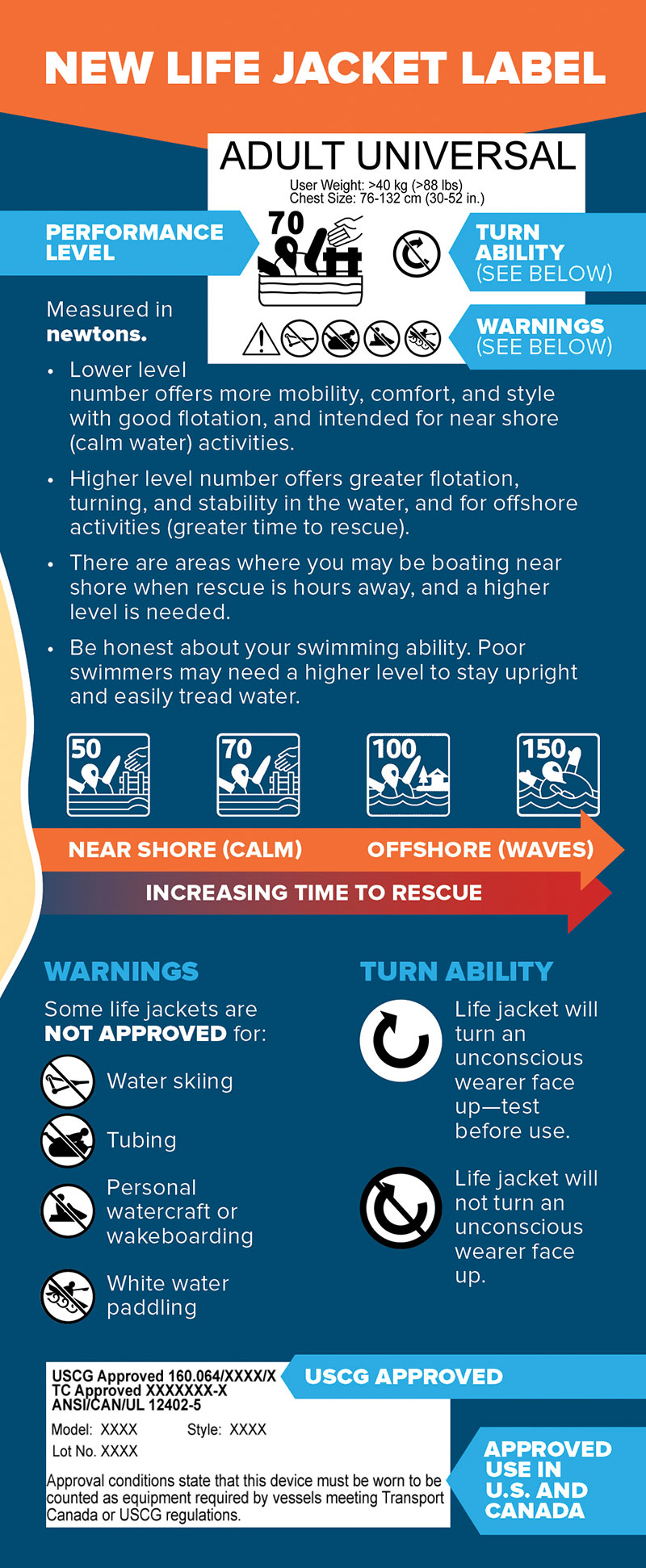
The new system rates life jackets by their buoyancy measured in Newtons, a term you may (or may not) remember from high school physics. A Newton is a unit of force, and the Performance Level number tells you roughly how many Newtons of upward lift or buoyancy the jacket provides. A 160-pound person floating in water needs about 70 Newtons of buoyancy to stay afloat, because the human body is already mostly water and naturally displaces quite a bit. However, each body is different, and the amount of muscle mass or fat you carry could change the amount of flotation you need.
The five different levels vary based on the conditions and distance from land.
Level 50 is the entry-level option, designed specifically for watersports like kayaking, wakeboarding and paddleboarding in calm, sheltered waters. These are slimmer, more flexible vests that don’t encumber movement, but they don’t count toward your boat’s legal onboard inventory unless the person is actively wearing one. Every vessel must have at least one suitable PFD onboard for each passenger. That’s your legal inventory. The moment a wakeboarder climbs back into the boat and removes their life jacket, you need at least a
Level 70 somewhere on the vessel for them. Level 70 is the everyday workhorse life jacket, and the minimum required for general onboard inventory. Level 70 is a good baseline for all boating, from day cruising to fishing. These will count as legal inventory whether worn or stowed, as long as they’re readily accessible and in good condition.
Level 100 steps it up for coastal and moderate offshore conditions. These are required for anyone (including children) when operating far from shore, and foam models count as inventory without being worn. Inflatable Level 100s, however, must be worn at all times to count if boarded by the Coast Guard for a safety check. These also provide enough buoyancy to turn an unconscious wearer face-up in most conditions, which is a critical safety feature.
Level 150 is built for offshore and rough-water conditions where rescue may be delayed. Foam models count as inventory without being worn; inflatable versions must be on your body.
Level 275 is the big one — designed for extreme conditions, commercial fishing or industrial use. These provide substantial buoyancy even when weighed down with gear, and count as inventory whether worn or stowed.
The new framework utilizes American National Standards Institute (ANSI) standards that move toward an international approach between the U.S. and Canada. This is very helpful for Great Lakes boaters who cruise through Canadian waters and don’t need the added confusion of having two different life jacket classifications. It also helps manufacturers who want to create PFDs that meet requirements for both countries.
credit Safe Boating Council
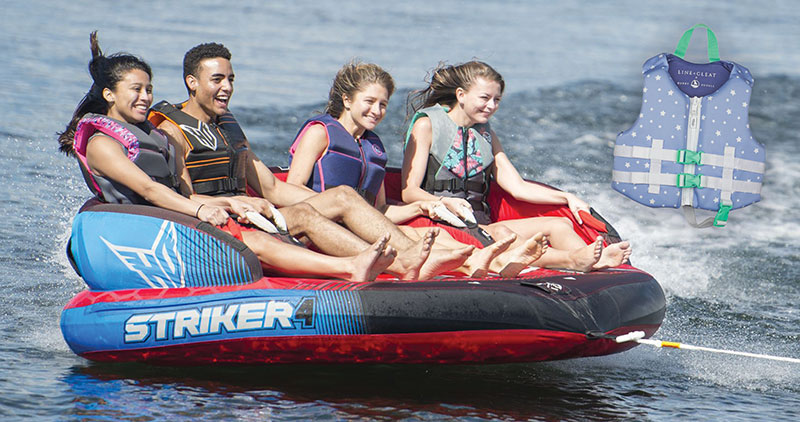
(Main photo) credit Safe Boating Council
credit Safe Boating Council
Graphic: Safe Boating Council
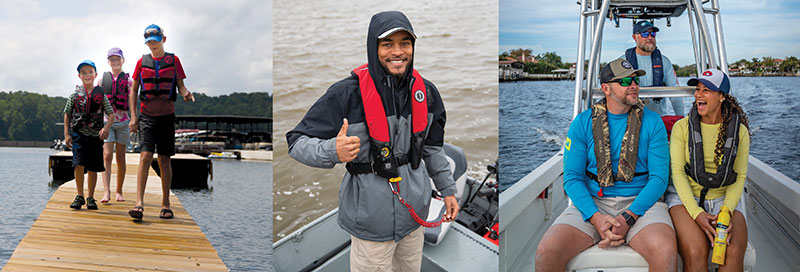
Credit Watersports Foundation
WHAT STILL COUNTS AS INVENTORY?
This is where boaters often get tripped up. To count toward your vessel’s legal inventory, a life jacket must be readily accessible (not buried in a locker under fenders, lines and cushions), properly sized for each passenger, in serviceable condition with no rips or broken buckles, and carrying a USCG-approval label. A duct-taped vest from 1987 won’t make the cut.
Inflatable life jackets are a bit different. Level 100 and 150 inflatables must be worn to count as legal inventory. A charged, hanging inflatable PFD in the cabin does not fulfill your per-person requirement.
CHECK THE LABEL
The new labels are far more descriptive and easier to comprehend than the old ones. Each label includes graphics that show the best intended use, whether it will turn an unconscious wearer face-up, and any relevant warnings.
“New life jacket labeling makes selecting a life jacket easier by using graphic images, or performance icons, to show which activities a life jacket is best suited for,” says Sensenbrenner. “Are you looking for a life jacket for paddling where mobility is most important, or a watersports jacket that has extra padding for a high-speed spill? Or are you shopping for an inflatable life jacket that will rotate the wearer face-up while potentially waiting a long time for an offshore rescue? These new icons will inform the wearer of the critical qualities, regardless of what language you may speak.”
DON’T FORGET THE KIDS
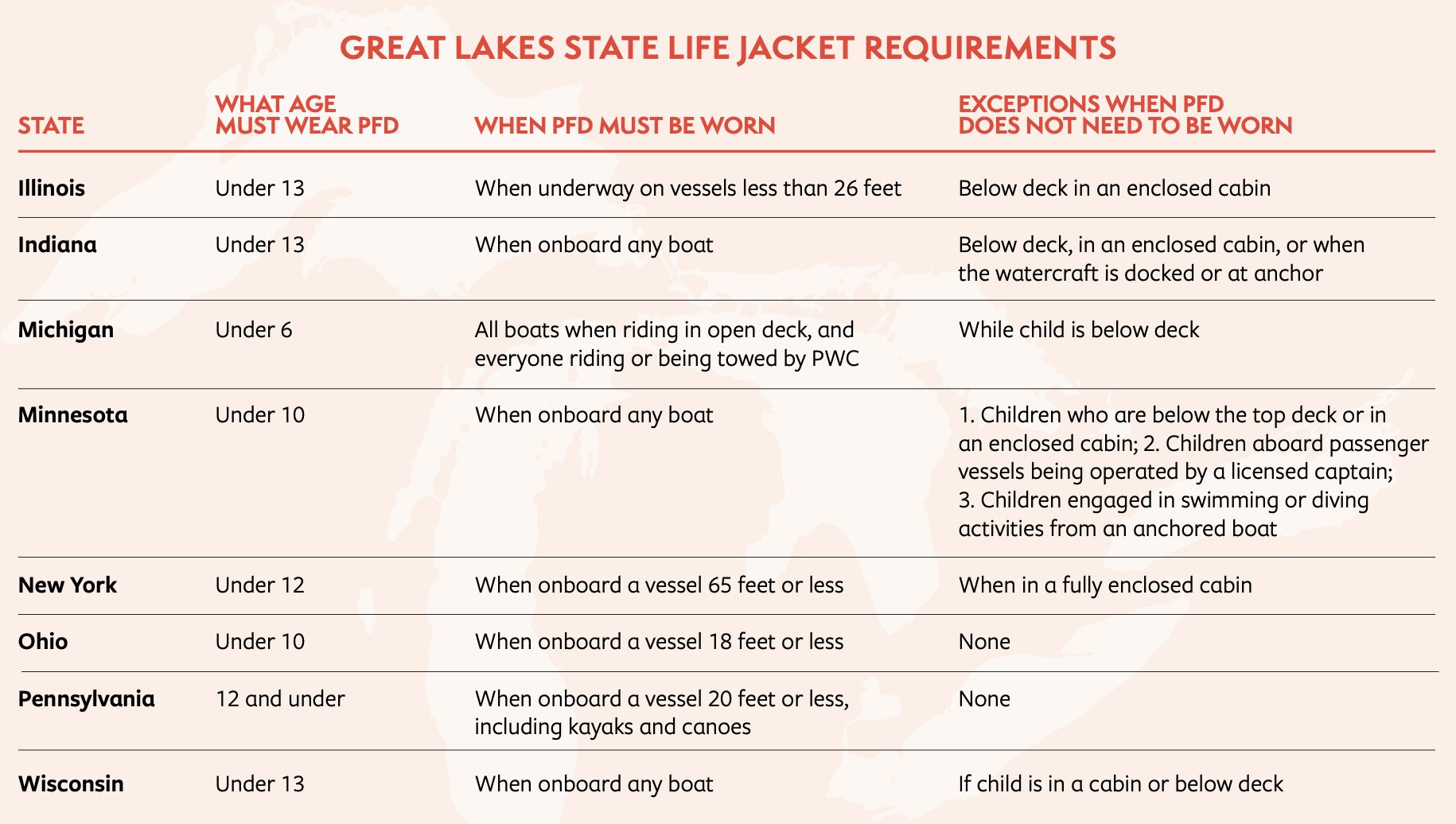
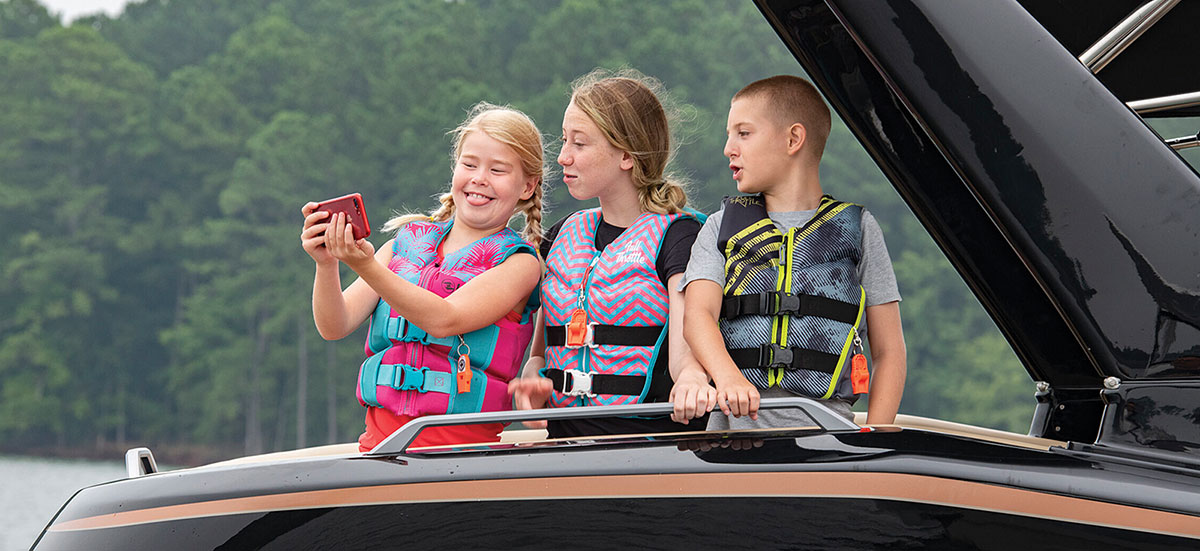
Federal law requires children under 13 to wear a USCG-approved life jacket at all times while on deck of a moving vessel. State laws may differ a bit when it comes toage (see sidebar below), but it’s a good idea to keep all kids under 13 in a life jacket. Just because your child is a good swimmer does not mean they are off the hook. Accidents happen fast, and the biggest risk is being thrown into the water while unconscious.
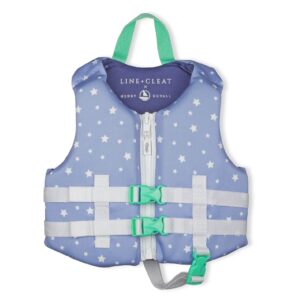
Life jackets for children are sized by weight (infant: 8 – 30 pounds, child: 30 – 50 pounds, youth: 50 – 90 pounds), and inflatables are not recommended for anyone under 16. For nearshore use, Level 70 is considered the minimum, and Level 100 is required for offshore waters. When choosing a PFD for your child, look for grab handles, crotch straps and head support collars — features that can make a real difference in an emergency and help you pull a young boater out of the water.
 “The most important thing to check for in a life jacket is that the label indicates it is USCG-approved and has an approval number. This means it has been tested to rigorous standards and will meet the carriage requirements if used and maintained properly,” says Sensenbrenner. “Just because a life jacket is for sale on a peg at a store doesn’t mean it’s compliant.”
While they take a little getting used to, the new Performance Level system is an improvement. The labels are clear, the standards align with international norms, and the push for more comfortable, wearable designs is good for everyone — because a life jacket hanging in the cabin doesn’t do you any good in an emergency. Think of bike helmets. A decade ago, you only saw hardcore cyclists wearing helmets; now, the majority of bikers, young and old, use them because helmets are more comfortable and fashionable. The USCG is hoping to achieve a similar benchmark for life jackets.
Whether you’re island-hopping in northern Lake Huron or fishing the open waters of Lake Erie, match your jacket level to the conditions and activity, make sure your inventory is up to spec, and wear the darn thing. The Great Lakes demand respect, and a properly fitted life jacket is one of the best ways to show it.