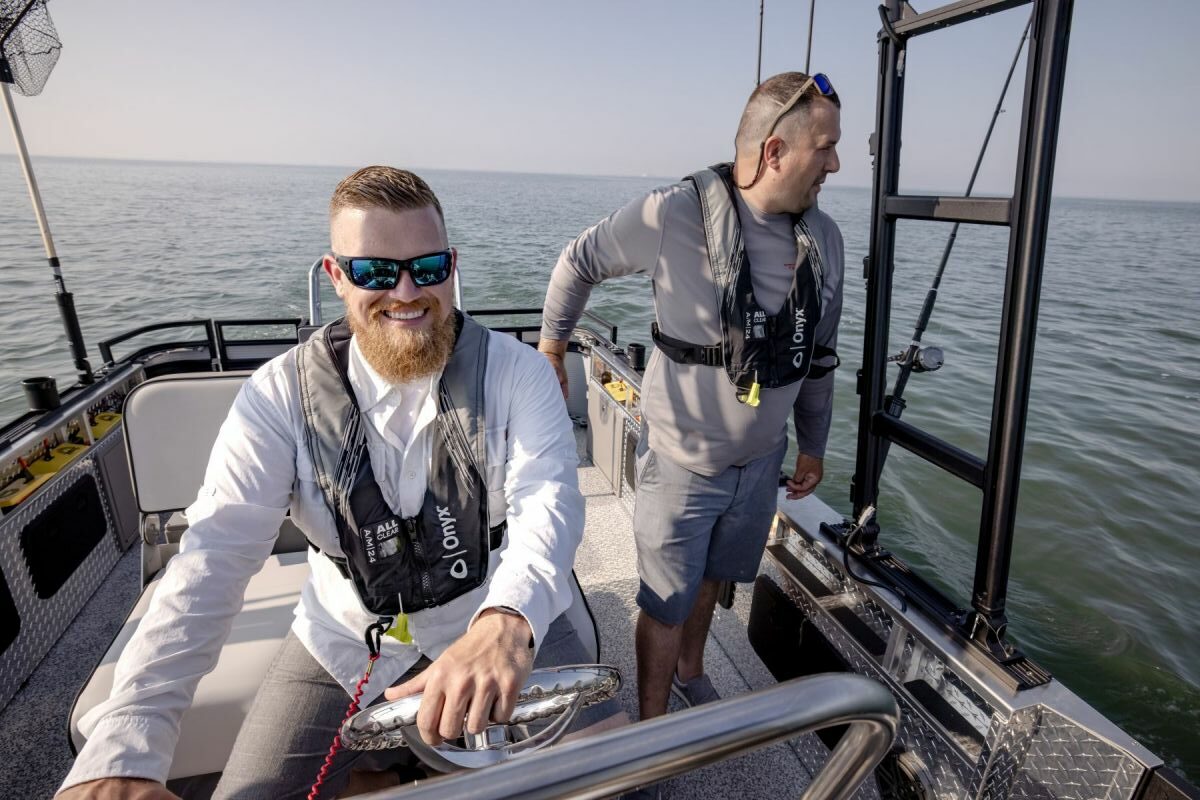
According to the U.S. Coast Guard, 86% of all drowning victims in boating incidents were not wearing a life jacket, and researchers at the U.S. Coast Guard and University of Maryland found the number of drownings could be reduced by 80% if all boaters wore life jackets. Thankfully, life jackets have come a long way since their early, bulky counterparts. Today there are more options than ever for sleek, activity-specific styles, some that offer high-tech features.
“The data is indisputable: Life jackets save lives,” says Jim Emmons, executive director of the Water Sports Foundation (WSF). “With the vastly improved comfort, convenience and styles now available, there’s no excuse not to wear one.”
Today’s options range from closed-cell foam in a comfortable nylon vest to more advanced models featuring segmented foam and breathable mesh panels. High-tech versions are self-inflating, many feature strobe lights and pockets for a personal locator beacon. A new class of ultra-comfortable PFDs will come to market in 2027 thanks to the Coast Guard’s new Level 50 standard, which allows for lower-profile devices to meet legal carriage requirements. “We just released our 2027 catalog, and I’m amazed by the extremely positive response and high level of interest in L50 products,” says Stig Larsson, CEO of paddling apparel and life jacket manufacturer Level Six. “I hope this translates into more paddlers and boaters wearing PFDs.”
Lighter, more comfortable life jackets are a positive for increasing life jacket wearing rates, but despite advancements, a U.S. Coast Guard study found life jacket wear rates for all boaters have increased only 2.8% since 1999. To help overcome objections to wearing life jackets, the WSF offers five tips:
- State the Rule at the Dock
- Lead by Example
- Invest in Comfortable Gear
- Ensure a Proper Fit
- Explain the Why
To learn more, visit watersportsfoundation.com.
PHOTO: WATER SPORTS FOUNDATION