Tucked away between Ontario and Minnesota, Rainy Lake’s vivid tale is best told by the people who cherish it.
The first time I glimpsed Rainy Lake, it was through ice-brushed eyelashes. The frozen tundra of blue and white glared back at me, framed by the thick, dark arms of slumbering spruce and balsam fir. The temperature stood at minus 40 degrees Fahrenheit — and that’s not counting the wind chill.
We were a ragtag group bundled in down, standing at the shoreline of Voyageurs National Park in Northern Minnesota. My husband and our three kids, a park ranger, and a visitor from Africa in a brand-new coat who could not stop smiling with glee at encountering such cold weather in such a beautiful place.
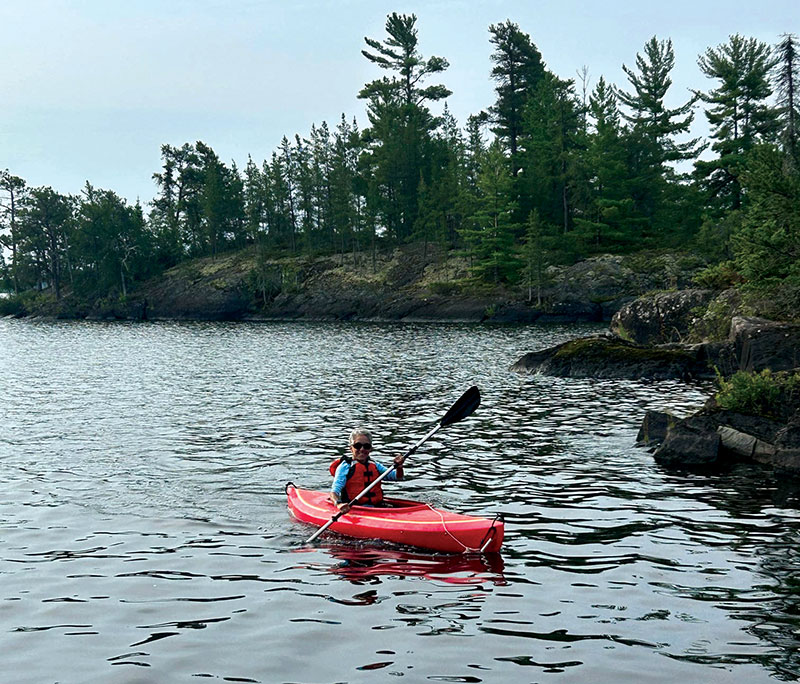
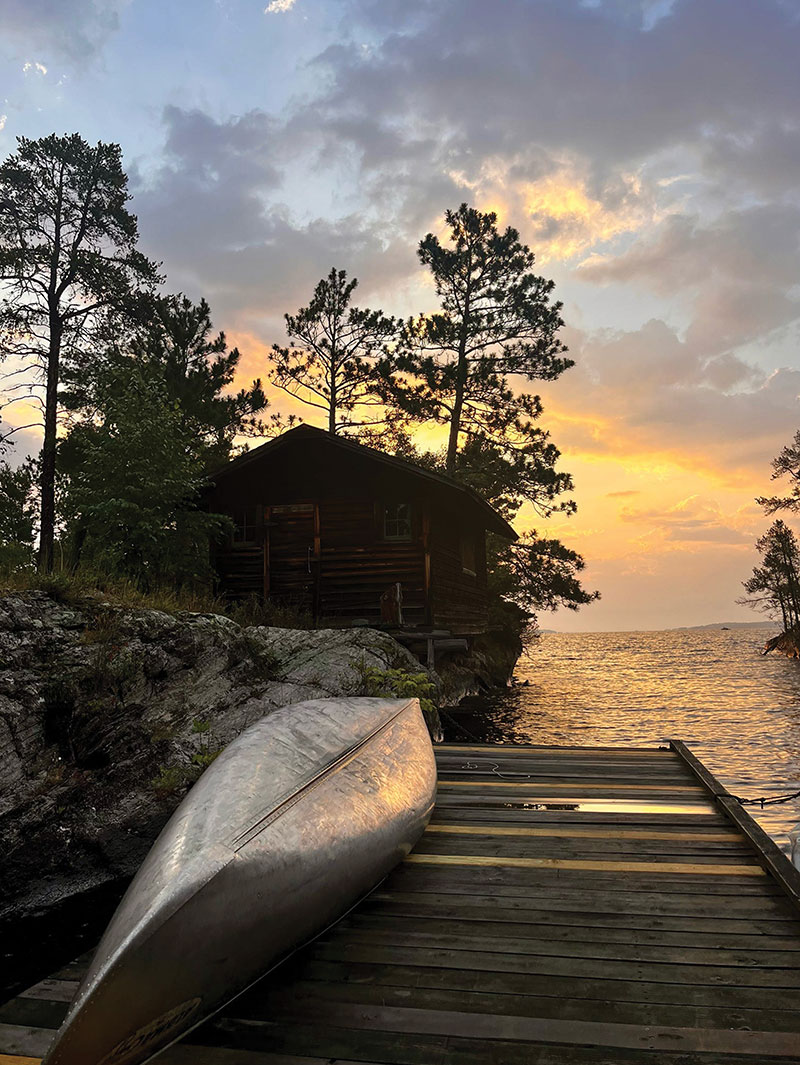
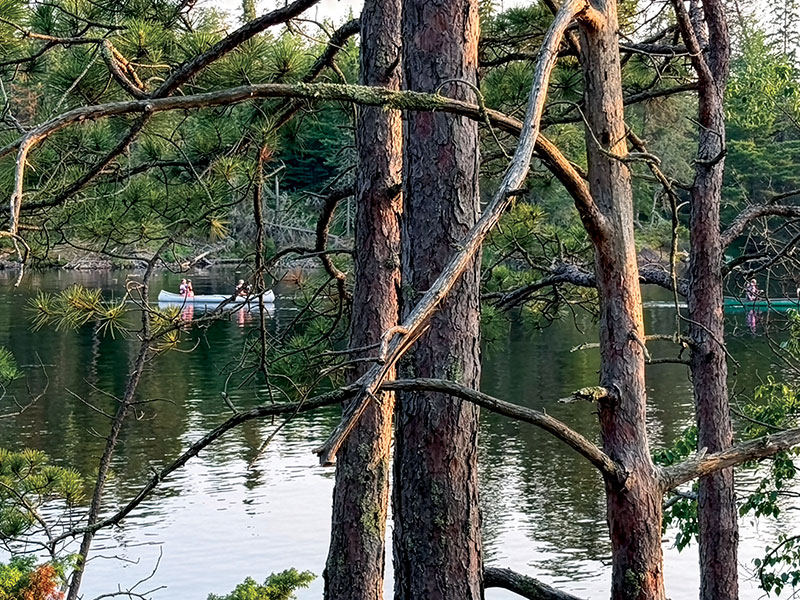
Fast forward to summer, and again I stood at the shoreline, this time gazing out at a shimmering silvery blue, awaiting the pontoon to take me to Mallard Island. Rainy Lake is home to about 2,500 islands, and Mallard — the length of an ore ship — is one of the four “Review Islands,” owned by the Ernest Oberholtzer Foundation. I spent a week as a creative resident on the island: Writing, reading, kayaking, canoeing, swimming, sitting, listening to the eagles and the loons, watching the fish jump and the snapping turtles surface for snacks. In the distance, the open water hosted houseboats and jet skis, fishing boats and pontoons. The passengers may have been exploring islands, looking for walleye, northern pike and smallmouth bass, or simply enjoying a day cruising nature’s water wonderland.
The story of this extraordinary lake, vivid and unforgettable in all seasons, is best told by the people, animals, plants and rocks who call it home.
Rich in culture and heritage
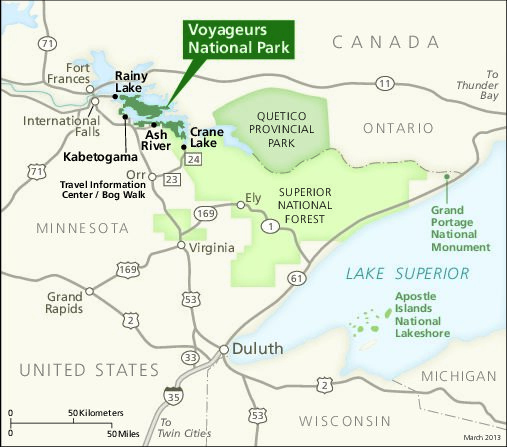
About three hours north of Lake Superior’s Twin Ports of Duluth, Minnesota, and Superior, Wisconsin, Rainy Lake is 360 square miles of connected waterways and islands, home to Voyageurs National Park, Kabetogama State Forest, Superior National Forest and five First Nation communities. More than 10 different tributaries feed into the lake, which has only one outlet, the Rainy River. The Anishinaabe people thought that was a significant occurrence for a lake and used it as a gathering place, naming it Koochiching, which means a large body of water emptying into one outlet. Visitors to Rainy Lake come to indigenous territory, rich in Anishinaabe culture and heritage.
Pebaamibines is a Mide spiritual teacher, advisor and first-language speaker from Nigigoonsiminikaaning First Nation. “Pebaam,” as I came to know him, is a former college professor at the University of Minnesota and the Elder of Mallard Island. During my time on Rainy Lake, we shared many meals and participated together in a sacred drum ceremony.
His perspective offered a deeper understanding of a place the Ojibwe have called home for centuries. For those of us who visit Rainy Lake, remembering whose ancestral homeland we are entering — and treating its water, land and all its life with respect and reverence — can make the experience that much more meaningful.
A life shaped by the lake
Jerry Williams has been coming to Rainy Lake since August 1944, when his family brought him on vacation when he was just 11 months old. He’s been coming back ever since. As a college student in the 1960s, he worked at the local paper mill. The mill and its partnering timber industry have been an economic backbone for the area that continues to this day, though on a smaller scale. Besides Indigenous people, French-Canadian voyageurs and other European immigrants — especially of Scandinavian descent —came to the area. Williams learned about boating on the lake from a Finnish immigrant who taught him how to run a boat, starting with small motors and expanding to open 18-foot wooden boats.
Today, at age 84, Williams spends summers on Rainy Lake and visits in the colder months, when the landscape transforms into a frigid winter wonderland. Snowmobile and cross-country trails abound, and the horizon is dotted by fish houses and pop-ups. Williams has even run the 5K “Freeze Your Gizzard Blizzard Run,” part of the annual January Ice Box Days in International Falls. A few years back, the temperature at the start — not counting windchill — was negative 32.1 degrees Fahrenheit.
“The coldest part of me were my thumbs!” Williams says.
In the warmer months, Williams helps out at his son’s resort and also at the annual International Falls Bass Tournament, held every August.
“That’s a delight,” he says. “We measure the 600 fish caught. They’re all returned to Rainy Lake. We monitor the tanks to make sure the water and oxygen match Rainy Lake. Our goal is 100% of fish that are weighed and returned healthy. Last year we did all but two.”
In Williams’ lifetime, he’s seen Ojibwe canoes parked on Mallard Island for the Sunday morning pancake breakfasts. He’s also seen the evolution of Voyageurs National Park, a completely water-based park now 50 years old.
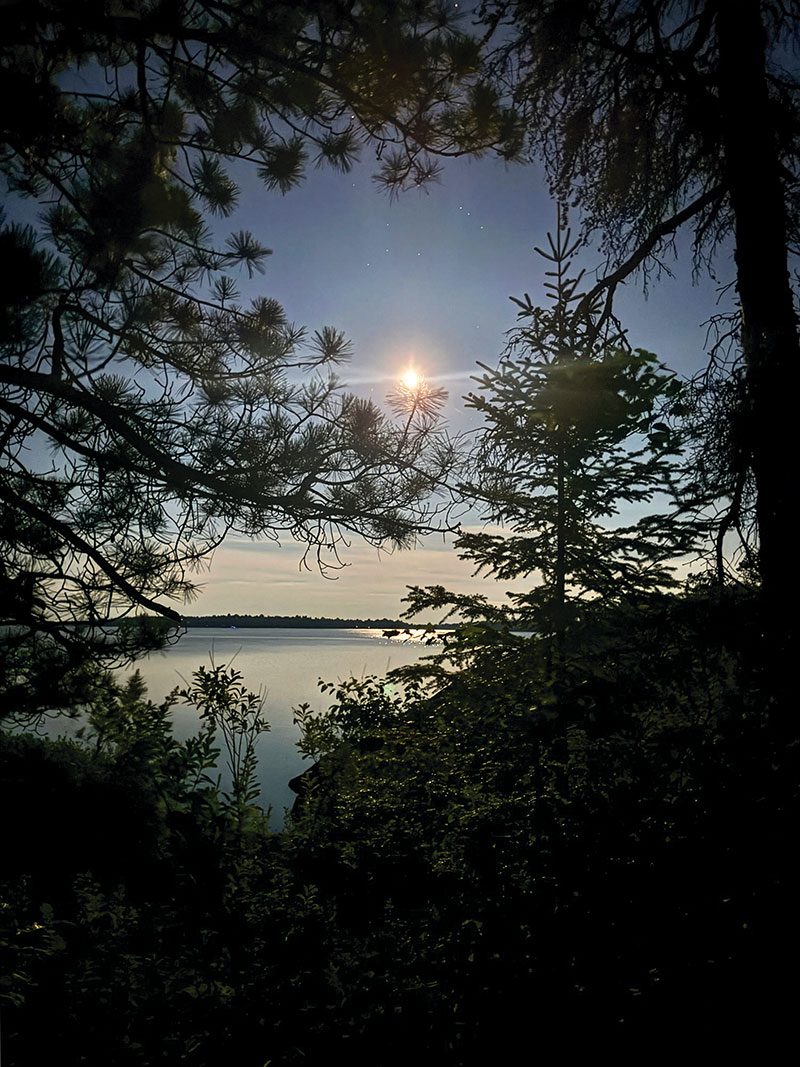
“It has ensured a wilderness void of privately owned places and full-on commercial development,” he says. As a certified International Dark Sky Sanctuary, “The northern lights are spectacular, and the bright starry bands of our Milky Way Galaxy are breathtaking. I like to take a boat out in the middle of the night. I use running lights to get down there, then turn them off and just be there.”
As the years have gone by, and his children and now grandchildren enjoy the area as he does, Rainy Lake’s significance has deepened for Williams.
“When I’m here, or next to, or on the lake, or especially drifting back into a quiet bay — it has become a place where my heart and my soul come together,” he says. “A big part of me is here, if not physically, then in thought. It will linger in some form long after I have left it.”
If these rocks could talk
Rainy Lake sits on the southern edge of the Canadian Shield on rocks that are 2.8 billion years old, scarred by many glaciers.
“It’s a place where the rocks ‘talk,’” says Williams. An especially good place to learn more is Voyageurs National Park, he adds.
On the water highway of the Ojibwe and French-Canadian canoeists of long ago, the park and its three visitor centers can be reached by car; but to truly explore it, a boat is absolutely necessary for this water-only national park (unless, of course, you show up in January). The park offers several programs, as does its non-profit partner, Voyageurs Conservancy, including sightseeing trips of various lengths.
Although the Minnesota part of Rainy Lake is the largest lake in the park, there are two other significant lakes: Kabetogama and Namakan Lakes, along with several others deep in the park that can be hiked to, says Williams. Each visitor center has public boat launching facilities, picnic and camp sites. If you show up in winter, you can drive on one of the ice roads, which begin at the visitor centers.
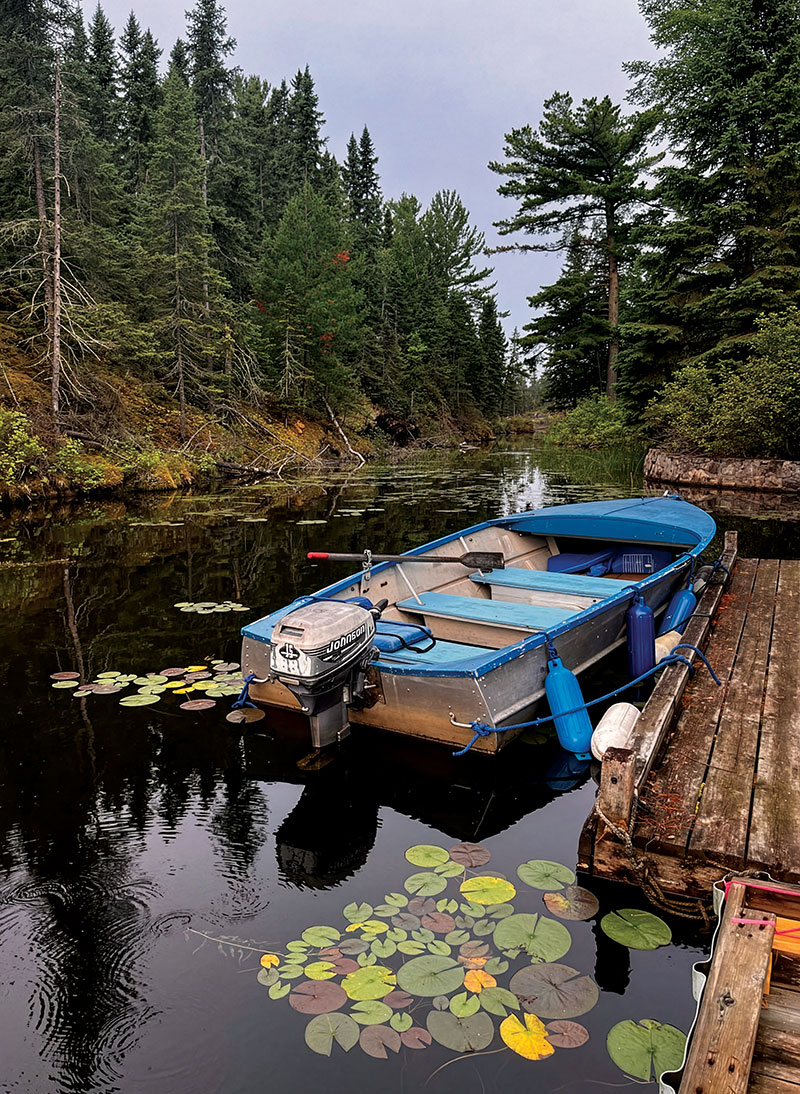
Houseboats are a great way to explore Rainy Lake, and several private companies offer a variety of options. Outfitters in the area rent canoes and kayaks. Resorts and camps along the shoreline also provide smaller boats and day services to get visitors out on the water.
On land, International Falls is well worth exploring, including the Koochiching County Historical Society/Museums with more than 10,000 years of regional history (like NFL legend Bronko Nagurski). In neighboring Ranier, the Cantilever Hotel and Distillery is a great stop for lunch, a beverage, or an overnight stay in the historical building inspired by the Cantilever Bridge, a hub of activity during Prohibition. The bridge, noted for its innovative early 20th century engineering, is still operational today. Just across the border in the Fort Frances area, important historical sites showcase Indigenous history and the fur trading of the voyageurs.
Never the same lake twice
One summer on Rainy Lake was not enough for me, so the next summer I returned — this time with eight more creative residents. Molly Hoeg was among my group. An avid kayaker, runner and cyclist, she had stayed with friends in their Canadian cabin, directly north of Mallard, but this was her first time on the Minnesota shore of Rainy Lake. The Canadian side, she says, “felt like an entirely different lake. It was wild and wavy, a force to take seriously.” A favorite activity of her friends is to boat to an island for a shore lunch over a campfire. On the south side, she spent many hours kayaking and exploring.
“I loved how calm it was when we were there and checking out all the shorelines, from the highly populated to the wild and untamed,” she says.
For me, my third visit to Rainy Lake may have been the best yet. The peace and tranquility remained, but I was shocked to meet very few of the area’s largest local population — there were no mosquitoes!
(Main photo) credit Michelle Flanagan-Haag
map provided by National Park Service
credit Melissa Hepokoski
credit Molly Brewer Hoeg
credit Melissa Hepokoski
credit Felicia Schneiderhan